The best choice for most senior and arthritic dogs is a ramp, not stairs — a ramp spreads the climb evenly instead of loading the joints step by step — and the PetSafe CozyUp leads this guide because its incline stays gentle at real bed heights. Stairs are the right answer for small, agile dogs whose only problem is altitude, and the foam picks below serve them in a fraction of a ramp’s footprint. The deciding specification is geometry: keep a ramp’s incline under roughly 25 degrees and a stair’s steps under about 6 inches high.
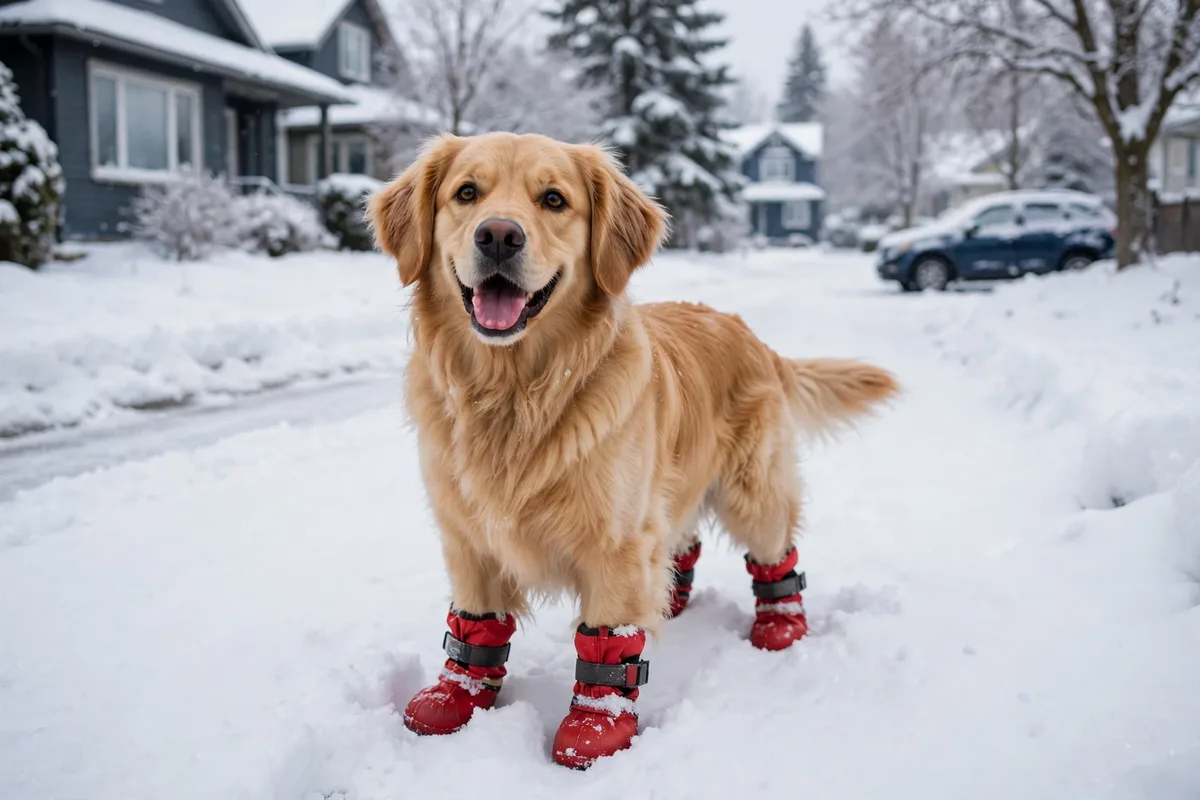
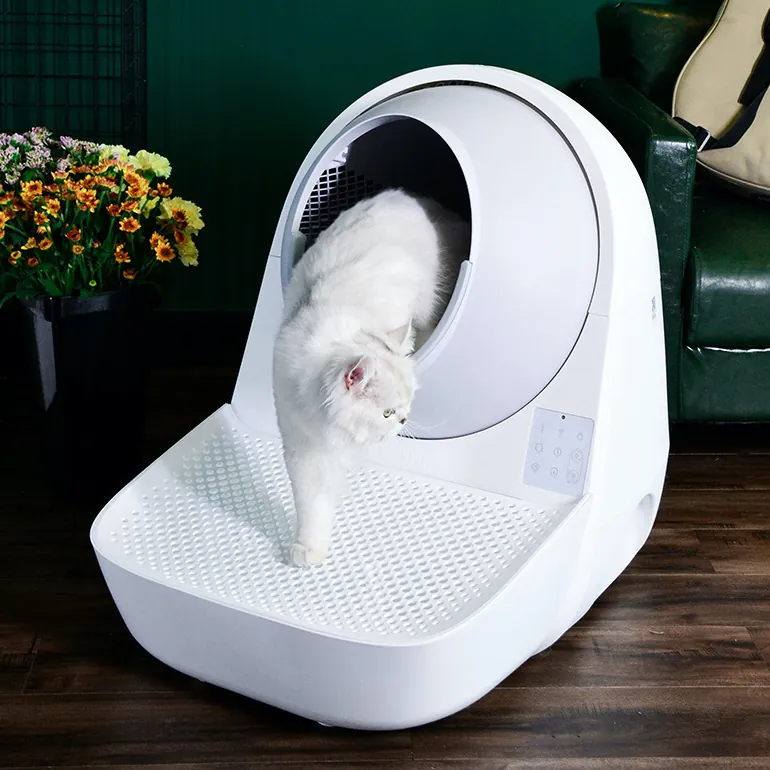
The five picks divide by dog and dwelling: two ramps for beds and vehicles, a scalloped foam ramp-stair hybrid, a wide foam staircase, and a sturdy step system for heavier dogs. Each entry states its working dimensions and weight rating in the open, because a ramp a dog refuses is furniture. Pair the access with the best dog beds in Canada and the USA where the dog lands, plan car trips with the best dog crates in Canada and the USA guide’s travel kit, and keep winter paws safe with the best dog boots for winter in Canada and the USA picks.
Disclosure: CookSmartPicks is reader-supported. When you buy through links on this page, we may earn an Amazon commission at no extra cost to you. Prices and availability change often — check the current price on Amazon before you decide.
How we chose these pet stairs and ramps
Geometry governed this list before brands were allowed to: for ramps, the working incline at a standard 24-inch bed height — computed from each model’s real length, not its marketing — had to stay in the range senior and arthritic dogs will actually climb, and for stairs, step height had to stay at or below about 6 inches with treads deep enough for a full paw. Products whose geometry recreated the jumping problem in miniature were cut regardless of reviews.
Surface and structure came next: high-traction carpet or ribbed surfaces only (a dog that slips once may refuse the tool forever), weight ratings checked against the dogs each pick claims to serve, and stability under a moving load — wobble is refusal in physical form. We also weighed the human logistics: weight, folding, and whether the thing can live in a bedroom without dominating it. Every pick is available through normal Canadian pet retail.
The lineup at a glance
| Product | Best for | Why it stands out |
|---|---|---|
| PetSafe CozyUp Bed Ramp (Wood, Carpeted) | Best overall ramp | The prescription ramp: a gentle, railed, carpeted climb rated for dogs to 120 lb |
| Pet Gear Easy Step (Foam Pet Stairs, 3-Step shown) | Best foam stairs | The foam standard: low, deep steps a small dog climbs instead of scrambles |
| Snoozer Scalloped Dog Ramp (Foam, Upholstered) | Best for hesitant dogs | The negotiated settlement: a scalloped wave for dogs that refuse both formats |
| PetSafe Happy Ride Folding Dog Ramp | Best for vehicles | The travel ramp: 150 lb capacity that folds into the cargo area |
| Zinus Easy Pet Stairs (Foam, Upholstered) | Best-looking stairs | The furniture stair: Zinus foam in upholstery a living room accepts |
1. PetSafe CozyUp Bed Ramp (Wood, Carpeted) — Best overall ramp
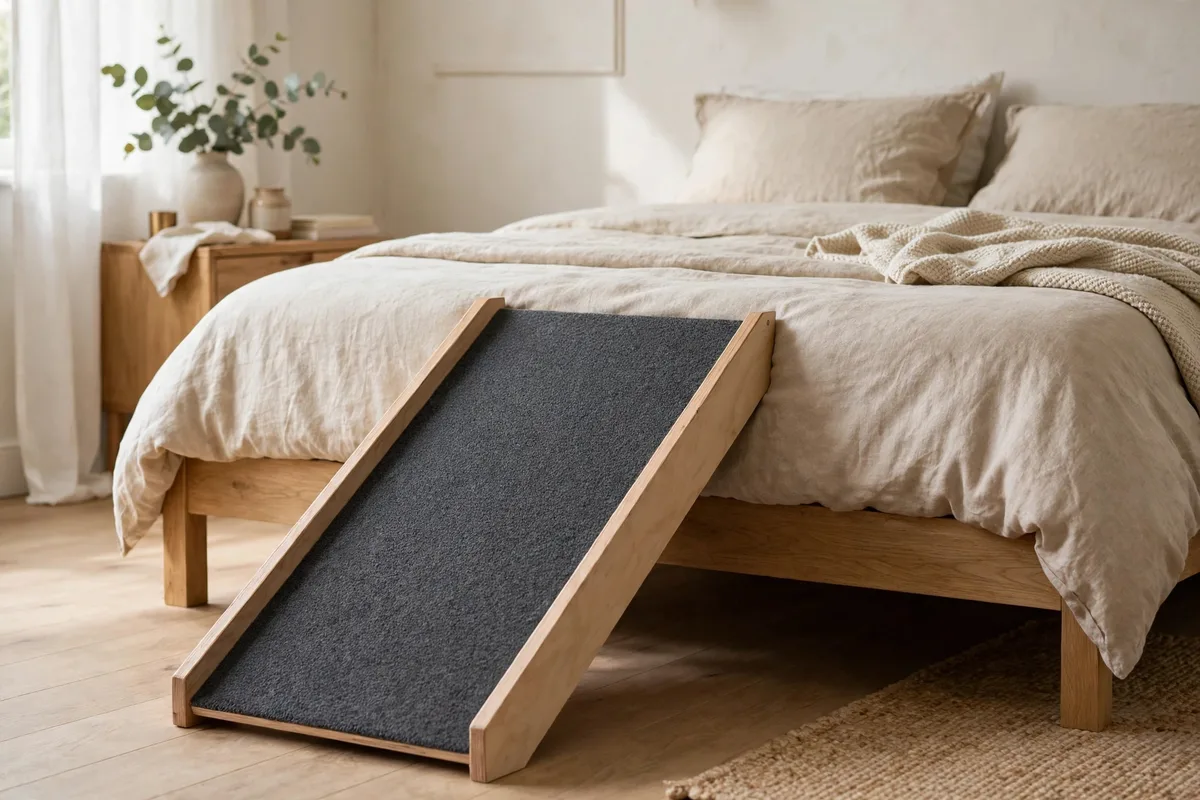
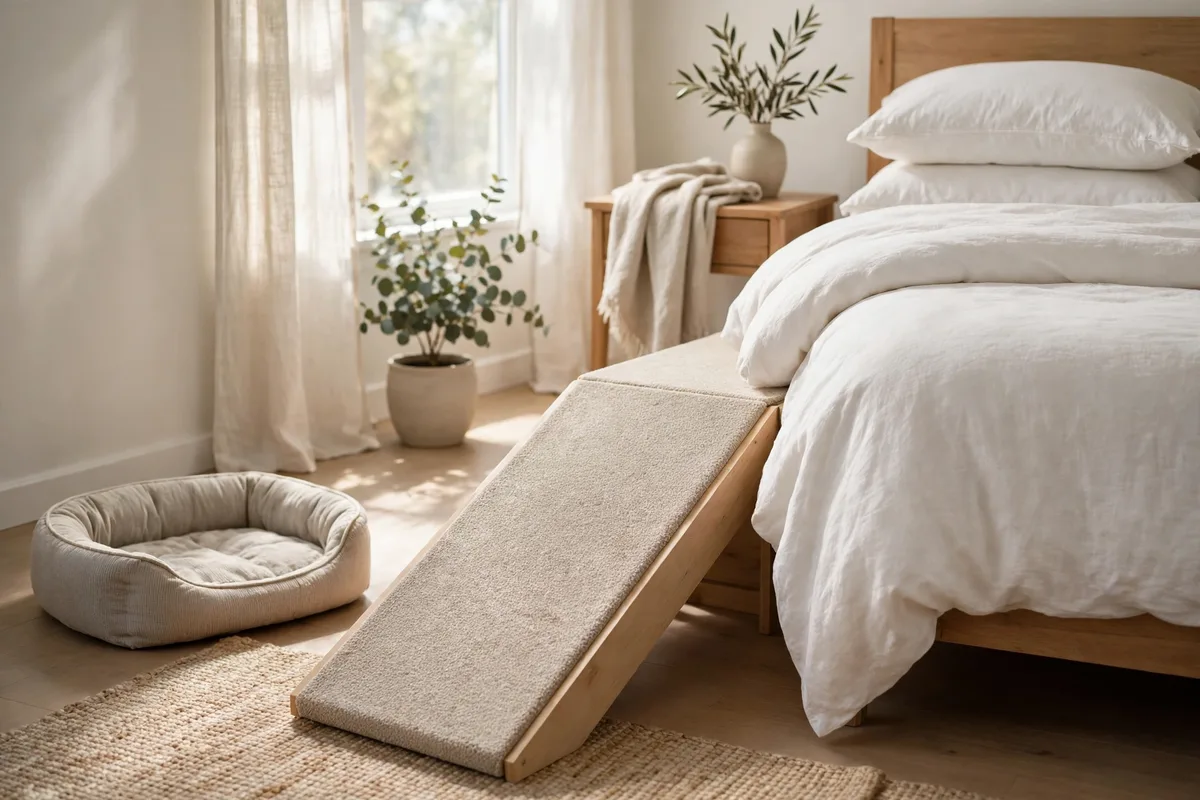
The CozyUp Bed Ramp is the category’s reference design: a wooden-frame ramp with a heavy carpeted climbing surface, side rails that keep a hesitant dog’s line honest, and a length that produces a genuinely gentle incline at standard bed heights — the geometry this guide insists on, delivered by the brand that has made pet access its business for decades. PetSafe rates it for dogs up to 120 lb, and the frame’s rigidity under a moving large dog is the point: no flex, no wobble, no reason for a careful dog to change its mind halfway up.
The ramp’s furniture manners are considered — it stands at the bed’s side like it belongs there, in finishes that read as bedroom furniture rather than veterinary equipment, and the carpet surface is replaceable in spirit: it vacuums clean and keeps its grip for years. For dogs that share the bed — the senior retriever, the post-surgery patient, the dachshund whose spine is the household’s standing concern — this is the access vets picture when they say ‘get a ramp.’
Canadian availability runs through every major pet retailer. The price sits at the category’s sensible top, justified by the frame’s decade-scale sturdiness. If the guide’s other picks are specialists, the CozyUp is the prescription: measure your bed height, give it the straight approach it wants, and let the dog’s confidence do the rest.
Ownership’s quiet proof is the dog’s route becoming invisible: within weeks, the ramp is simply how the dog gets up, and the household stops lifting — which is the entire outcome, for the dog’s joints and the owner’s back alike.
Measure your mattress top before ordering anything: the ramp’s upper end should land within an inch or two of the mattress surface, because a final hop at the top undoes the ramp’s whole purpose — the dog should walk off the carpet and onto the bed in one level stride.
Yay · Pros
- Gentle incline at real bed heights; side rails
- Rated to 120 lb per PetSafe; rigid wooden frame
- Furniture-grade looks for the bedroom
Hmm · Cons
- Long footprint — measure the room
- Too much ramp for a low sofa
- Carpet needs regular de-hairing to keep grip
Best for: Senior dogs and high beds — the default ramp Skip if: Your room cannot fit a ramp’s run — the foam stairs below fold the climb into half the space
2. Pet Gear Easy Step (Foam Pet Stairs, 3-Step shown) — Best foam stairs
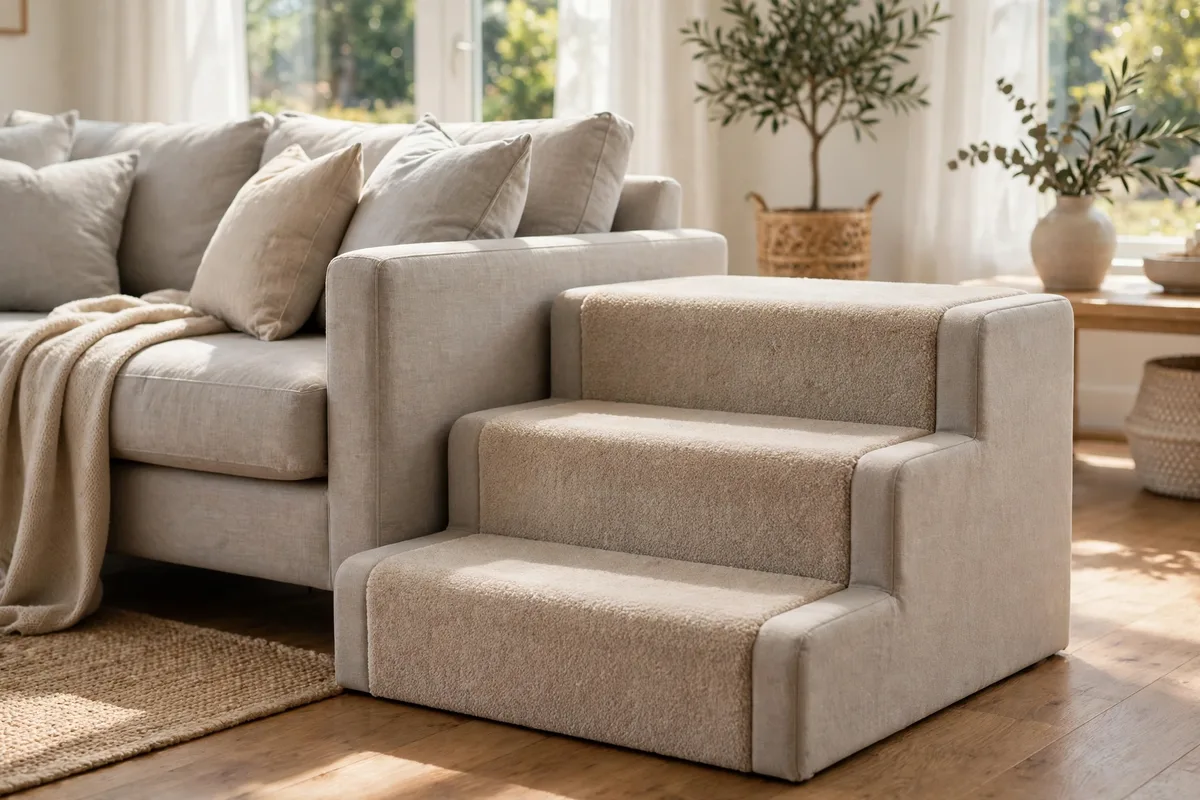
Pet Gear’s Easy Step line is the foam-stair standard: high-density foam steps in two, three and four-step heights, with wide, deep treads and a carpet surface that unsnaps or unzips for washing depending on the model. The geometry is the friendly kind — steps in the 5-to-6-inch rise class with treads a full paw deep — so a small dog climbs rather than scrambles, and the whole staircase weighs almost nothing, which means it migrates between bed and sofa as the day demands and stores in a closet when guests arrive.
Foam’s physics are the honest terms: it is kind to joints on impact, silent, and forgiving of the furniture it leans on, and it slowly compresses under a heavy dog’s daily traffic — Pet Gear rates the line for small-to-medium dogs (the maker’s figures run to roughly 75 lb for the larger models, less for the smallest), and within that rating the steps hold their shape for years. The carpet’s grip is the confidence surface small dogs trust.
Canadian pet retail stocks the line broadly at the friendliest prices in this guide. For the dog whose problem is simply that the bed is tall and it is not — the young, the small, the agile — Easy Step is the proportionate answer, and the one most households should buy before considering anything larger.
Ownership is delightfully low-effort: the cover washes, the foam airs, and the staircase’s lightness means it gets moved to wherever the dog currently rules — which, owners report, is everywhere the dog is allowed to be.
The foam’s density is the durability check to make in the store: press a thumb deep into a step — it should resist, then spring back fully. Foam that stays dented on the showroom floor will be a valley by Christmas under a dog’s daily traffic.
Yay · Pros
- Wide, deep, low steps — true paw-sized geometry
- Featherweight; moves room to room
- Washable carpet cover; friendly prices
Hmm · Cons
- Foam compresses under heavier dogs over time
- Step height suits small dogs best
- Cover is the wear item — spares vary by model
Best for: Confident small-to-medium dogs and tidy bedrooms Skip if: Your dog is large, senior or arthritic — a ramp serves those joints better
3. Snoozer Scalloped Dog Ramp (Foam, Upholstered) — Best for hesitant dogs
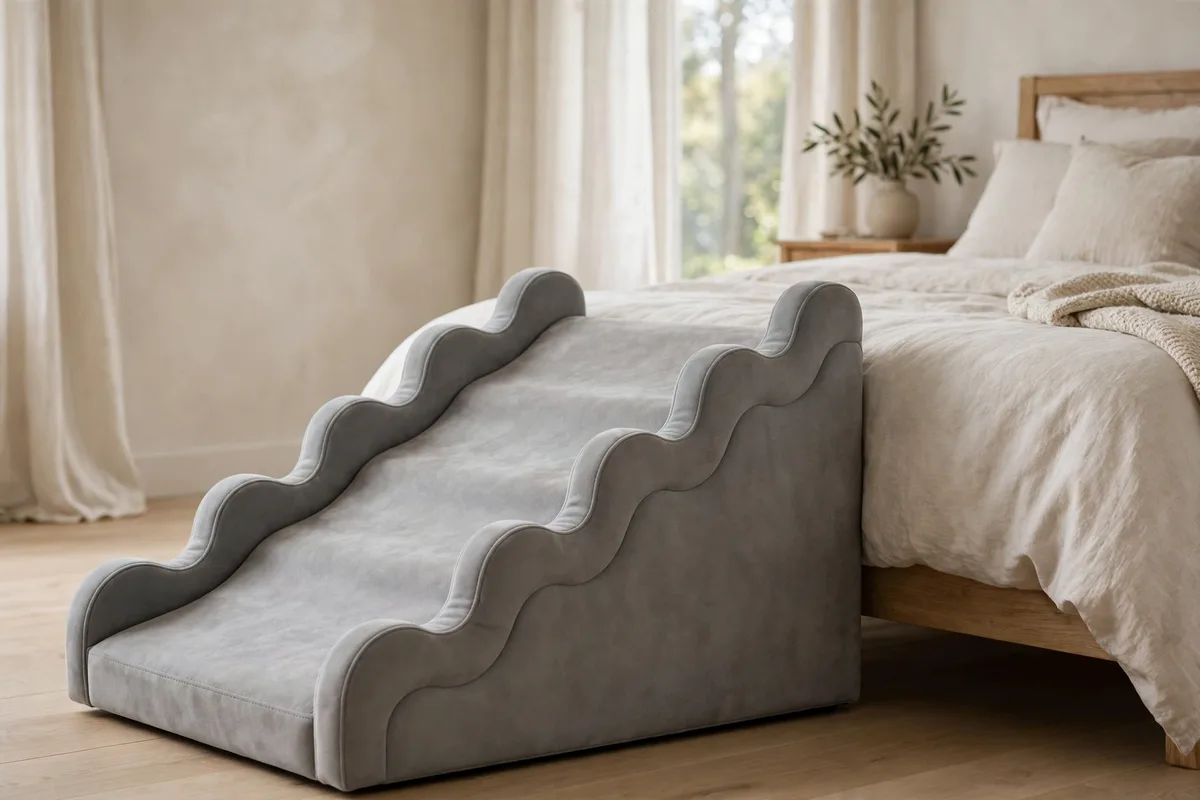
The Snoozer Scalloped Ramp is the hybrid for the dog that has opinions: a solid foam form sculpted into a wave — three scalloped rises that climb like a ramp but break the slope into stair-like rests, so a hesitant dog never faces a continuous incline or a distinct step edge. For dogs that refuse ramps (too slopey) and balk at stairs (too steppy), the scallop is the negotiated settlement, and trainers recommend the format for exactly the refusers. The foam body is upholstered in a washable microsuede-style cover that reads as furniture, not equipment.
The dimensions suit small-to-medium dogs reaching beds and sofas in the standard range, with the wave’s effective steepness gentler than its footprint suggests — the rests reset the dog’s confidence at each rise. Snoozer, an American pet-furniture maker, builds the form densely enough to hold its sculpture under daily use, and the cover’s quality matches the brand’s dog-bed reputation.
Canadian availability is through pet boutiques and online retail at a premium over plain foam stairs. The buyer is the household that has already returned one refused product: the scallop’s whole purpose is the second attempt succeeding, and its success rate with hesitant dogs is the reason it anchors this slot in the guide.
Ownership adds one training note the maker would endorse: introduce it as furniture first — let the dog claim it as a lounging hill for a day — and the climb to the bed becomes the dog’s own idea, which is how refusals end.
The scallops double as a lounge: many small dogs adopt the wave’s middle dip as a daytime perch, which quietly completes the training for free — a ramp the dog naps on is a ramp the dog trusts at 2 a.m., and trust is the whole product.
Yay · Pros
- Wave profile — ramp gentleness, stair rests
- The format refusers accept
- Furniture-grade upholstered cover, washable
Hmm · Cons
- Premium price for foam
- Footprint larger than plain stairs
- Best for small-to-medium dogs only
Best for: Hesitant dogs who refuse both ramps and stairs Skip if: Your dog climbs happily already — plain stairs cost less
4. PetSafe Happy Ride Folding Dog Ramp — Best for vehicles
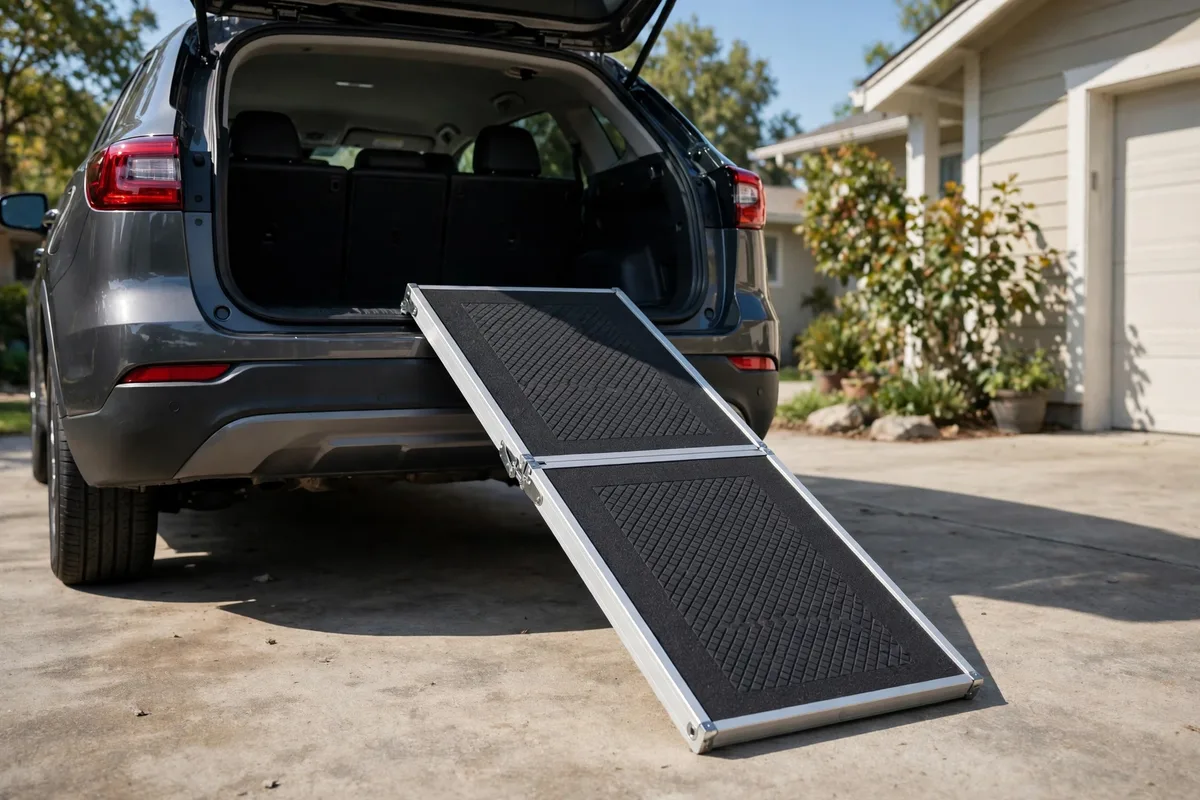
The Happy Ride folding ramp solves the other access problem: the vehicle. A dog that manages the bed may still face a tailgate or SUV floor at a height no joint should jump, and this ramp — folding, aluminium-framed, with a high-traction tread surface — spans it. PetSafe rates the standard model for dogs up to 150 lb, and the folding format lives in the cargo area without argument, deploying in seconds at the trailhead, the vet, or the cottage dock’s truck.
Vehicle inclines are inherently steeper than bedroom ramps — the geometry of a tailgate allows nothing else — so the guide’s advice is supervision: a hand on the collar or harness for nervous dogs, the ramp angled against the bumper’s lowest point, and training at home before the first trip. Within those terms, the Happy Ride’s grip surface and rigidity earn dogs’ trust faster than the category’s flimsier folding rivals, whose flex is the usual reason car ramps get refused.
Canadian availability is universal in pet retail. For the household whose dog’s life is measured in car rides — the hiking partner, the cottage dog, the senior who still expects Saturday’s adventure — this ramp is the difference between the dog coming and the dog watching from the window, which is the whole ballgame.
Ownership lives in the car: it never gets left behind because it never gets unloaded, and owners report it becomes as standard as the leash in the door pocket — equipment that disappears into the routine it enables.
Vehicle fit deserves a driveway test: the ramp’s top edge needs a flat lip of bumper or cargo floor to rest on, and its deployed angle must be one your dog accepts — rehearse the setup at home before the first real trip depends on it.
Yay · Pros
- Folds flat; lives in the vehicle
- Rated to 150 lb per PetSafe; aluminium frame
- High-traction tread; deploys in seconds
Hmm · Cons
- Vehicle incline is steeper — spot nervous dogs
- Too long for most bedrooms
- Utilitarian looks
Best for: Dogs that travel — vehicles, cottages, vet visits Skip if: You need a bedroom ramp — its length and looks belong to the driveway
5. Zinus Easy Pet Stairs (Foam, Upholstered) — Best-looking stairs
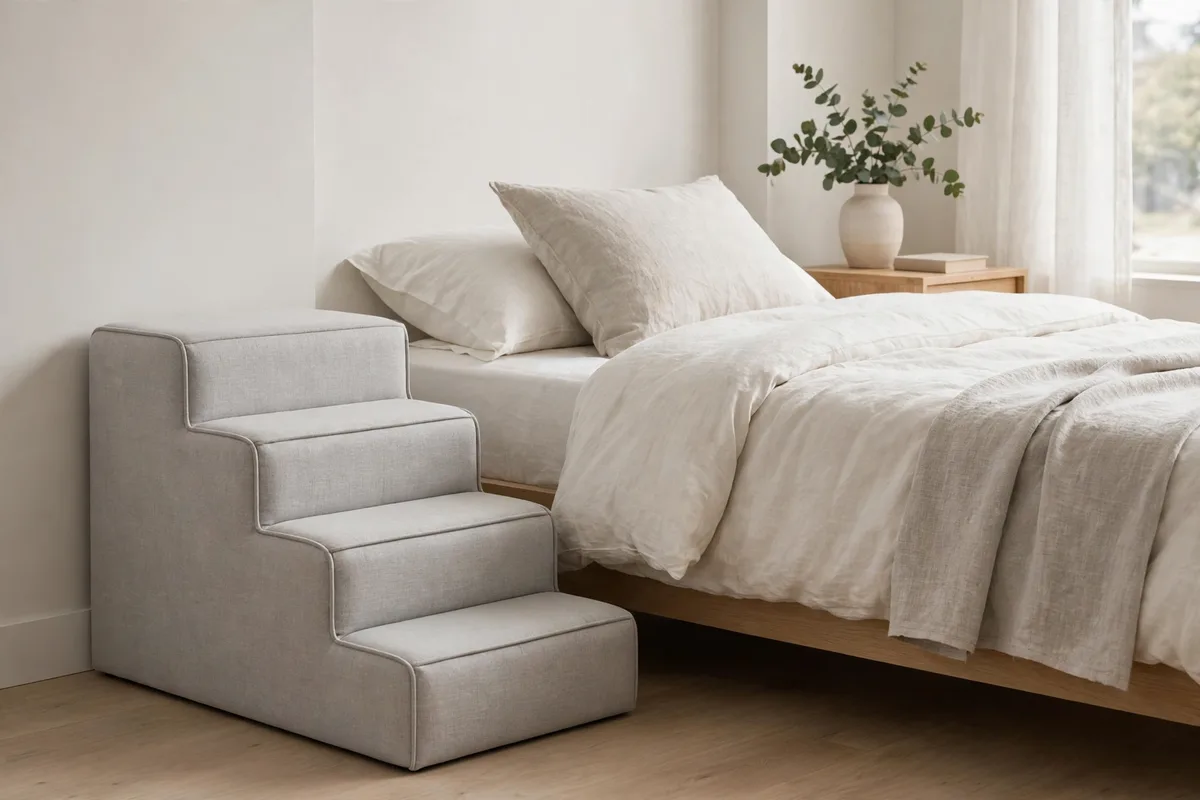
Zinus — the mattress-in-a-box company — makes pet stairs the way it makes beds: dense foam, clean upholstery, and a design that assumes the object will be seen. The Easy Pet Stairs come in two, three and four-step formats with a removable, washable cover in furniture fabrics, and step geometry in the friendly class (low rises, deep treads) that small and medium dogs climb confidently. The foam is firmer than the Pet Gear’s, which larger small-dogs and their owners often prefer — less sink, more certainty underfoot.
The brand’s logistics are the modern kind: the stairs ship compressed, expand on opening, and are stocked through the same online channels as the mattresses, with Canadian availability to match. The cover’s fit and finish lead the foam class, and the whole object reads as a small upholstered ottoman’s cousin — in style-led homes, that is the difference between a tool that stays out (and gets used) and one that gets hidden (and does not).
Pricing sits above the basic foam tier and below the furniture brands. For the small-dog household that rejected the pet-store aesthetic, Zinus is the stair that survives the living room’s standards while doing the joints the same kindness as any pick here.
Ownership’s detail is the cover: it washes back to new more convincingly than rivals’, and since a pet stair lives at paw height in a bedroom, that freshness cycle is the product’s long-term appearance, maintained in the laundry rather than the landfill.
The compressed shipping has one rule: let the stairs expand for a full day before judging the fit, because foam that spent weeks vacuum-packed needs hours to reach its true step height — and a dog introduced to a half-expanded stair learns the wrong geometry.
Yay · Pros
- Furniture fabrics; the best-looking foam stairs
- Firm foam — certain footing for small dogs
- Removable washable cover; several sizes
Hmm · Cons
- Steps suit small-to-medium dogs
- Foam firmness is a preference, not a spec
- Pricier than basic foam stairs
Best for: Style-led homes wanting stairs that look like furniture Skip if: Your dog is senior or arthritic — the CozyUp ramp is the kinder geometry
Incline maths: why ramp angle matters more than ramp length claims
A ramp’s gentleness is its angle, and the angle is arithmetic: a ramp reaching a 24-inch bed over a 48-inch run climbs at about 27 degrees — manageable for most dogs — while the same bed reached over 36 inches climbs at roughly 34 degrees, which senior and arthritic dogs often refuse. The working rule from veterinary rehabilitation practice is to keep inclines under about 20 to 25 degrees for compromised dogs, which means the ramp’s footprint, not its folded size, is the specification that decides whether your dog uses it or walks around it.
Stairs trade that footprint for a different demand: each step asks the dog to lift and load its joints through the step’s height, so step height is the stair equivalent of ramp angle. For small and senior dogs, steps above about 6 inches recreate the jumping problem in instalments; the low, deep steps in this guide (4 to 6 inches high, 10 or more deep) are what ‘pet stairs’ should mean, as opposed to the human-scale staircase miniatures that fill the category’s bottom shelf.
Surface grip is the confidence variable: a dog that slips once on a ramp may refuse it permanently, because dogs learn surfaces in single trials. Carpet and ribbed rubber earn trust; smooth wood and vinyl spend it. The picks above all surface their climbs in high-traction material, and the training protocol matters as much as the texture — treats on the ramp, sessions of two minutes, the ramp flat on the floor before it is ever raised — because a ramp a dog trusts at floor level earns trust at bed height.
Placement decides the rest: a ramp needs a landing zone — the dog must be able to approach straight, mount without turning on the slope, and arrive on the bed with room to settle. Ramps parked at angles in traffic lanes get refused by exactly the dogs they were bought for. Measure the room before the ramp: the correct product is the one whose working footprint your bedroom actually has, which is why this guide states folded and working dimensions with equal weight.
And the honest boundary of the whole category: stairs and ramps manage access, not pain. A dog that hesitates at a gentle, trusted ramp, or that cries on steps it once used, is giving information for a veterinarian, not for a steeper purchase — joint disease progresses, and the ramp’s job is to make the good years easier, not to argue with the diagnosis. Buy the gentlest geometry your room allows, and let it serve for years.
Pet stairs & ramp questions, answered
Are ramps or stairs better for a senior dog?
For senior, arthritic, recovering or long-backed dogs (dachshunds, corgis), a ramp is kinder: it spreads the climb evenly and avoids repeated joint loading on each step. Stairs suit younger, smaller, agile dogs whose problem is simply height, and they take far less floor space. If your dog already hesitates or shows stiffness, choose the ramp and keep its incline under roughly 25 degrees.
How do I work out a ramp’s incline?
Divide the ramp’s rise (your bed’s height) by its length: a 24-inch rise over a 48-inch ramp is about a 27-degree incline; over 60 inches it drops to roughly 22 degrees. For compromised dogs, aim for 20 to 25 degrees or gentler — which usually means the longest ramp your room fits, placed straight-on to the bed with a clear approach.
How much weight can pet stairs hold?
Check the maker’s weight rating and stay well inside it — the picks in this guide range from small-dog ratings around 50 lb to heavy-duty ramps rated past 150 lb (maker’s figures). Wide dogs also need width: a ramp or stair tread under about 14 inches wide feels precarious to a broad dog, whatever its weight. When between sizes, the bigger, sturdier option earns its footprint in the dog’s confidence.
How do I teach my dog to use a ramp?
Slowly and at floor level first: lay the ramp flat (or set stairs against a low surface), reward the dog for walking across it with treats for a few short sessions, then raise it in stages over days. Never carry the dog onto it or force the first climb — a single scare can refuse the tool permanently. Most dogs adopt a well-placed ramp within a week of patient, treat-led practice.
Are pet stairs safe for dachshunds and long-backed breeds?
Yes, with the right design: wide, low steps (about 4 to 6 inches high) or a gentle ramp, plus your veterinarian’s guidance. For dachshunds and other IVDD-prone breeds, eliminating jumping is the standard preventive advice, and a ramp at the bed and sofa is the usual prescription. Choose carpeted, high-grip surfaces — a slip is the event you are designing against.
How do I clean pet stairs and ramps?
Foam stairs vacuum or spot-clean (most have removable, washable covers — check the model), carpeted ramps vacuum and benefit from a lint roller’s pass, and folding car ramps hose down. The covers are the consumable: a spare cover, where offered, keeps the tool in service while one washes. Grip surfaces clogged with hair lose traction, so a weekly once-over is a safety habit, not housekeeping.
The short version
Choose the PetSafe CozyUp ramp for senior, arthritic and long-backed dogs — its gentle incline is the kindest geometry here. The Pet Gear and Zinus foam stairs serve small, agile dogs in half the footprint, the Snoozer’s scallops convert refusers, and the Happy Ride folding ramp owns the vehicle. Measure your bed, compute the incline, train with treats at floor level — and let any new hesitation be a conversation with your vet, not a steeper purchase.
Last updated: November 18, 2026. We refresh this guide each season and whenever a pick is replaced by a better one.