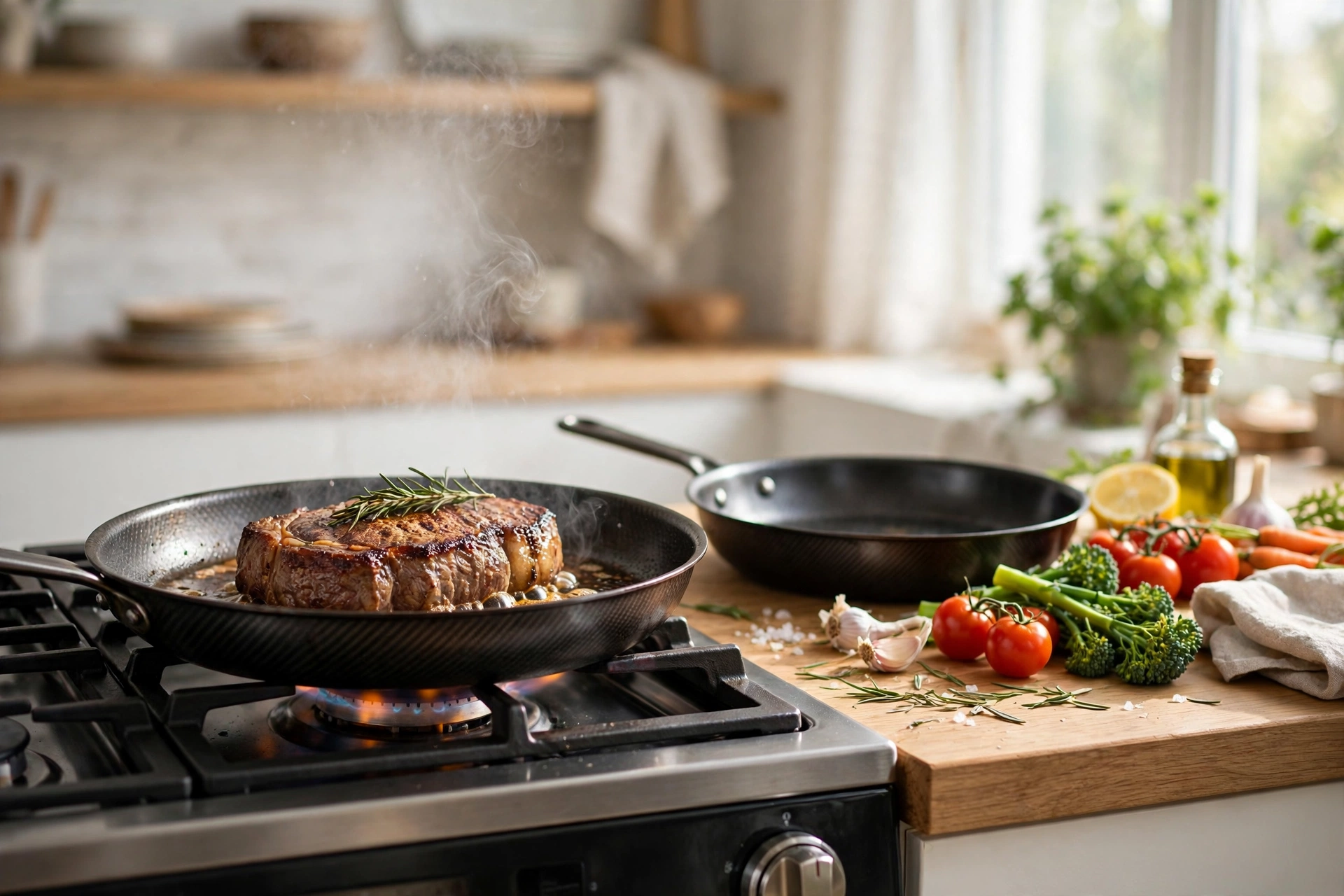
Carbon steel is the pan professional kitchens actually cook in, and the one home cooks keep migrating to: it sears like cast iron at roughly half the weight, survives metal utensils and screaming-hot burners, and has no coating to scratch, flake or wear out. That last point is pulling in a second wave of buyers — people leaving coated nonstick behind over PFAS concerns who still want eggs to release without a fight. The catch is that carbon steel asks something of you first: a layer of seasoning, built by cooking, that becomes the pan's natural nonstick surface.
The honest headline: the real choice in this category is not brand, it is seasoning. Half this lineup arrives raw and asks you to build the surface yourself — the French way, and still the best long-term result. The other half arrives pre-seasoned or surface-treated so the sticky first month is shorter. Everything below is split by that decision, then by gauge: thick steel sears harder and resists warping, thin steel is lighter and cheaper. One shared lineup serves both countries — the same French and American pans anchor Amazon.ca and Amazon.com, so there is no market split to invent.
How we chose these carbon steel pans
We built this list from the published testing that actually puts thermocouples and eggs on these pans: The Kitchn's eight-pan hands-on test, America's Test Kitchen's favourites as tracked by CupIndy, the independent thermal testing reported by Fieldpacket (citing Prudent Reviews), and owner evidence across both Amazon stores — the de Buyer Mineral B alone carries 15,796 ratings, per PrepDeck. CookSmartPicks does not run its own pan lab; what we do is reconcile the published evidence and surface the friction points the roundups bury.
Three things separated the picks. Gauge — thick steel (around 3 mm) holds heat through a steak and resists warping; thin pans heat fast but can buckle on aggressive induction. Seasoning state — raw, pre-seasoned or nitrided decides how the first month of cooking goes. Handle and oven behaviour — welded versus riveted, and whether the handle's finish limits oven time, matters more in daily use than any spec-sheet number.
The lineup at a glance
| Pan | Best for | Why it made the cut |
|---|---|---|
| de Buyer Mineral B Carbon Steel Fry Pan 10.25" | Best overall | The 3mm French reference point — heavy-gauge steel that sears hard and seasons for a lifetime |
| Matfer Bourgeat Black Carbon Steel Fry Pan 11⅞" | Best for high heat | The most even heat in independent thermal testing, with a rivetless welded handle |
| Made In Seasoned Carbon Steel Frying Pan 10" | Best pre-seasoned | The Kitchn's best overall of eight pans tested, seasoned before it reaches your stove |
| Lodge Pre-Seasoned Carbon Steel Skillet | Best first pan | Arrives seasoned, made in the USA, and priced for a first step into carbon steel |
| OXO Obsidian Carbon Steel Fry Pan 10" | Best budget pre-seasoned | The Kitchn's budget pick — pre-seasoned steel without the French-pan price |
| Misen Carbon Nonstick Pan | Best for beginners | Nitrided and rust-resistant — the closest carbon steel gets to nonstick behaviour |
1. de Buyer Mineral B Carbon Steel Fry Pan 10.25" — Best overall
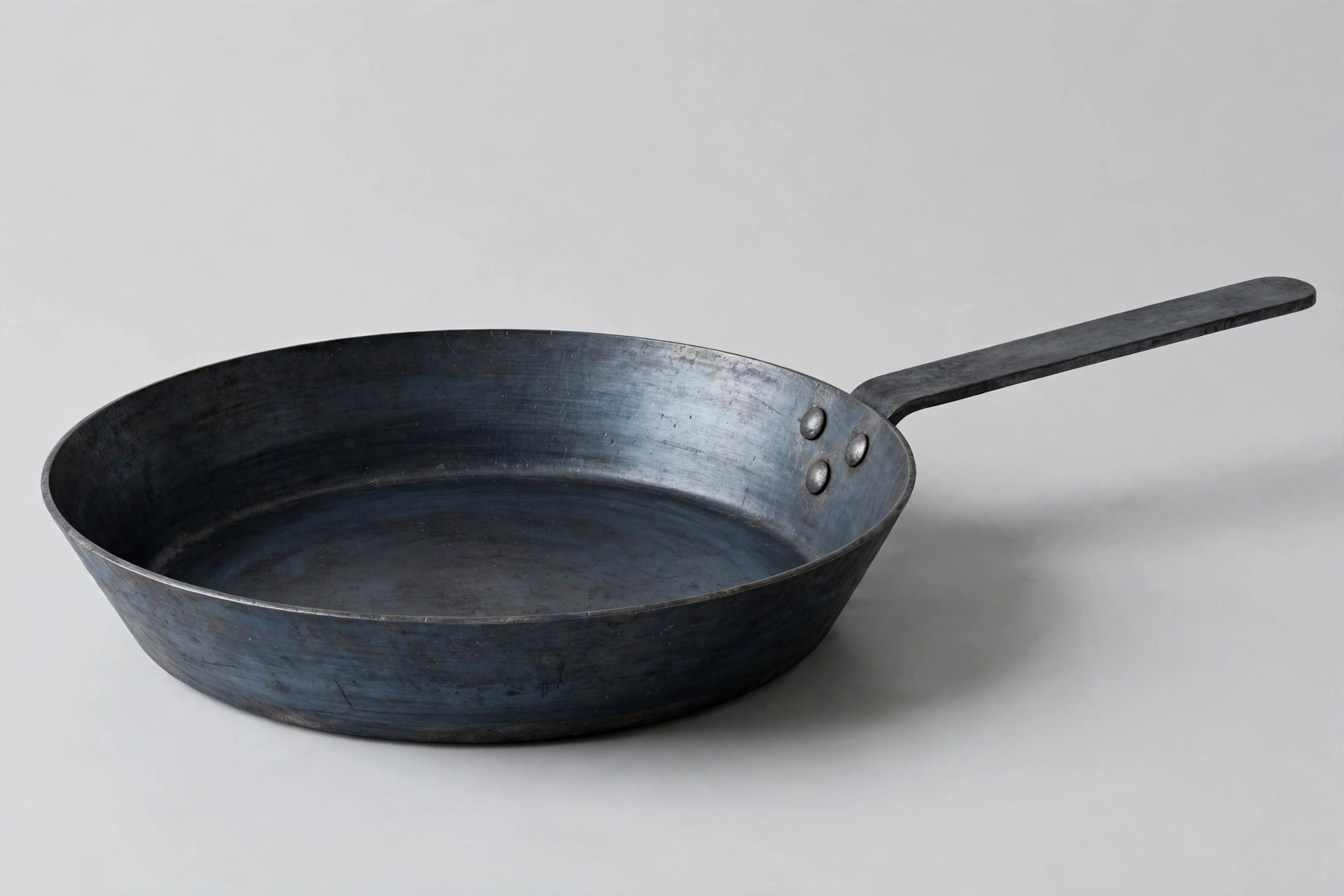
The Mineral B is the reference point every other carbon steel pan gets measured against: 3 mm of French steel, a long flat handle, and a protective beeswax finish that you wash off and replace with your own seasoning. That thickness is the story — it banks heat like a cast iron skillet, so a steak keeps searing instead of steaming, yet the pan still moves and tilts like a skillet should. The owner base backs the reputation: 15,796 ratings, per PrepDeck, is the largest evidence pool in the category.
The trade-offs are the traditional ones. Seasoning is entirely on you, and the first weeks involve some sticking while the layer builds. The standard Mineral B's coated handle limits its oven time, so long oven finishes are not its party trick — the brief stovetop sear is. And like all raw carbon steel it will rust if it sits wet. None of that is a defect; it is the deal you sign for the best-performing traditional pan here.
Yay · Pros
- 3mm heavy-gauge steel — cast-iron searing power at skillet weight
- The category benchmark, with the largest owner base (15,796 ratings per PrepDeck)
- Seasons into a genuinely slick surface that improves for years
Hmm · Cons
- Arrives unseasoned under beeswax — the first month takes patience
- Coated handle limits oven time on the standard model
- Rusts if left wet; needs dry-and-oil care
Best for: cooks who want the classic French pan and are happy to season it themselves. Skip if: you want eggs to slide on day one — start with a pre-seasoned pick below.
2. Matfer Bourgeat Black Carbon Steel Fry Pan 11⅞" — Best for high heat
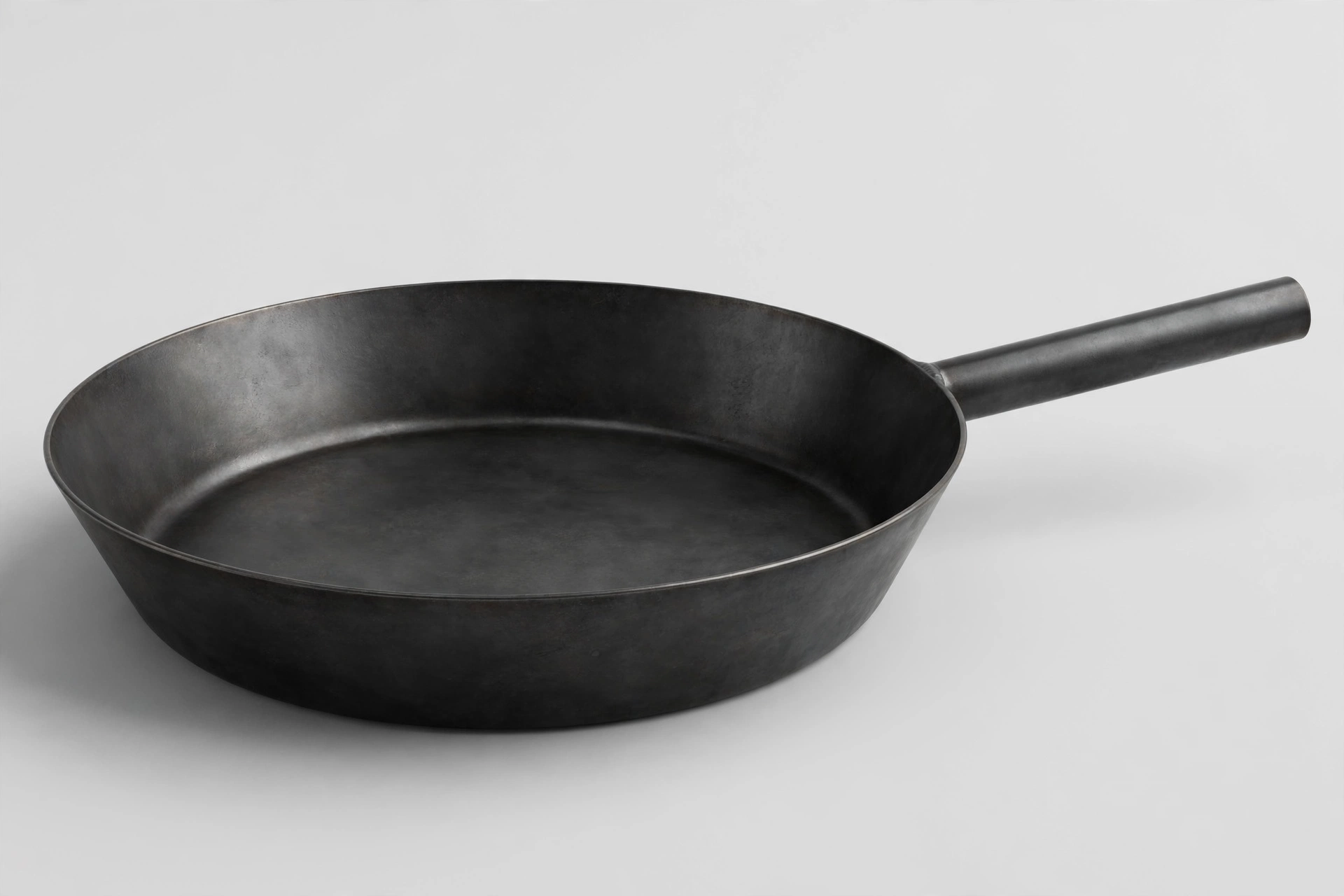
The Matfer is the working chef's answer to the de Buyer, and the test numbers favour it on the point that matters most: in independent thermal testing it posted the most even heat of the pans measured — a 9°F centre-to-edge variance, against 36–75°F for rivals (Fieldpacket, citing Prudent Reviews). America's Test Kitchen has also named Matfer a favourite, per CupIndy. The handle is welded rather than riveted, so there are no rivet heads inside the pan trapping food and complicating cleanup.
This is a big, serious, unseasoned pan. The 11⅞" size gives real searing acreage but asks for two hands when it is loaded, and the seasoning job starts from bare steel — a proper afternoon-one project, not a gradual one. The look is utilitarian because it is a tool built for restaurant lines. If your cooking runs hot and often, that is precisely the appeal.
Yay · Pros
- Most even heat in independent thermal testing — 9°F centre-to-edge (per Prudent Reviews)
- Rivetless welded handle — nothing inside the pan to trap food
- An America's Test Kitchen favourite, built for high-heat work
Hmm · Cons
- Arrives fully unseasoned — the whole seasoning job is yours
- Large and heavy when loaded; tossing food is a two-hand job
- Utilitarian finish — a tool, not a showpiece
Best for: high-heat searing, steak nights and cooks who think like pros. Skip if: it is your first carbon steel pan and the seasoning project sounds like a chore.
3. Made In Seasoned Carbon Steel Frying Pan 10" — Best pre-seasoned
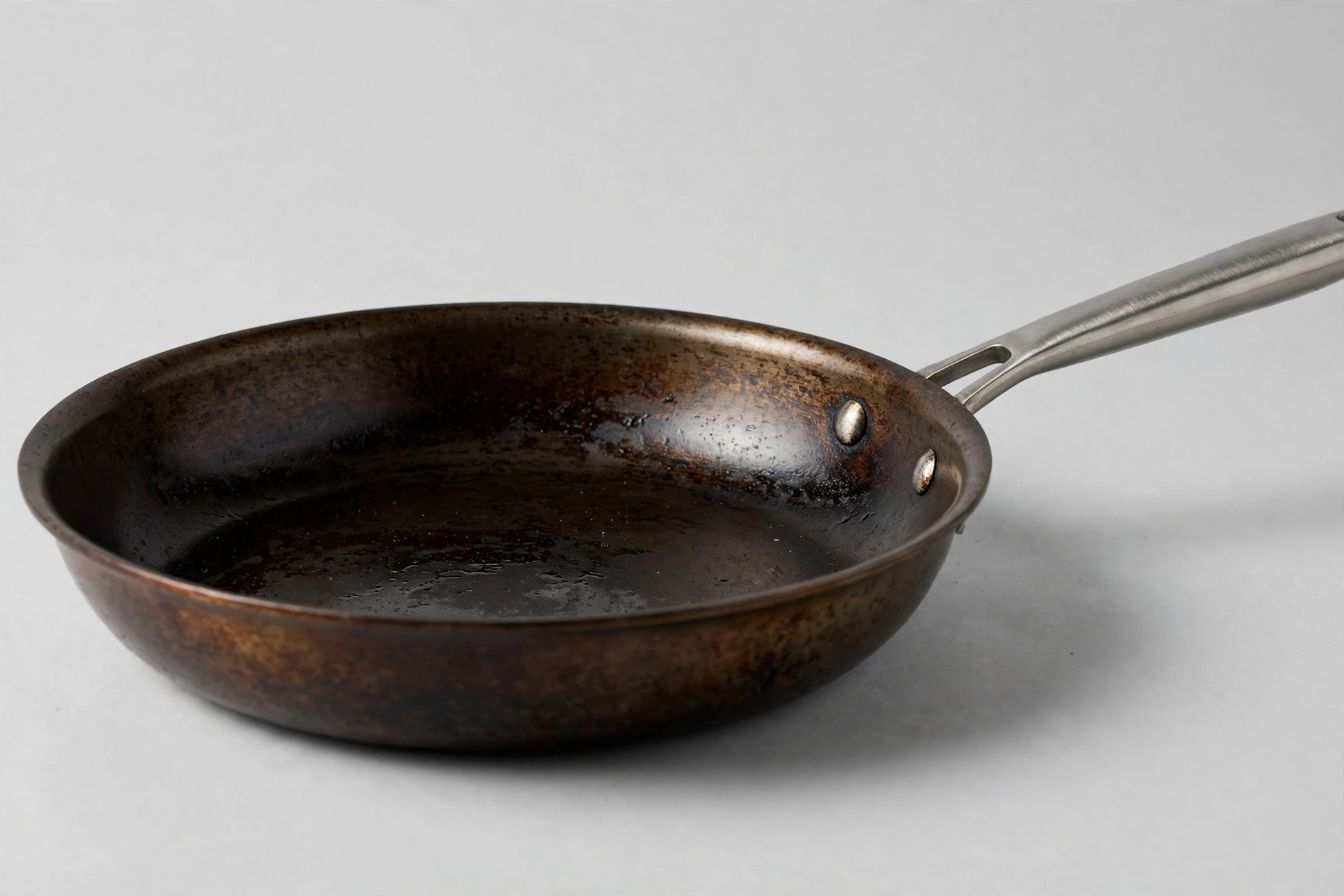
Made In's pitch is simple: the seasoning work starts before the pan reaches you. It worked on the testers — in The Kitchn's eight-pan hands-on test, the Made In Seasoned took best overall. The pre-seasoning means the pan behaves sooner: less of the sticky apprenticeship the raw French pans demand, while the surface still deepens and slicks with every month of cooking, exactly as traditional carbon steel should.
You pay for that head start — this sits at the premium end of the lineup, above the other pre-seasoned picks. And pre-seasoned is not nonstick: delicate fish and eggs still test the young surface early on, and the same carbon steel care rules apply in full (no soaking, dry it on the stove, a whisper of oil). Think of it as buying back the first month, not skipping the relationship.
Yay · Pros
- The Kitchn's best overall of eight pans tested
- Pre-seasoned — behaves weeks sooner than raw steel
- Seasoning still builds and improves with use, like a traditional pan
Hmm · Cons
- Premium price among the pre-seasoned picks
- Young seasoning still sticks on delicate foods early on
- Full carbon steel care rules still apply
Best for: buyers who want French-style performance without the raw-steel first month. Skip if: the budget leads — the Lodge and OXO below cover the same brief for less.
4. Lodge Pre-Seasoned Carbon Steel Skillet — Best first pan
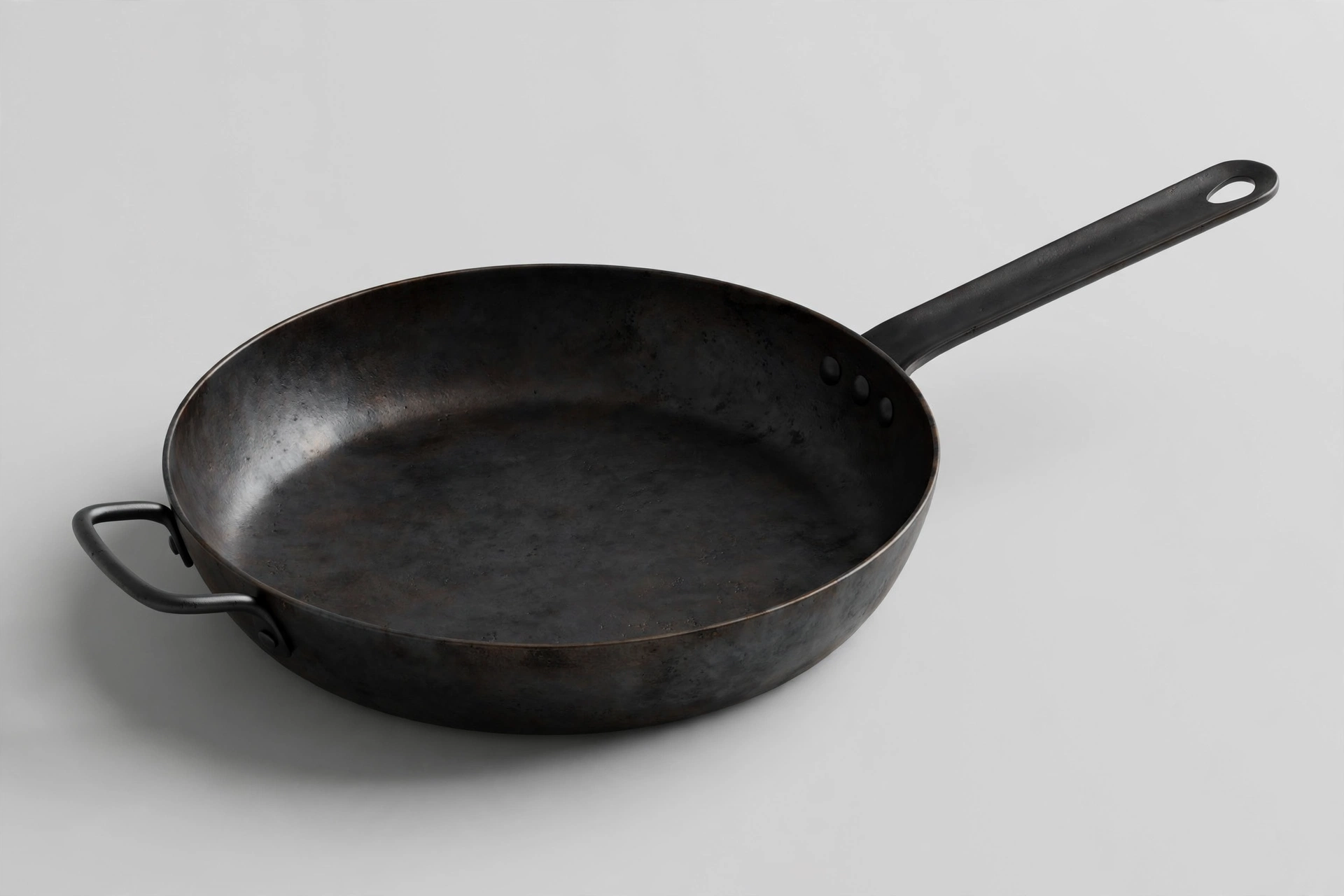
Lodge does for carbon steel what it did for cast iron: takes a material with a snob problem and sells it seasoned, American-made and priced for normal people. The skillet arrives pre-seasoned, so a first-time owner can cook dinner the night it lands instead of spending the evening polymerising oil. For anyone testing whether carbon steel fits their cooking before committing to a French pan, this is the lowest-risk way in.
The honest limits: a factory seasoning layer is a starting coat, not the deep, glassy surface a year of cooking builds — expect the pan to improve noticeably over its first months, and expect some early sticking on delicate food. It also follows every carbon steel rule: left soaking in the sink, it will rust like any of them. What it never does is embarrass itself on heat or durability.
Yay · Pros
- Arrives pre-seasoned — cook dinner the first night
- Made in the USA at the friendliest price of the traditional pans
- Lodge's no-nonsense build — made to be used hard
Hmm · Cons
- Factory seasoning is a starting layer, not the finished surface
- Delicate foods stick until the seasoning deepens
- Rusts if soaked, like all carbon steel
Best for: first-time carbon steel buyers and cast iron owners adding a lighter pan. Skip if: you already know you love the material — go straight to the de Buyer or Matfer.
5. OXO Obsidian Carbon Steel Fry Pan 10" — Best budget pre-seasoned
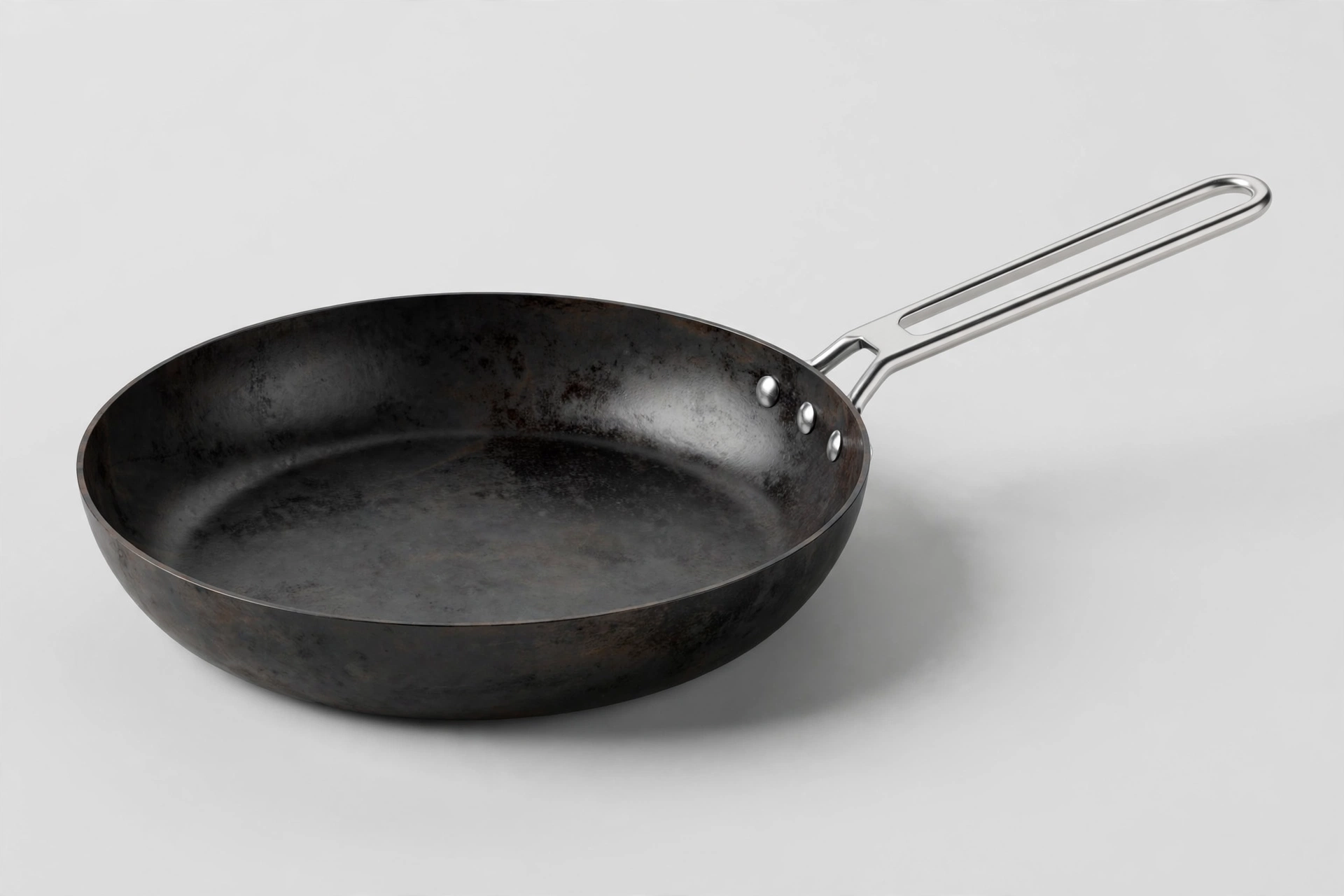
The Obsidian is the nonstick refugee's pan: pre-seasoned, sensibly priced, and validated by the toughest comparison here — The Kitchn's eight-pan test named it the budget pick. OXO's design instincts show in the details that make a pan easy to live with day to day, and the pre-seasoned surface means the switch from a coated pan does not begin with a week of stuck eggs.
The compromises are gauge and ceiling. This is lighter steel than the French pans, and thinner pans are the ones that can warp on aggressive induction — warm it progressively on a high-output hob rather than blasting it on boost. Its seasoning also starts thinner than a home-built layer. Within those limits, it is the easiest inexpensive entry into the material.
Yay · Pros
- The Kitchn's budget pick in its eight-pan test
- Pre-seasoned — the gentlest switch from coated nonstick
- OXO ergonomics at a budget price
Hmm · Cons
- Lighter gauge than the French pans — less heat banked for searing
- Thin pans can warp on aggressive induction boost settings
- Pre-seasoning starts thin and needs building
Best for: nonstick switchers on a budget who want a seasoned head start. Skip if: you cook on a high-output induction hob at full boost daily — the thick French pans shrug that off better.
6. Misen Carbon Nonstick Pan — Best for beginners
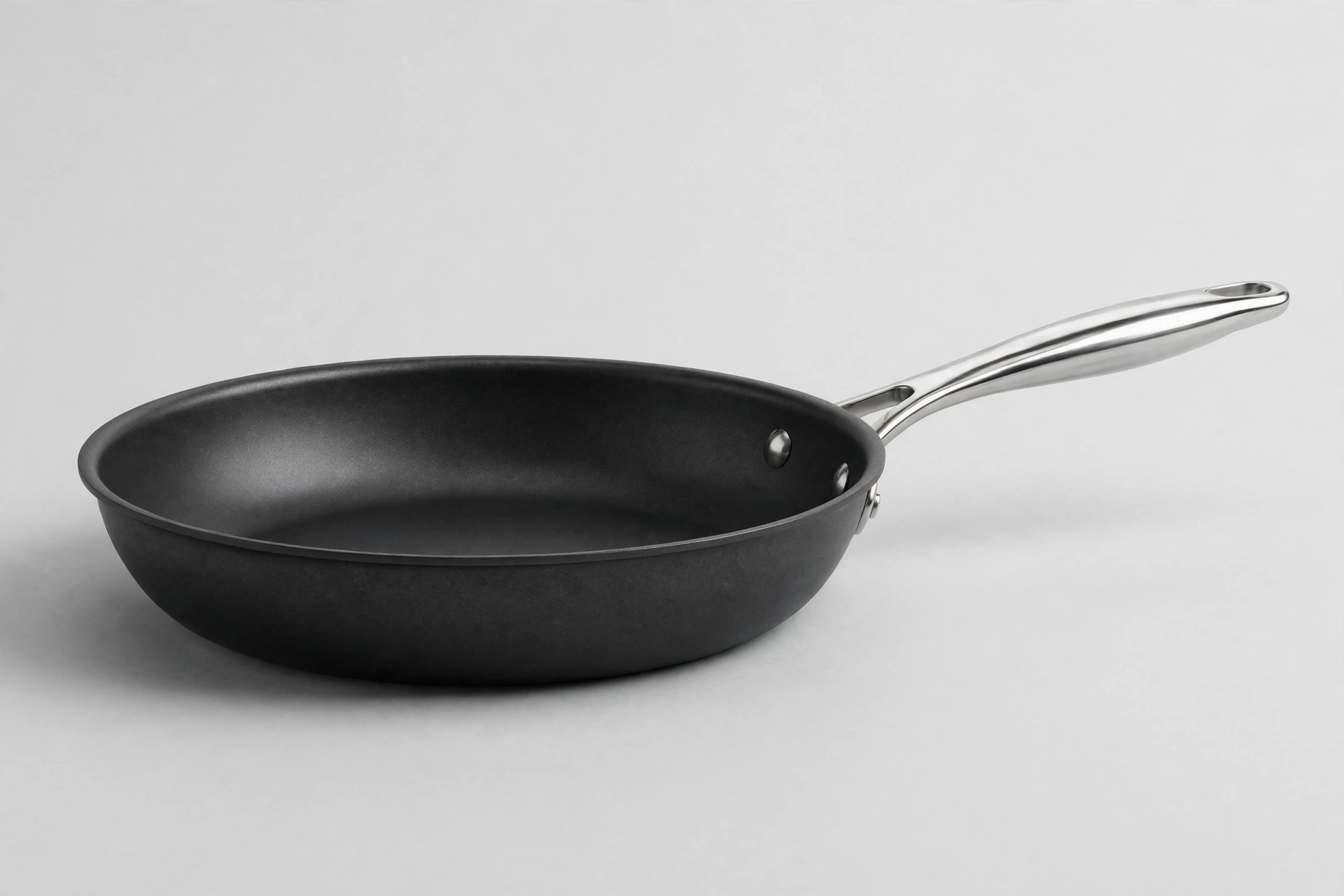
Misen attacks carbon steel's two beginner fears — rust and the seasoning learning curve — with chemistry instead of oil: the steel is nitrided, a treatment that hardens the surface and makes it rust-resistant, so the pan behaves closer to nonstick from early on without any coating to wear out. For someone who wants the searing and durability story but has watched a roommate destroy a traditional pan in a sink of water, this is the forgiving version.
The trade is tradition. A nitrided surface is a finished treatment rather than a living seasoning layer you build and repair yourself, and Misen is a young direct-to-consumer brand next to French makers with a century of pans behind them. Purists will pick the de Buyer every time. Beginners who would otherwise give up in month one will cook more, and better, with this.
Yay · Pros
- Nitrided surface — rust-resistant, no seasoning apprenticeship
- Closest to nonstick behaviour with no coating to wear out
- Sears and handles high heat like traditional carbon steel
Hmm · Cons
- Surface is a fixed treatment, not a seasoning layer you build
- Young brand — no century-long track record behind it
- Purists prefer raw steel they season themselves
Best for: beginners, shared kitchens and anyone whose pans sometimes sit wet. Skip if: half the pleasure for you is building the seasoning yourself.
Gauge, seasoning and stovetops: what actually matters
Gauge decides how the pan behaves. Around 3 mm — the de Buyer and Matfer — steel banks enough heat that cold food does not crash the temperature, and the base stays flat for years. Thinner pans are lighter and cheaper but give the heat back faster, and they are the ones that can warp on aggressive induction. Buy thick if you sear; buy thin only if weight or budget truly leads.
Seasoning state decides your first month, not your pan's destiny. Raw pans (de Buyer, Matfer) build the deepest surface over time; pre-seasoned pans (Made In, Lodge, OXO) start partway there; nitrided steel (Misen) sidesteps the process. Every route ends at a pan that releases food well — the difference is how much patience the first weeks ask for.
Carbon steel vs cast iron vs nonstick is a weight-and-lifespan question. Against cast iron, carbon steel gives up some heat retention for half the weight and a smoother surface — our cast iron skillet guide covers the other side of that trade. Against coated pans, carbon steel trades day-one slickness for a surface that cannot wear out — if you are replacing a scratched nonstick pan, our nonstick frying pan guide shows what the modern coated options still do better, mainly delicate eggs with zero learning curve.
Carbon steel pan questions, answered
Is carbon steel better than cast iron? Different, not better. Carbon steel is lighter, smoother and more responsive; cast iron banks more heat and its seasoning is harder to damage. Many cooks end up owning both — the skillet for cornbread and the carbon steel pan for everything fast.
How long before a carbon steel pan stops sticking? A pre-seasoned pan behaves reasonably within the first week of regular cooking; a raw pan takes a few weeks of fatty, hot cooking to build a dependable layer. It never becomes a coated pan — it becomes something better for searing that releases most foods most of the time.
Can carbon steel pans warp on induction? Yes, if they are thin and shocked — a cold pan slammed onto a boost setting is the classic cause. Warm any carbon steel pan progressively on induction, and prefer the thick French gauges if induction is your main hob.
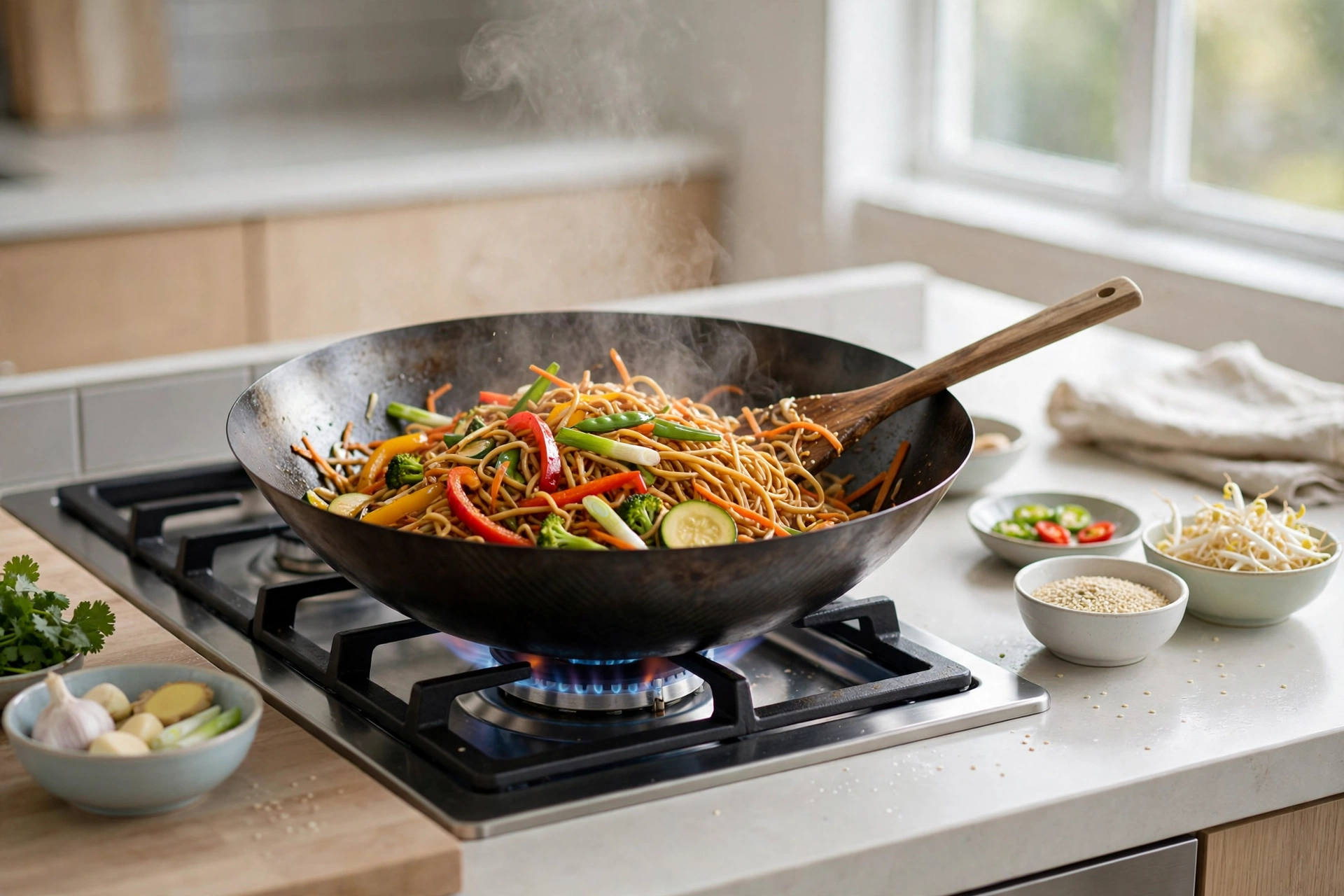
Is a wok just a big carbon steel pan? Essentially, yes — carbon steel is the traditional wok material for the same reasons: it is light enough to toss, tough enough for extreme heat and seasons into a slick surface. If stir-frying is your main event, our best woks guide covers the round-bottom and flat-bottom choices in this same material.
The short version
Buy the de Buyer Mineral B if you want the benchmark pan and will season it yourself. Buy the Matfer Bourgeat if your cooking runs hot and you want the most even heat tested. Buy the Made In Seasoned for the shortest path to a working surface, the Lodge for a first pan on a budget, the OXO Obsidian if you are leaving nonstick behind cheaply, and the Misen if rust and seasoning are the fears holding you back. Everything else is gauge: thick steel, warm it gently, and the pan will outcook us all.
Last updated: November 16, 2026. We refresh this guide each season and whenever a pick is replaced by a better one.