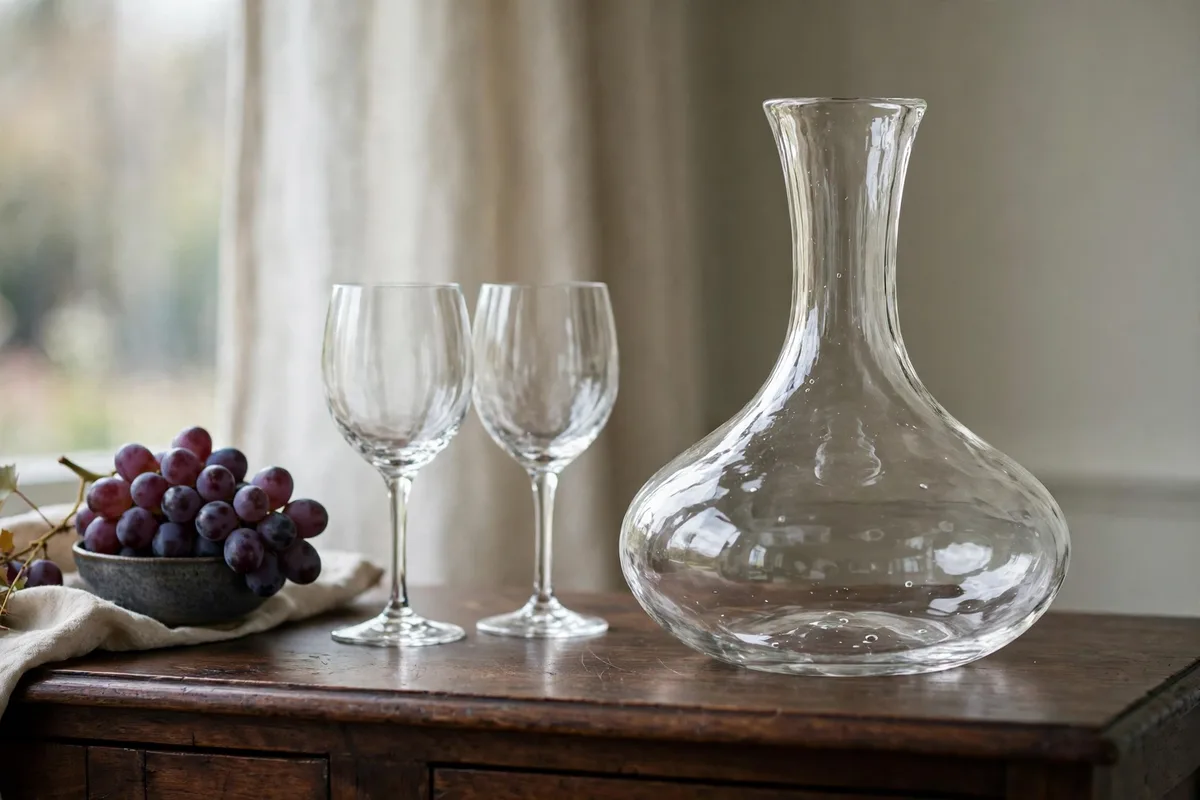
Most wine needs no decanter at all: decanting genuinely helps young, tannic reds — 30 to 90 minutes of air — and old bottles that need a gentle pour off their sediment; everything beyond that is ceremony. A decanter is the simplest tool in wine and the most myth-wrapped: a glass vessel whose entire job is to give a bottle air, time, or a clean pour off its sediment. The right one costs little and lasts decades; the wrong one — too small, too fragile, impossible to clean — becomes the most elegant dust-catcher in the house. This guide ranks the working decanters first, then grades the pour-over aerator gadgets on what blind testing actually shows, so you can match the tool to the bottle you really drink.
The picks divide by mission: a wide-base classic for young reds, a flagship swan for the ceremony, a carafe-style brewer for everyday versatility, and two spout aerators for the weeknight bottle that needs help in ninety seconds. Every vessel was checked for true 750 ml capacity with headroom, mouth width (cleanability), and Canadian availability. Pour the results into the best wine glasses in Canada and the USA from our glasses guide, and the evening is properly equipped; for the bottles themselves to arrive at their best, the best wine fridges in Canada and the USA guide covers storage.
Disclosure: CookSmartPicks is reader-supported. When you buy through links on this page, we may earn an Amazon commission at no extra cost to you. Prices and availability change often — check the current price on Amazon before you decide.
How we chose these wine decanters
We split the category by the two real jobs — aerating young wine and separating old wine from sediment — and judged vessels on the physics of each: surface area of the wine pool for aeration, pouring control and neck clarity for sediment, and the dimension nobody photographs, the mouth width that decides whether the vessel can ever be cleaned. Capacities were checked against a real 750 ml bottle plus headroom; a decanter that brims at one bottle fails its only test.
The aerator gadgets were graded as gadgets: on the strength of the published blind-test record and owner patterns rather than their chamber-and-swirl marketing, and on whether they survive dishwashers and drawers. Canadian availability was confirmed for every pick, and two sculptural decanters with necks too narrow to clean were cut — beauty that cannot be washed becomes a shelf ornament within a year.
The lineup at a glance
| Product | Best for | Why it stands out |
|---|---|---|
| Le Chateau Red Wine Decanter (Hand-Blown, 750 ml) | Best overall decanter | The textbook shape: a broad pool for air, a clean pour, a mouth you can actually wash |
| Riedel Cabernet Decanter (Swan-Neck) | Best for ceremony | The swan: aeration by architecture and the most beautiful pour in wine |
| Menu Wine Breather Carafe (by Audo) | Best everyday carafe system | The practical aerator: wine sheets down the glass, breathes fast, pours back |
| Vintorio Wine Aerator Pourer | Best aerator pourer | The spout that works: chamber aeration, clean pour, weeknight speed |
| Rabbit Wine Aerator Pourer | Best gift-grade aerator | The polished spout: same honest physics, gift-grade execution |
1. Le Chateau Red Wine Decanter (Hand-Blown, 750 ml) — Best overall decanter
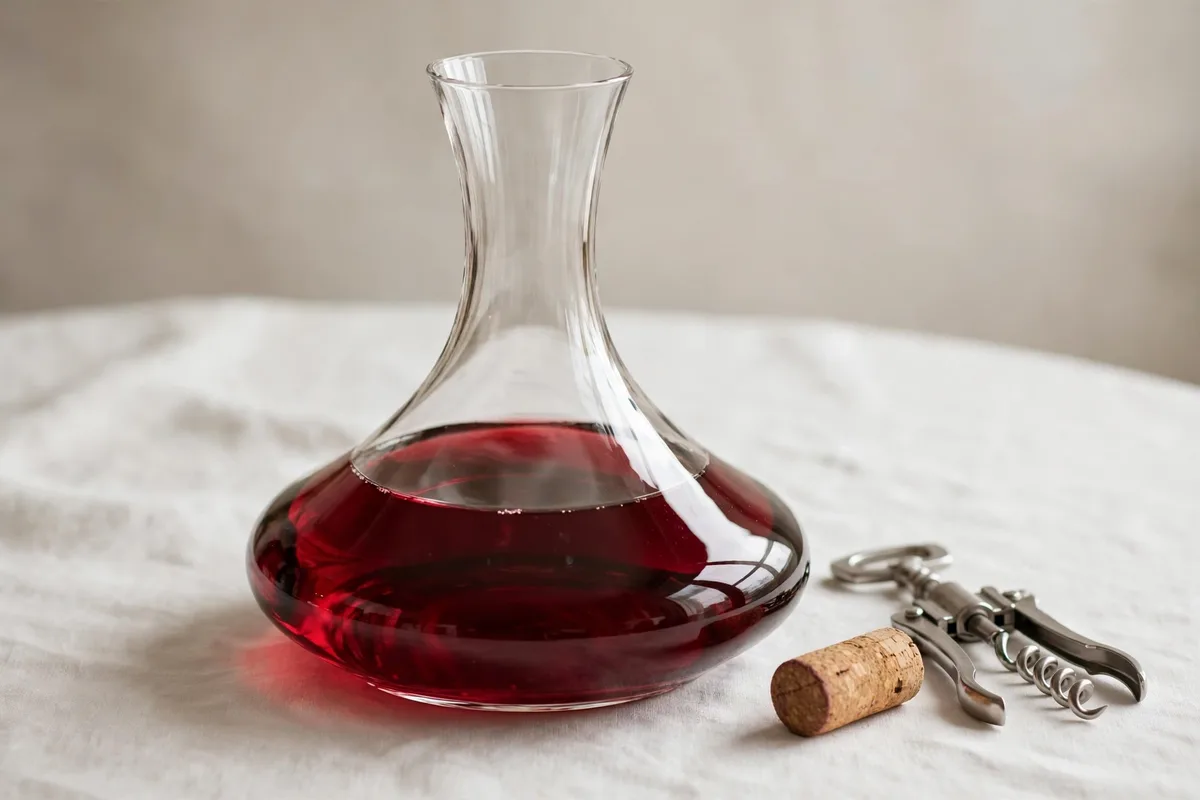
The Le Chateau is the decanter shape perfected by a century of use: a wide, flat base that spreads a 750 ml bottle into a broad, shallow pool — maximum surface area against air, which is the entire point — rising to a slanted neck that pours without glugging and a rolled rim that does not dribble down the glass. It is hand-blown, lead-free, and sized honestly: a full bottle sits at the widest point exactly as the textbooks prescribe, not brimming at the neck like undersized rivals.
In service it does the young-red job superbly — forty minutes in the Le Chateau is the cheapest upgrade a tannic cabernet can receive — and the wide mouth makes it the easiest serious decanter here to wash and dry, the virtue that decides whether a decanter is used weekly or annually. The base is stable, the glass has reassuring heft without fragility theatre, and it looks like the platonic idea of a decanter on the table, because it is.
For Canadian buyers it is stocked through mainstream retail at a price that sits where the category should: the cost of two decent bottles for a vessel that improves hundreds. If this guide’s other picks are specializations — ceremony, speed, versatility — the Le Chateau is the default, and most households should simply start and finish here.
The Le Chateau’s slanted neck has a practical consequence owners praise: the last glass pours as cleanly as the first, without the glug-and-splash that empties lesser decanters onto the cloth. In a vessel whose whole purpose is presentation, the final pour is not a detail.
Yay · Pros
- Wide base = maximum aeration surface
- Full-bottle capacity at the widest point
- Wide mouth: the easiest real decanter to clean
Hmm · Cons
- Hand-wash; glass wants respect
- Takes cupboard space like all wide bases
- No stopper included
Best for: Most households — the classic wide-base answer Skip if: You mostly decant for sediment in old wines — any clean carafe pours gently; save the money
2. Riedel Cabernet Decanter (Swan-Neck) — Best for ceremony
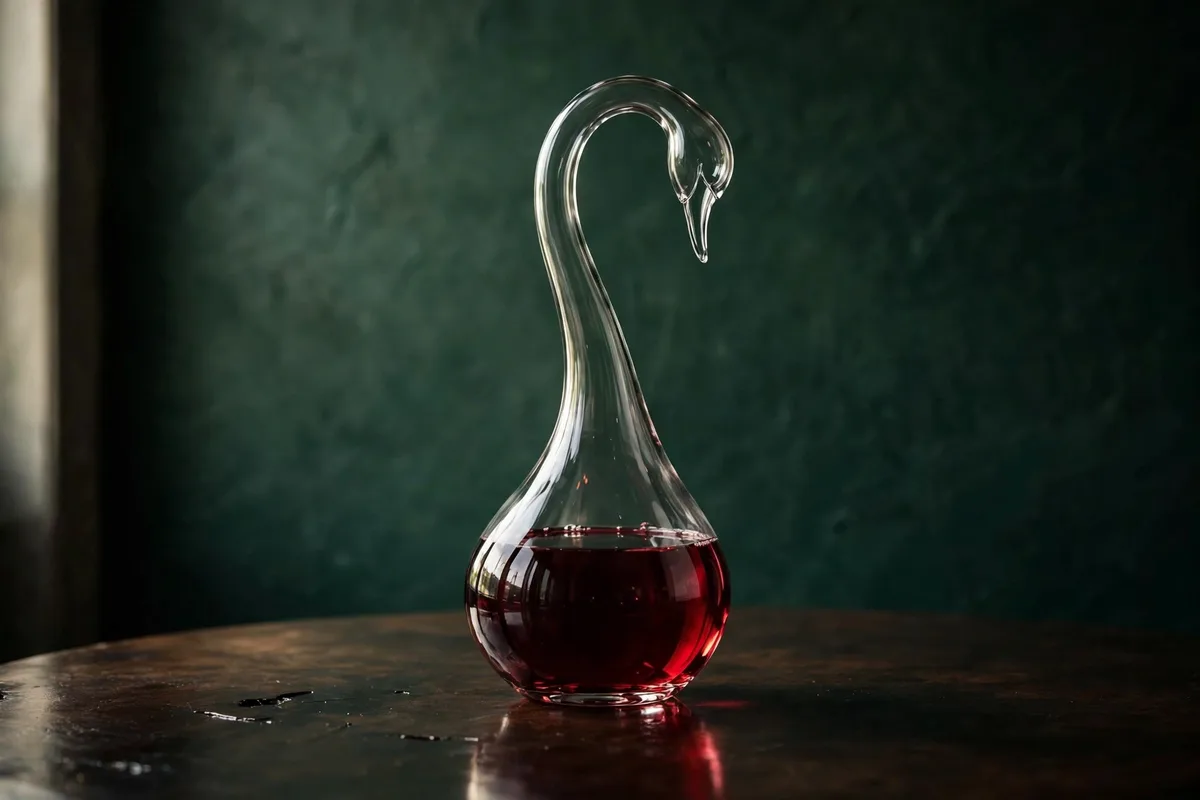
Riedel’s swan-neck decanters — the Cabernet and its taller siblings — are the category’s sculpture: a vertical, lyre-shaped vessel that pours in a dramatic arc and aerates through the pour itself, the wine sheeting down the glass as it enters and leaves. The functional claim is real, if modest: the double-passage through air does accelerate softening, and the tall form separates sediment with unusual control because the pour is slow, visible and stoppable at the shoulder.
What you are truly buying is the ritual — the bottle presented, the pour arcing, the table watching — executed by the Austrian house that industrialized wine-glass science. The glass is mouth-blown, fine, and unforgiving of careless washing: this is the decanter that needs the cleaning beads, the drying stand, and a cupboard where nothing reaches past it. Riedel’s Canadian distribution makes it findable; replacement after a breakage is a decision, not an accident.
Choose it when the evenings it serves are occasions and the bottles justify theatre. For the Tuesday cabernet it is overkill wearing a beautiful shape; for the anniversary Barolo, it is part of the gift. The guide’s honesty rule applies in both directions — this is a luxury, and it is a genuine one.
The Riedel’s height — it stands notably taller than the classic shapes — is worth measuring against your cupboard before the romance commits you: more than one owner’s swan lives on the counter permanently because no shelf in the house accepts it. Beautiful, and a floor plan.
Yay · Pros
- Aerates through the pour; superb sediment control
- Mouth-blown Austrian glass; genuine table theatre
- Slow, stoppable pour protects old wines
Hmm · Cons
- Flagship price
- The neck demands the beads-and-stand cleaning ritual
- Fragile in the way of all fine glass theatre
Best for: The ceremony-lover decanting special bottles for guests Skip if: Your decanting is weeknight and practical — the Le Chateau serves it better
3. Menu Wine Breather Carafe (by Audo) — Best everyday carafe system
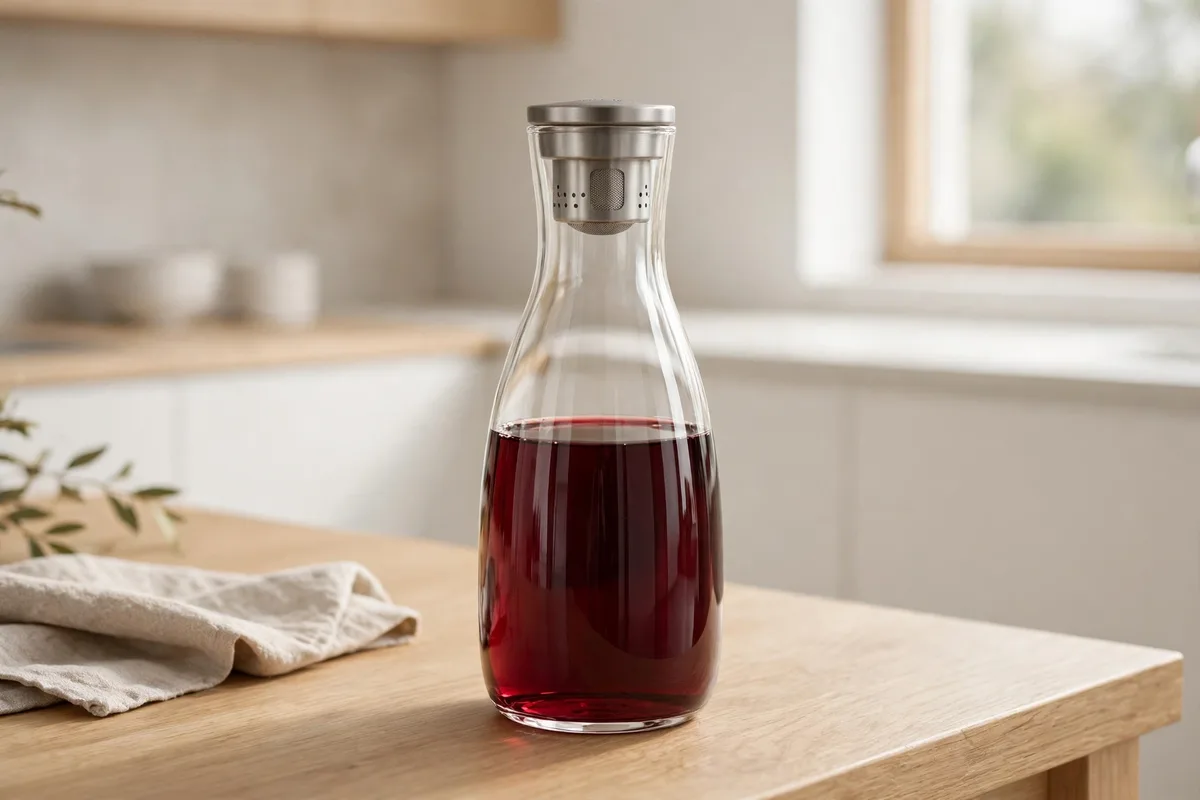
The Wine Breather solves the decanter’s two practical failures — fragility and the second pour — with Scandinavian directness: a sturdy carafe and a fitted aerator top. You invert the bottle into the top, the wine cascades down the carafe’s inner walls in a thin, air-exposed sheet (the maker claims up to ten times the oxygen contact of pouring alone; independent tasters find the softening effect real), and when the wine has breathed, the same top pours it back into the bottle for service — or you serve from the carafe, which is what most owners do.
As an object it is the anti-fragile pick: thick glass, a mouth you can get a brush into, a footprint like a water carafe, and a second career as exactly that on nights without wine. The aeration is gentler than a wide-base pool’s long soak, which makes it the right tool for the mid-week bottle that wants twenty minutes, not ninety. The seal and top wash easily, and the whole system stores in a normal cupboard shelf — the first decanter in this guide that can say so.
Canadian availability runs through design retailers at a Scandinavian price; the justification is versatility per cupboard inch. For the household that decants weekly and entertains casually, the Breather is the decanter that will still be in weekly service in five years, because nothing about it asks for ceremony or courage.
The Wine Breather’s carafe earns a permanent counter role in many homes as the water vessel, which solves the decanter’s storage problem by abolishing it: the object never goes away because it never stops being used. Dual-purpose is the Scandinavian design’s deepest feature.
Yay · Pros
- Bottle-to-carafe aeration in one motion
- Sturdy, brush-cleanable, doubles as a water carafe
- Stores like a carafe, not a sculpture
Hmm · Cons
- Aeration gentler than a wide-base pool
- Two-part system has a seal to keep clean
- Scandinavian pricing for a carafe
Best for: Everyday households that want decanting without a fragile extra object Skip if: You decant old, sediment-heavy wines — use a gentle classic pour instead
4. Vintorio Wine Aerator Pourer — Best aerator pourer
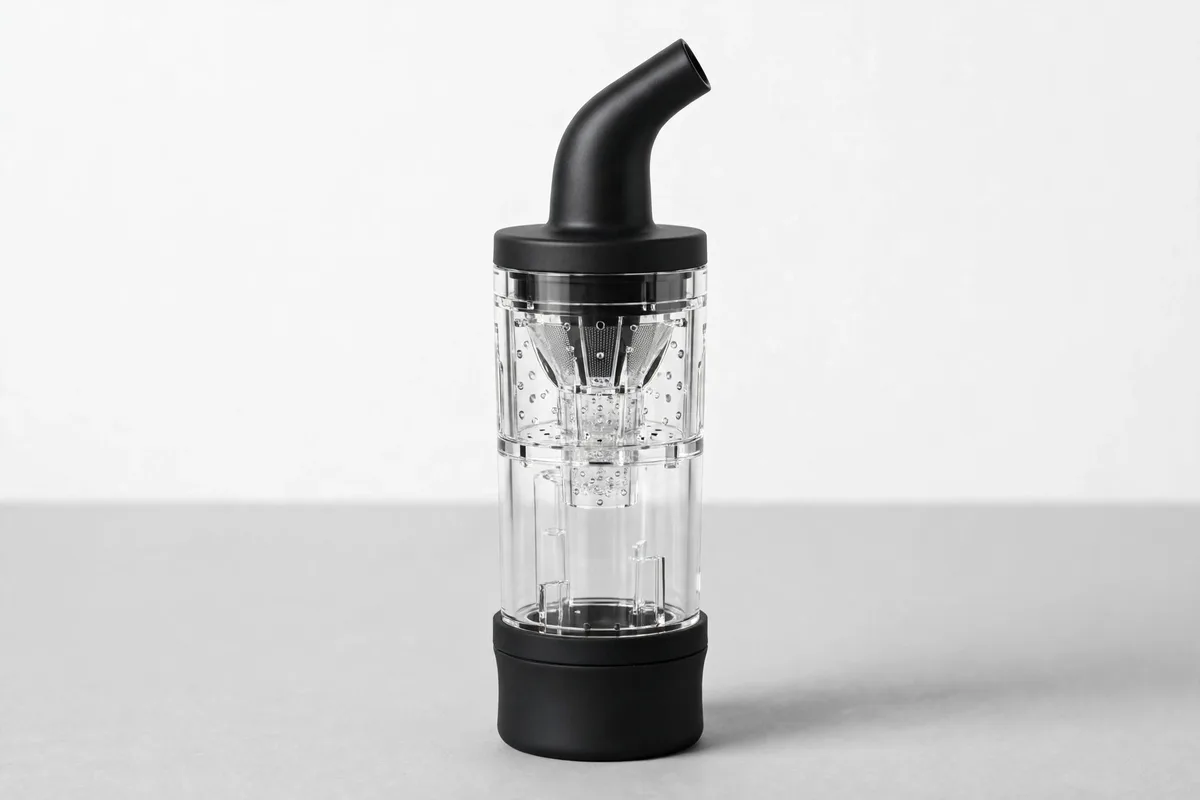
The Vintorio is the aerator spout done properly: a chamber with air intake ports sized on the Bernoulli principle, an acrylic body that survives drawers and dishwashers, and a spout that pours without the dribble that plasters cheaper aerators’ reputations. In the glass, its effect matches the category’s honest ceiling — a young, tight wine pours noticeably softer and more aromatic than an unaerated pour, roughly comparable to a short decant, which is precisely the weeknight job description.
It earns its place over rivals on build and behaviour: the sediment screen catches the grit from unfiltered bottles, the rubber stopper seals into standard 750 ml necks without wobbling, and the whole thing rinses in seconds. Owner reports run to years of service, unusual for a gadget at this price, and the maker’s claims stay within shouting distance of the physics — a rarity in aerator marketing that this guide rewards on principle.
Buy it as what it is: a time machine that trades a little ceremony for a lot of convenience, ideal for the 6:04 bottle opened for a 6:15 dinner. It will not replace the decanter for the good stuff, and it does not pretend otherwise in this guide’s telling — for the wine most households drink most nights, it is the highest-value object on this page.
The Vintorio’s screen deserves a sentence of its own: for the growing shelf of unfiltered and natural wines, catching the grit at the pour is a service no amount of careful decanting matches at weeknight speed — the gadget quietly serving the trendiest bottles in the house.
Yay · Pros
- Real, blind-test-consistent softening in seconds
- Sediment screen; drip-free spout; dishwasher safe
- Survives drawers for years — gadget-grade rarity
Hmm · Cons
- No substitute for a long decant of a serious wine
- Small parts want a rinse right after use
- Effect is modest — physics, not magic
Best for: Weeknight bottles that need help in ninety seconds Skip if: Your bottles are fine and old — aeration is for the young and tight
5. Rabbit Wine Aerator Pourer — Best gift-grade aerator
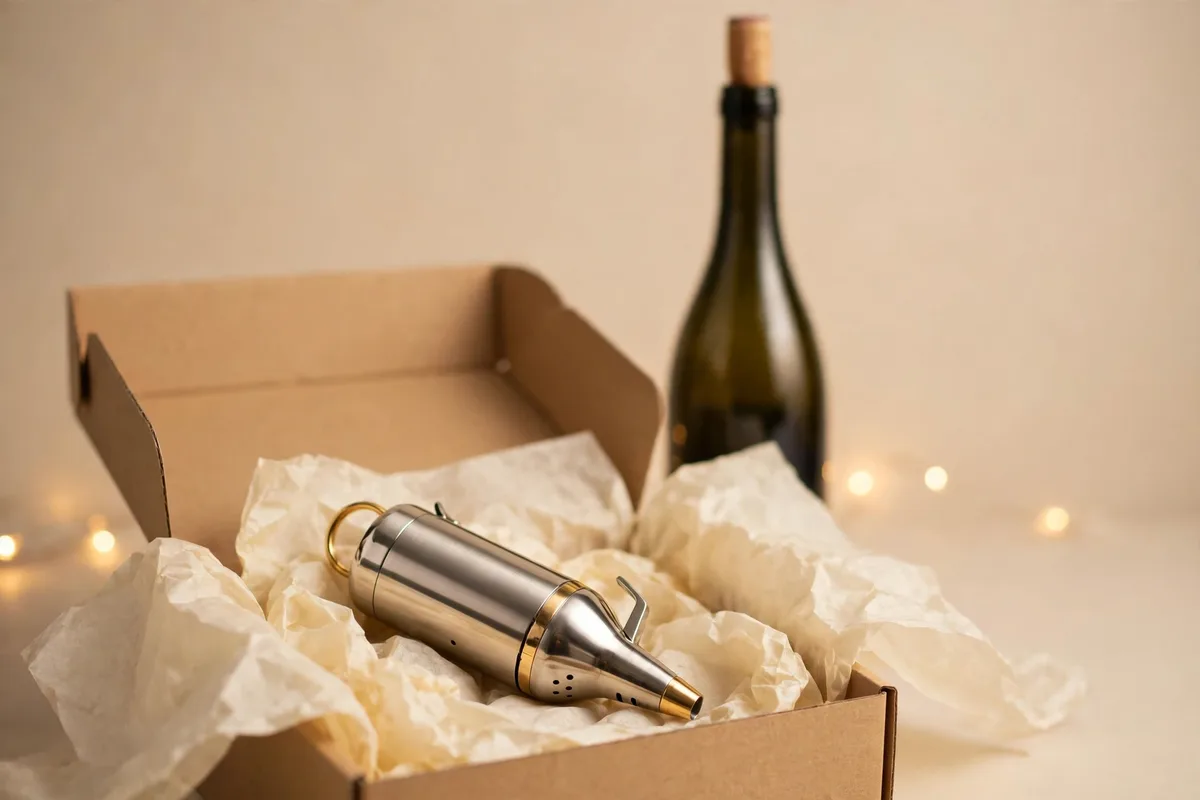
Rabbit’s aerator pourer is the gadget shelf’s polished option: a weightier, gift-boxed spout with a removable aeration chamber, a fine-mesh sediment filter and the brand’s general air of having been designed for a wedding registry. In the glass it performs as the category performs — a young wine softened at the pour, aroma opened a notch — with pouring manners a step above the budget spouts: no dribble, a clean cut-off, a stopper that seats with a satisfying certainty.
The honest comparison sits one pick up the page: the physics available to any pour-over aerator is the same physics, and the Rabbit’s premium buys finish, filtration and presentation rather than a different order of effect. That is a legitimate purchase — gifts are allowed to be about the object — provided the buyer knows which currency they are spending. As a wedding or host gift paired with a bottle, it lands exactly as intended.
Canadian retail carries the Rabbit line broadly, and the build quality supports the brand’s registry-grade positioning: this is the aerator that survives being given, used at the giver’s next dinner, and asked about. Choose it for the giving, keep the Vintorio logic for yourself, and the guide has done its job either way.
Rabbit’s aerator has an afterlife in the gift economy: it is the rare wine gadget that recipients actually keep in the drawer by the corkscrews rather than regifting onward, which — in a category famous for drawer clutter — may be the most practical endorsement available.
Yay · Pros
- Registry-grade finish; excellent pour manners
- Fine sediment filter; removable chamber
- Broad Canadian retail availability
Hmm · Cons
- Costs several times the Vintorio for similar physics
- More parts to rinse and keep track of
- Effect on the wine is the category’s usual modest one
Best for: Gift-buyers and gadget fans who want aeration with presentation Skip if: You want maximum effect per dollar — that is the Vintorio, above
Decanting without the theatre: when wine actually needs air
A standard 750 ml bottle is the decanter capacity test: a true decanter holds the full bottle at its widest point with headroom to spare, and most sculptural designs quietly fail it. Decanting does two unrelated jobs that marketing happily confuses. Aeration — exposing young wine to oxygen — softens harsh tannins and blows off the reductive, closed aromas a freshly opened bottle can carry. Sediment separation — pouring an old wine off its deposits — is the opposite temperament: gentle, minimal, and about clarity rather than change. A wide-base decanter serves the first job; a careful hand and any clean vessel serve the second. Knowing which job your bottle needs is worth more than any vessel in this guide.
The young, tannic red is the true client: a $20 cabernet or a young Barolo can gain more from forty minutes in a wide decanter than from another $10 at the liquor store, because time and surface area do chemically what patience in a cellar does slowly. The honest limit is that aeration cannot add what the wine does not have — it reveals and softens; it does not manufacture complexity — and over-aerating a delicate wine (an old pinot can fade in the glass within the hour) destroys what you paid for. Decant the young and sturdy; pour the old and fragile carefully, and taste as you go.
Pour-over aerators compress the timeline by forcing wine through air at the spout. Blind comparisons by wine writers over the years find them effective at the softening job — roughly equivalent to a modest decant — with the caveat that they can also strip a little aroma in the violence. For a weeknight bottle opened at 6:04 for dinner at 6:15, that trade is obviously right. For the special bottle, the decanter’s slowness is part of the ceremony and part of the control: you can taste at intervals and stop the air when the wine arrives.
Cleaning is the category’s unspoken tax: a decanter you cannot clean is a decanter you will stop using. Wide mouths win; narrow swan necks need the bead-and-water ritual (stainless decanter-cleaning beads exist and work) and a drying stand, because water spots on glass read as neglect at the table. Every pick in this guide was weighed on that chore as heavily as on its silhouette — the best decanter is the one still in service next year.
And the white-wine footnote: young, tight whites and rosés often brighten with a brief decant too, served from the decanter set in ice. It looks theatrical and tastes genuinely better — the rare piece of wine theatre this guide endorses without reservation.
One more number belongs in every decanter decision: surface area. A 750 ml bottle spread in a wide-base decanter exposes roughly three times the wine surface of the same bottle standing open, which is why the decanter’s hour and the bottle’s evening are not the same aeration — and why simply pulling the cork early, the oldest advice in wine, does so little on its own.
Decanting questions, answered
How long should I decant a bottle of red wine?
Young, tannic reds gain the most — cabernet, syrah, young Barolo, big blends — typically 30 to 90 minutes in a wide-base decanter. Older, fragile wines should be decanted only to separate sediment, gently and shortly before serving, and tasted as they evolve; some fade fast. Most everyday wines need nothing more than a swirl in the glass.
Do pour-over aerators actually work?
They work for their purpose: forced aeration at the pour softens a young wine about as much as a short decant, in seconds. Wine writers’ blind tests generally find the effect real but modest, and occasionally at the cost of a little aroma. For weeknight bottles they are a fair trade; for a special bottle, a decanter’s slower, tastable progress is the better tool.
How do I clean a decanter with a narrow neck?
Rinse immediately after use with warm water — never soap inside a decanter you can avoid — and use stainless cleaning beads with water for red-wine film in narrow necks. Dry upside down on a decanter stand or a clean towel over a bottle; a drop of vinegar in the rinse prevents water spots. The chore takes two minutes if done the same night and twenty if left to morning.
Do I need to decant for sediment?
Only older wines (roughly a decade or more, and unfiltered reds) throw meaningful sediment. Stand the bottle upright for a day, then pour slowly in one motion, stopping when the sediment approaches the neck — a light behind the neck helps you see it. Young wines can skip the ceremony entirely; their decanting is for air, not clarity.
Can I use a decanter for water or other drinks?
Yes — a decanter doubles as a water or iced-tea carafe handsomely, which is one more argument for the simpler shapes. Just rinse between uses; glass holds no flavour. Several households in our reading use the wide-base pick as the table’s water vessel on weeknights and its wine vessel on Fridays.
Why do decanters break so easily?
Because decanters are thin glass with awkward centres of gravity — the drying rack and the sink edge are where they die. Hand-wash, dry on a stand or towel, and store upright somewhere it will not be reached past. The pour-over aerators, being small and sturdy, are the category’s survivors; choose them if your kitchen eats glassware.
Storage decides the second year of a decanter’s life: upright, mouth protected, somewhere it is never reached past or stacked under. A decanter stored in its original box or on a dedicated shelf survives; one parked beside the everyday glasses in a busy cupboard is living on borrowed time. The wide-base classic’s stability is a storage virtue as much as a table one — it sits low, heavy and unbothered where taller shapes wobble.
The short version
Buy the Le Chateau for real decanting — the wide base and washable mouth make it the decanter households actually use. The Riedel swan is ceremony for special bottles; the Menu Wine Breather is the sturdy everyday system; and the Vintorio spout is the honest weeknight shortcut, with the Rabbit as its gift-grade twin. Decant the young and tannic, pour the old and fragile gently, and clean whatever you buy the same night.
Last updated: November 18, 2026. We refresh this guide each season and whenever a pick is replaced by a better one.