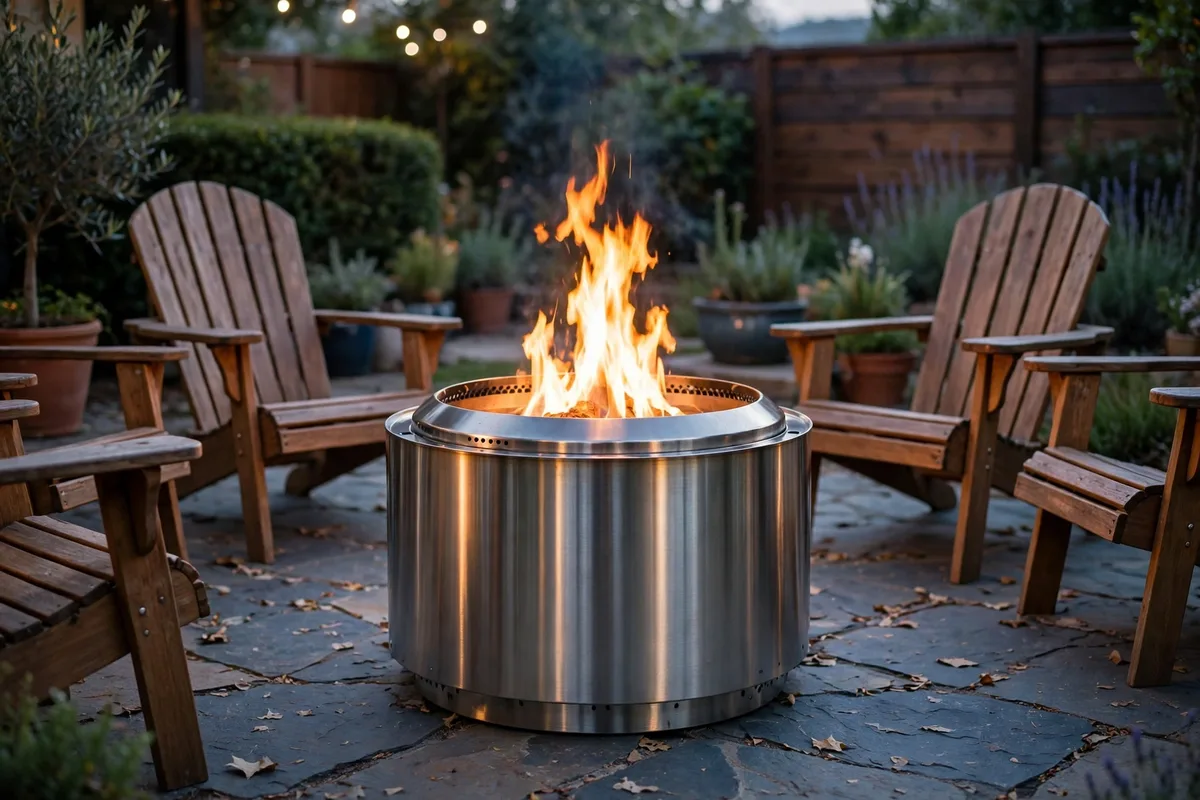
A smokeless fire pit is not smoke-free — it is a double-walled stove that reburns most of its smoke once the fire is hot, and the Solo Stove Bonfire 2.0 leads this guide because its secondary combustion is the category’s reference standard. The honest expectation is a 70–90% reduction in smoke with dry hardwood, not zero, and the first ten minutes of any fire will smoke like any other while the walls heat up.
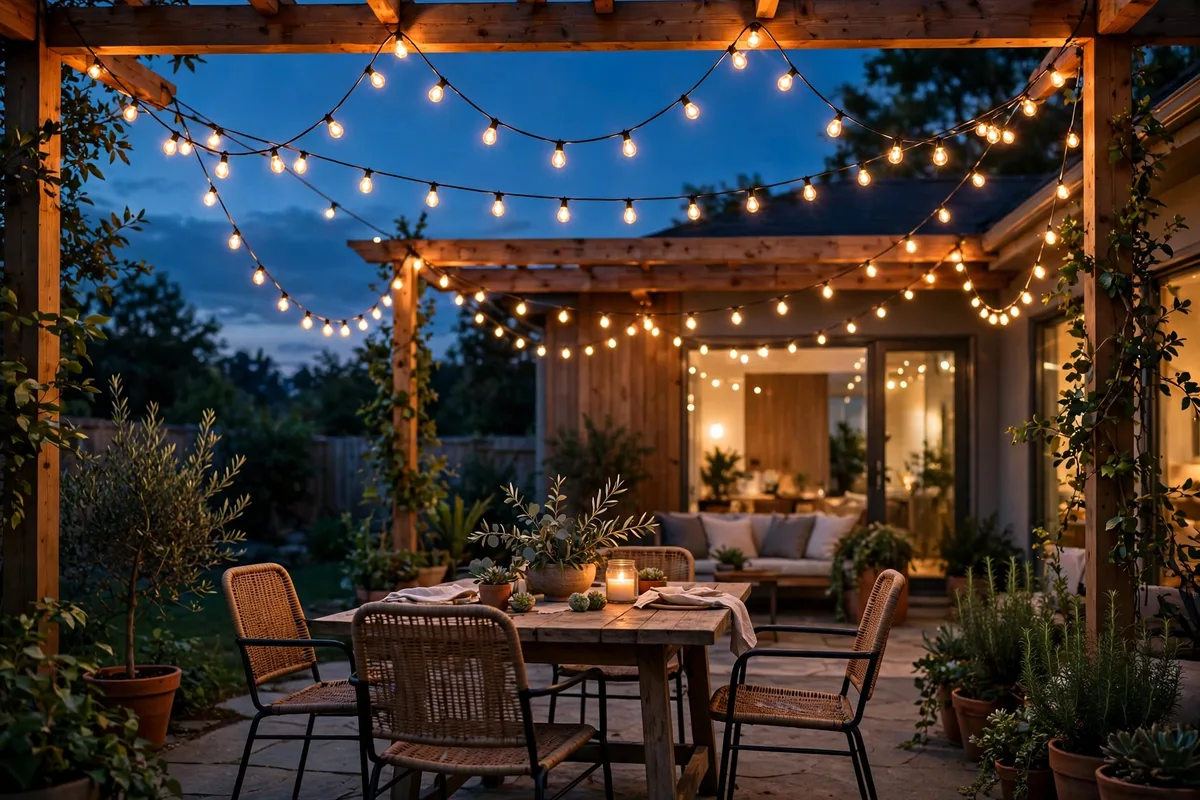
The five pits divide by backyard and ambition: the Bonfire for most people, the Breeo for cooks, the TIKI for design-led patios, the BioLite for gadget lovers, and the compact Ranger for small spaces. Each entry states its chamber size and deck rules in the open. Round out the patio with the best outdoor string lights in Canada and the USA guide for cold nights the fire cannot cover, light it with the best solar garden lights in Canada and the USA picks, and heat the shoulder seasons with the best patio heaters in Canada and the USA guide.
Disclosure: CookSmartPicks is reader-supported. When you buy through links on this page, we may earn an Amazon commission at no extra cost to you. Prices and availability change often — check the current price on Amazon before you decide.
How we chose these smokeless fire pits
The shortlist was built on the physics first: every pick had to use genuine secondary combustion — double-wall construction with heated air jets that reburn smoke — rather than a chimney shape or a marketing adjective. Chamber diameter decided the ranking within the class, because log size governs real-world smoke more than any spec sheet: pits that accept standard 16-inch firewood behave better in Canadian backyards than pretty pits that demand specialty mini-logs.
Deck-safety provisions, cooking options and build material (stainless versus weathering steel) were weighed next, and every pick’s maker guidance on surfaces was read rather than assumed. The result spans the class honestly: two sizes of the category’s reference design, a cooking-first steel pit, a design-led patio model, and a tech outlier with a fan and a grill. All are available through normal Canadian retail.
The lineup at a glance
| Product | Best for | Why it stands out |
|---|---|---|
| Solo Stove Bonfire 2.0 (19.5″ Stainless) | Best overall | The category’s standard: a portable stainless pit whose rim of fire eats its smoke |
| Breeo X Series Smokeless Fire Pit (X24) | Best for cooking | The live-fire kitchen: heavy steel, a sear plate, and a patina that improves outdoors |
| TIKI Brand Patio Smokeless Fire Pit | Best looking | The patio’s fire pit: design-first, pellet-easy, lit on weeknights |
| BioLite FirePit+ (Fan-Assisted, Grill Top) | Best tech | The fire with a volume knob: 51 air jets, a fan, and a see-through body |
| Solo Stove Ranger (15″ Compact) | Best compact | The small fire done right: full smokeless physics in a 15-inch footprint |
1. Solo Stove Bonfire 2.0 (19.5″ Stainless) — Best overall
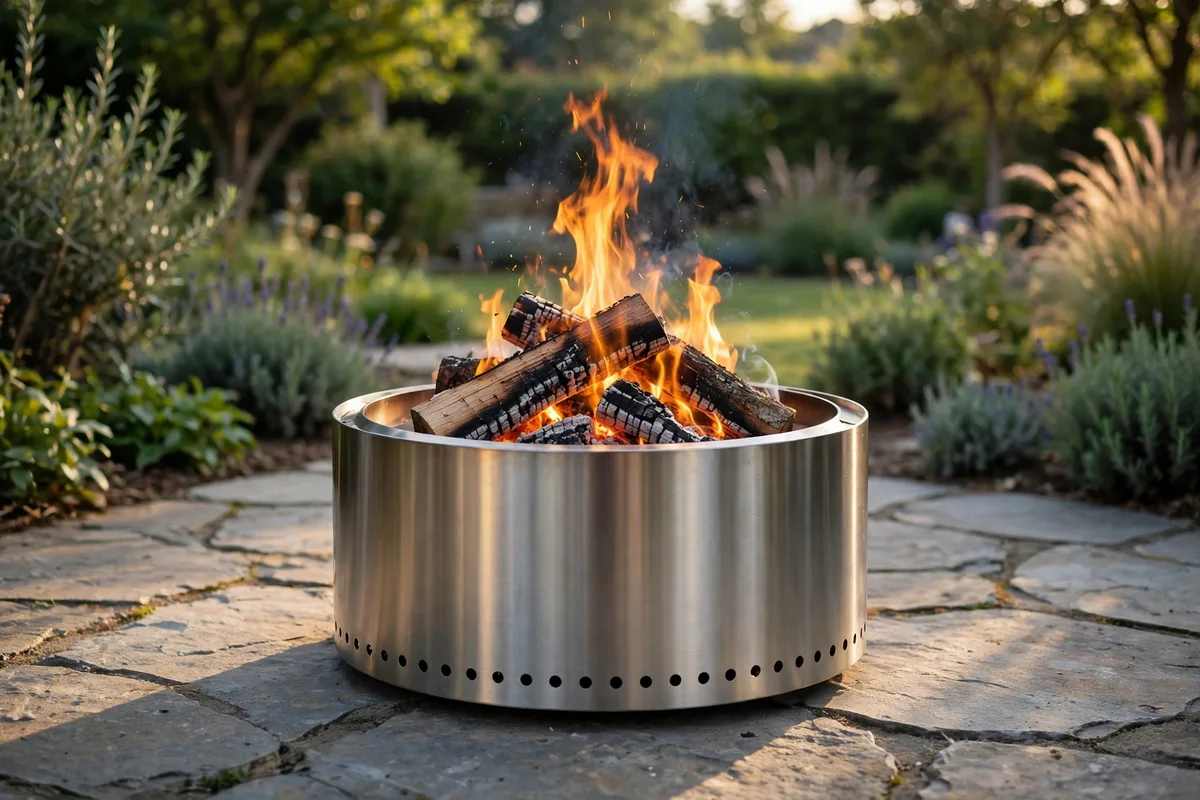
The Bonfire 2.0 is the pit that defined the category: a 19.5-inch stainless double-wall cylinder whose base vents feed heated air to a ring of jets at the rim, igniting the smoke into a secondary flame that owners describe as a crown of fire above the logs. Solo Stove rates the chamber for standard firewood, the ash pan removes for the regular emptying the design requires, and the whole unit’s 20-odd pounds make it genuinely portable — cottage, campsite (where permitted), and backyard in one pit. The 2.0’s removable ash pan and base plate fixed the first generation’s only real chore.
In use, the pattern this guide promises is the pattern owners report: a smoky first ten minutes, then a fire that can be sat beside in a full circle — the social transformation that sells these pits, because the ‘smoke seat’ disappears and the conversation stops rotating. The heat output is serious, the flame’s look is half the pleasure, and the stainless takes on heat tinting that owners either polish or wear as patina.
Canadian availability is direct and through major outdoor retailers, at the category’s mid-premium price, with the stand and cover the two accessories to budget from day one. For the household buying its first smokeless pit, the Bonfire is the default against which the rest of this guide is a set of deliberate deviations.
Ownership’s rhythm is ash discipline: empty the pan every few fires, keep the vents clear, and the smokeless effect stays at full strength — the owners who complain about smoke are, disproportionately, the owners sitting on a month of ash.
A note on the first fire’s theatre: light it thirty minutes before the guests sit down, and the smoky establishment phase happens to an audience of one — by the time the circle forms, the pit is in its clean-burning stride, which is the entire ownership trick of the category compressed into a scheduling decision.
Yay · Pros
- Reference secondary-combustion design
- Removable ash pan (2.0 upgrade)
- Portable; huge accessory ecosystem
Hmm · Cons
- Needs the stand (sold separately) for deck use
- Specialty accessories add up
- Hot exterior — a no-touch zone for kids and dogs
Best for: Most backyards — the reference smokeless pit Skip if: You want to cook seriously over the fire — the Breeo below is built around it
2. Breeo X Series Smokeless Fire Pit (X24) — Best for cooking
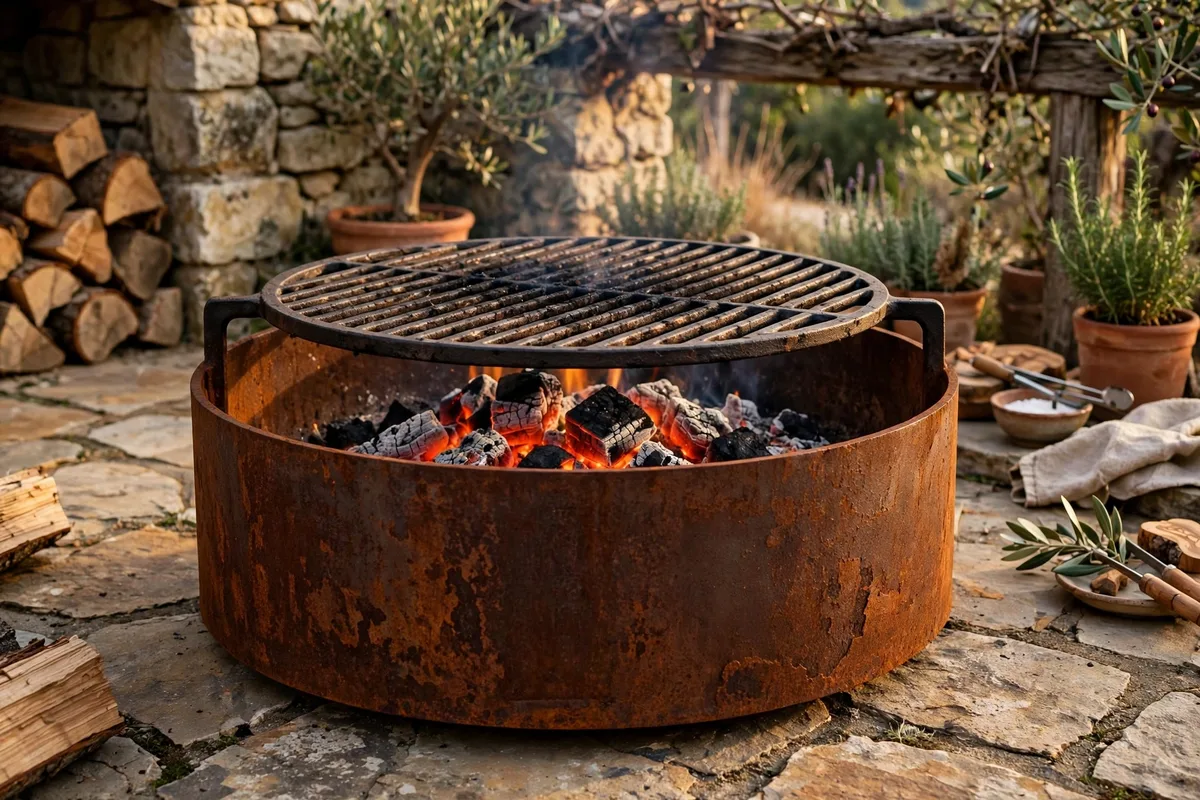
The Breeo X Series is the smokeless pit rebuilt as a cooking hearth: a heavier-gauge double-wall pit in weathering Corten steel (or stainless), with a raised cooking insert system — the SearPlate rim and Outpost grill — that turns the secondary-combustion fire into a live-fire kitchen. The X24, the line’s centre, swallows standard logs whole, burns with the same smoke-reburning physics as the leader, and then holds a cast-iron’s worth of heat for the cooking that is this pit’s entire reason to exist. The Corten version rusts deliberately into a stable, handsome patina — the one pit designed to live outdoors uncovered.
The build quality is the category’s heavyweight statement: American-made, thick steel, welds and mass that read as permanent patio infrastructure rather than equipment. The fire’s behaviour rewards cooks — a deep, even coal bed under a controllable grill height — and the smokeless effect at full roar matches the leader’s, with the same dry-wood conditions attached.
Canadian availability runs through the maker and specialty outdoor retailers at the guide’s premium tier. The buyer is the household whose fire pit is a stove with a social life: steaks seared over oak, a kettle on the rim, friends around a fire that also made dinner. For that brief, nothing else in this guide is really competing.
Ownership is infrastructure-grade: the Breeo stays where it is installed, improves in looks as the patina sets, and anchors a patio the way a good barbecue does — a decade-scale object, bought once, on purpose.
Cast-iron owners should season the SearPlate like a pan — a thin oil coat after cooking sessions — because the plate lives outdoors over fire, and the Breeo’s cooking surfaces reward the same care culture as the skillet they functionally are; neglect reads on them faster than on the pit’s steel.
Yay · Pros
- Built to cook: SearPlate and grill system
- Heavy-gauge Corten or stainless steel
- Accepts full-size logs; deep coal bed
Hmm · Cons
- Heavy — a patio fixture, not a traveller
- Premium pricing, accessories extra
- Patina finish is a taste not everyone shares
Best for: Cooking over real fire — the chef’s pit Skip if: You want portability — this is a fixture, and proudly so
3. TIKI Brand Patio Smokeless Fire Pit — Best looking
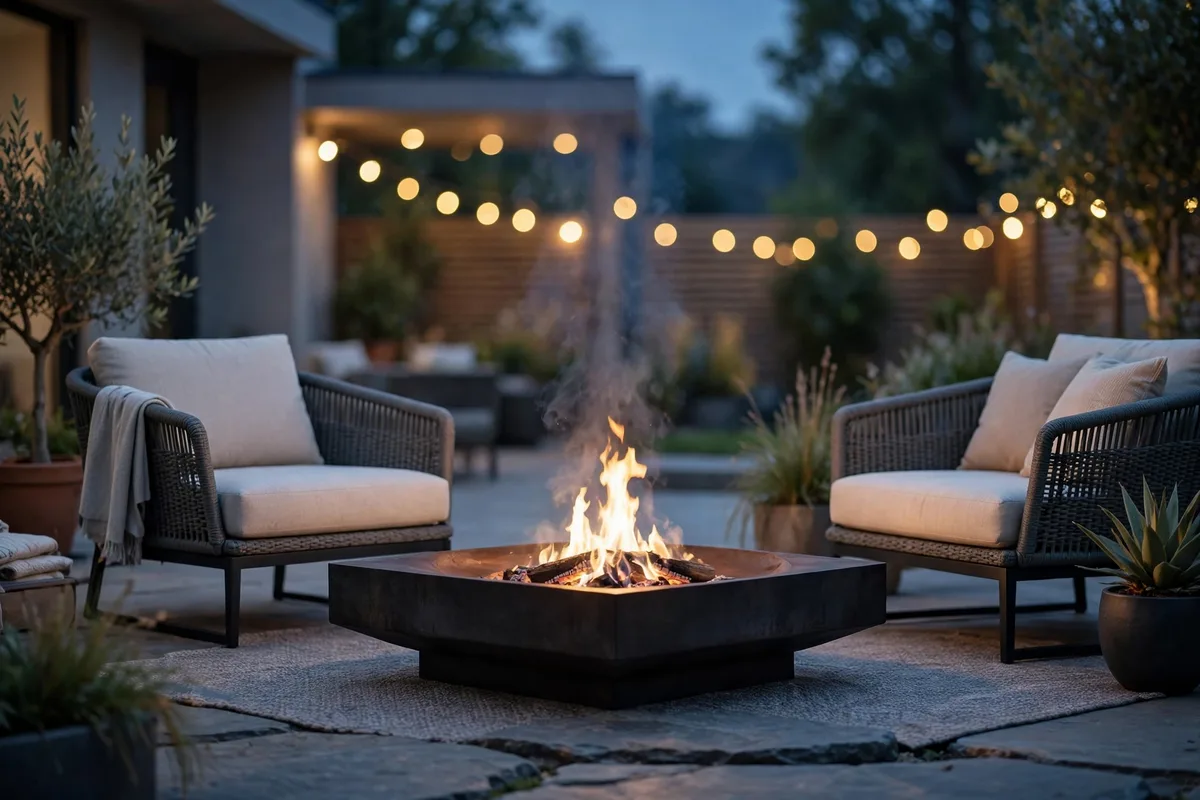
The TIKI Patio fire pit is the design entry: a low, wide, furniture-scaled pit in blackened steel with a wide ash-friendly bowl, engineered airflow for reduced smoke, and — its signature convenience — the option of the brand’s wood-pellet packs alongside ordinary firewood. The pellet packs light in minutes and burn a predictable course, which makes the TIKI the weeknight pit: fire after dinner without the fire-building ritual, in a silhouette that belongs beside outdoor furniture rather than at a campsite.
The smoke performance with dry wood or pellets sits in the category’s honest middle — a large reduction over an open pit, a step behind the dedicated double-wall leaders at full roar — and the wide, low flame picture is the most decorative here. The build and finish target the patio as a room: this is the pit for people whose first specification was that it not look like camping equipment.
Canadian availability is through major home retailers at a mid-range price, with the pellet packs an ongoing brand purchase for those who adopt them. For design-first households that will actually use a convenient fire weekly — rather than a perfect fire rarely — the TIKI’s trade is the right one, and the guide respects it.
Ownership runs on convenience math: the pellet users burn more fires per season than the wood purists, which is the only usage statistic that matters — the best pit is the one lit on a Tuesday.
The pellet packs have a storage law: keep them bone dry indoors, because a pellet that has drunk a humid garage’s air swells, crumbles and burns dirty — the convenience fuel’s only real demand, and the one whose neglect gets blamed on the pit.
Yay · Pros
- Furniture-grade design; low wide flame
- Pellet-pack option for instant weeknight fires
- Easy ash cleanup; patio-friendly scale
Hmm · Cons
- Pellets cost more per evening than firewood
- Smaller wood chamber than the leaders
- Brand ecosystem (pellets, accessories) is the ongoing spend
Best for: Design-led patios and pellet convenience Skip if: You want maximum smoke reduction — the Solo Stove and Breeo reburn harder
4. BioLite FirePit+ (Fan-Assisted, Grill Top) — Best tech
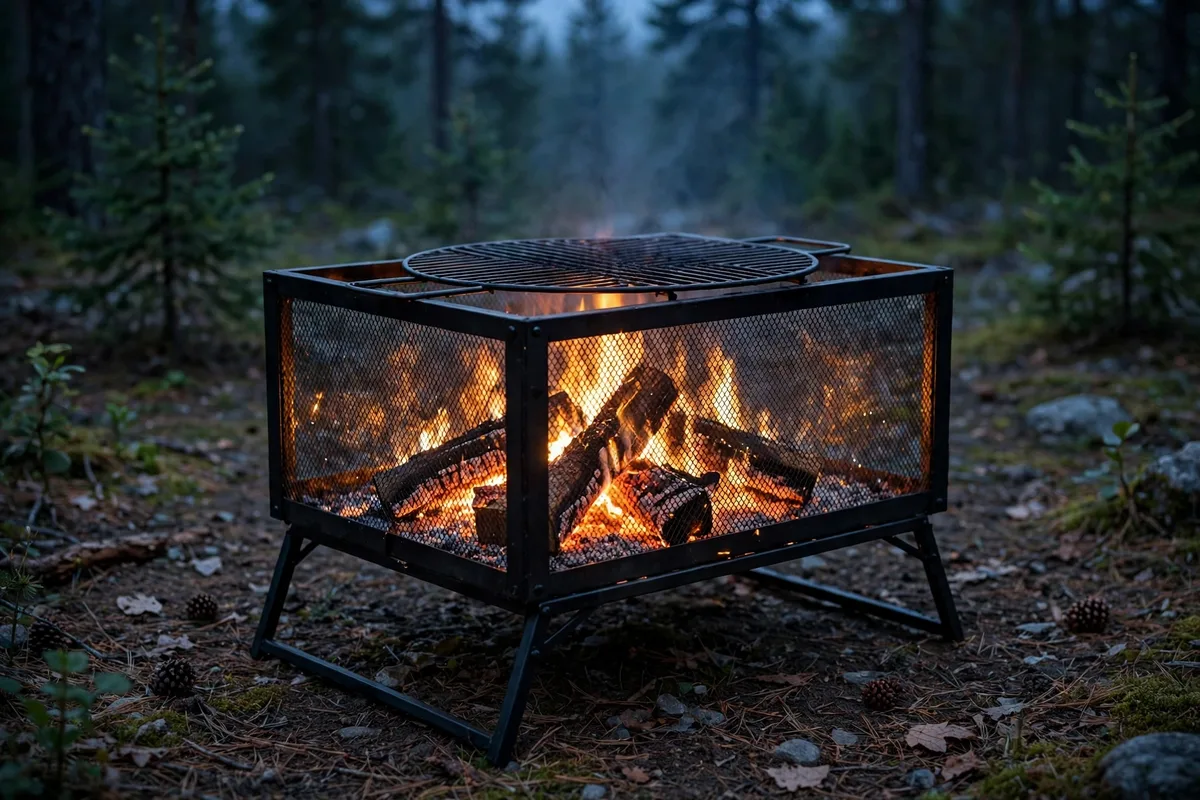
The BioLite FirePit+ is the category’s beautiful outlier: a rectangular, mesh-sided pit whose battery-powered fan drives air through 51 jets (the maker’s count) to force combustion so complete that the fire is visible through the body’s X-ray mesh — and controllable from an app or the onboard dial, from ember to inferno. The fan’s battery doubles as a USB power bank, the legs fold for transport, and the included grill top makes it a hibachi as readily as a fire pit. It is the only pick whose smokelessness is active rather than passive engineering.
The honest terms: the fan must be charged (a long weekend per charge by the maker’s figures), electronics live beside fire and weather, and the fire’s scale is intimate — this is a four-person fire, not a crowd’s bonfire. Within those terms the FirePit+ delivers the most controllable, visibly dramatic small fire in the guide, and its smoke suppression at fan speed rivals the big double-walls’.
Canadian availability is through outdoor retailers at a mid-premium price. The buyer is the camper-tech household, the small-patio household, and anyone who has ever wished a fire had a volume knob — it does, and it is this one.
Ownership has a ritual the others lack: charge the pack, and the fire becomes an appliance in the best sense — predictable, adjustable, and ready when the evening is, which for busy households is its own kind of luxury.
The FirePit+’s battery is a winter consideration: lithium cells dislike deep cold storage, so the pack winters indoors with the camping gear, not in the frozen garage — a five-second habit that decides whether spring’s first fire starts with a fan or with a wait.
Yay · Pros
- Fan-driven combustion with app control
- Mesh body — the fire is visible from all sides
- Battery doubles as a USB power bank; folds flat
Hmm · Cons
- Needs charging; electronics near fire is a care point
- Smaller fire than the big cylinders
- Rectangular shape takes its own log sizes best
Best for: Tech lovers — fan control, grill top, power bank Skip if: You want a big crowd fire — the Bonfire’s chamber doubles this one
5. Solo Stove Ranger (15″ Compact) — Best compact
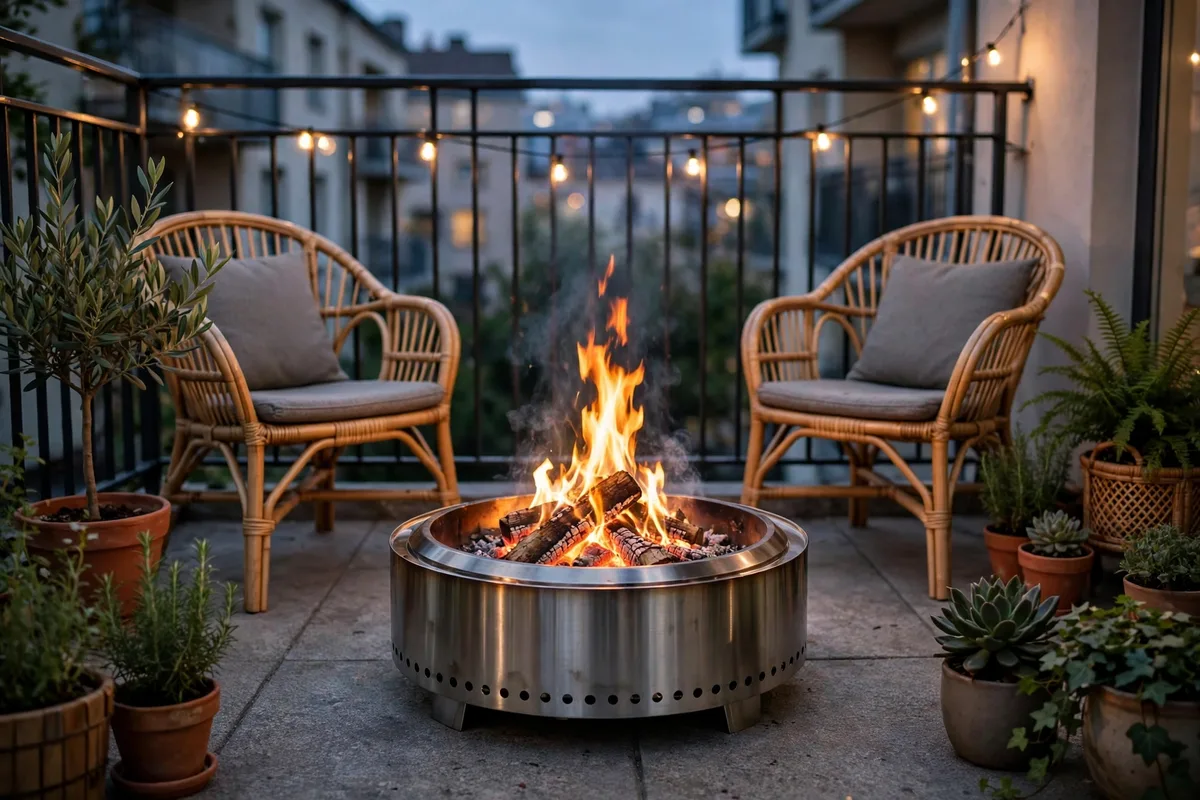
The Ranger is the Bonfire’s compact sibling: the same double-wall secondary combustion in a 15-inch pit sized for small patios, couples, and fires for two to four people. It burns the same way — smoky start, clean roar — on smaller wood: cut or split pieces in the 12-inch class, which is the compact pit’s standing condition everywhere. The portability is the best here, with a carry case in the box’s ecosystem and a weight one person moves without planning.
Heat and presence scale with the chamber, honestly: the Ranger warms a circle of chairs, not a crowd, and asks for more frequent feeding. For the small-space household those are the right trades — a full-size pit in a small patio is a hazard and a nuisance, while the Ranger is proportionate, neighbourly, and still unmistakably the real fire the category exists to deliver.
Canadian availability mirrors the Bonfire’s at a lower price. Buy it for the balcony-adjacent patio (where bylaws allow), the camper, or the couple whose fire is a nightly ritual for two — and accept its appetite for smaller, drier wood as the membership fee.
Ownership’s charm is frequency: Ranger owners light more fires than Bonfire owners, because the small fire is a smaller decision — the compact pit wins the weeknight, which is where fire pits earn their keep.
Small-pit fire craft differs in one respect: the Ranger’s chamber rewards smaller splits fed more often, so the woodpile for it should be processed accordingly — a hatchet and ten minutes at the chopping block converts a cord of standard splits into a season of right-sized fuel.
Yay · Pros
- Full secondary combustion, compact footprint
- Most portable pick; carry-case friendly
- Same accessory family as the Bonfire
Hmm · Cons
- Small logs only — more tending
- Less heat for a crowd
- Same stand-and-cover accessory math as its sibling
Best for: Small patios, balconies-with-rules and solo fires Skip if: Your fires seat six or more — size up to the Bonfire
Deck safety and the honest limits of ‘smokeless’
Secondary combustion needs a hot, established fire: the double-wall pits in this guide reburn smoke only once the fire is roaring and the walls are heat-soaked, which means the first ten minutes of any fire — the smokiest minutes — happen exactly as they do in a cheap pit. Start with dry kindling, build up gradually, and the smokeless phase arrives; start with damp wood and logs too large for the chamber, and no engineering on earth will save the evening. Fuel quality is the first smokeless technology, and it is free.
Wood choice compounds it: seasoned hardwood (under about 20% moisture) burns hotter and cleaner than softwood or green wood in every pit here, and it is the difference between the advertised effect and a neighbourhood complaint. Kiln-dried bundles cost more per fire and deliver the experience the pit was bought for — the honest arithmetic of the category is that the pit is the one-time cost and the dry wood is the subscription.
Decks are where honesty matters most: radiant heat from a pit’s base can scorch or ignite decking, and every maker in this guide requires a non-combustible surface or a heat-shield stand for deck use — read your model’s clearance, use the stand, and never place any pit on a composite deck without the maker’s explicit approval, because composite boards soften and scar at temperatures wood tolerates. Grass dies in a ring, concrete can spall, and the stand or a paver pad is a small price against all three.
Local rules outrank product features: many municipalities in both countries restrict open burning by season, drought condition, or outright in dense urban zones, and a smokeless pit is legally a fire pit in most of them — the reduced smoke earns goodwill with neighbours, not exemptions from bylaws. Check before the first fire, keep water or an extinguisher in reach as every maker instructs, and let the fire die rather than dousing a hot stainless pit, whose steel warps under thermal shock.
Ash and storage close the ownership loop: ash insulates the air inlets the smokeless effect depends on, so the double-wall pits need their ash emptied regularly — a five-minute job once fully cold — and the stainless models want a cover or indoor storage if their finish is to stay handsome, since surface rust on hot steel is cosmetic but relentless. The Breeo’s weathering steel makes the opposite bargain on purpose: its patina is the finish, and it is the only pick here that improves by being left out.
And the category’s real comparison is against the alternative: a propane fire table lights instantly, makes no ash, and is legal on more decks — and delivers none of the wood fire’s heat, crackle, or cooking options. The pits in this guide are for people who want the actual fire with the smoke engineered down to a whisper once it is roaring; judged on that brief, they deliver something no gas appliance can counterfeit.
Smokeless fire pit questions, answered
Are smokeless fire pits really smokeless?
Reduced smoke, dramatically — once the fire is hot and established, secondary combustion reburns most of the smoke before it leaves the pit. Not zero: startup is smoky, damp or oversized wood smokes in any pit, and reloading causes brief puffs. Buy one expecting a 70–90% improvement in comfort (the category’s realistic range in owner experience), dry hardwood for fuel, and neighbours who stop closing their windows.
Can I use a smokeless fire pit on my deck?
Only with the maker’s heat protection: a purpose stand or shield, on a surface the maker approves. Bare pits radiate enough base heat to scorch wood decking and can permanently scar composite boards, which soften at lower temperatures. Use the brand’s stand, add a paver or heat pad for margin, keep the pit away from railings and furniture, and never leave any fire unattended.
What wood burns cleanest in a smokeless pit?
Seasoned hardwood at under roughly 20% moisture — oak, maple, ash, or kiln-dried bundles. Dry wood is the single biggest variable in the whole category: it lights faster, reaches the smokeless phase sooner, and produces a fraction of the smoke of green or damp wood in the same pit. Avoid softwood for regular use (more sparks and resin), and never burn treated, painted or manufactured wood offcuts.
Can I cook over a smokeless fire pit?
Yes, with the right model: the Breeo X Series is built around it, with a raised insert and grill accessories for direct-fire cooking, and the Solo Stove line takes griddle and grill accessories. The BioLite’s included grill top handles casual cooking. Remember the fire is hotter and less adjustable than a barbecue — cast iron and patience are the technique — and check local rules, since some jurisdictions distinguish cooking fires from recreational ones.
How do I maintain a smokeless fire pit?
Empty the ash once fully cold — ash blocks the air inlets the smokeless effect depends on, so regular clearing is performance maintenance, not tidiness. Wipe stainless with a dry cloth, expect heat tinting (normal, permanent colour change near the fire), and store under a cover or indoors to slow surface rust. Never douse a hot pit with water: thermal shock can warp the steel.
Are smokeless fire pits legal in cities?
Usually yes, but verify: most municipal bylaws in Canada and the U.S. regulate open fires by size, fuel, distance from structures, and burn bans — and smokeless pits count as fire pits in most of them. The reduced smoke helps with neighbours, not with the bylaw. Check your municipality and any condo or strata rules before the first fire, and observe burn bans absolutely.
The short version
Buy the Solo Stove Bonfire 2.0 for the reference smokeless fire, the Breeo X24 if the fire is also your stove, the TIKI for design and pellet convenience, the BioLite for fan-controlled tech, and the Ranger for small spaces. Burn dry hardwood, use a stand on any deck, and expect a whisper of smoke — not a bonfire’s cloud, and never zero.
Last updated: November 18, 2026. We refresh this guide each season and whenever a pick is replaced by a better one.