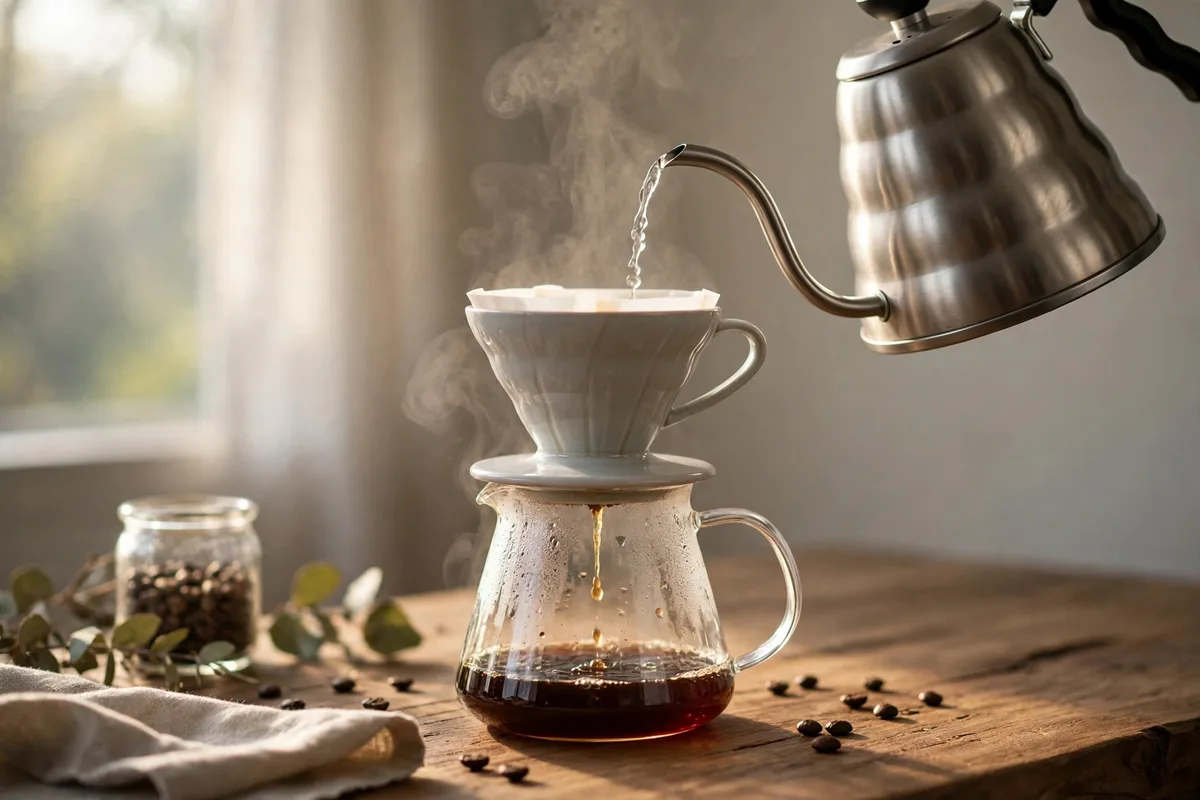
Pour-over is the cheapest way to make genuinely great coffee and the easiest way to make a disappointing one — the difference is a plastic cone’s geometry and about ninety seconds of technique. The best pour-over coffee drippers divide into clear camps: fast, demanding cones that reward skill with sparkling cups; forgiving flat-beds that regulate the flow for you; and one immersion hybrid that removes technique from the equation almost entirely. This guide covers the manual end of the coffee shelf our best drip coffee makers in Canada and the USA guide’s machines cannot touch — no electricity, no pods, no descaling, just a filter, a kettle and your attention.
Five drippers, five philosophies. Each review below names who should buy it and who should skip it, because the most common pour-over mistake is buying the champion’s dripper (the V60, usually) for a beginner’s routine. What they all share is dependence on two partners: a decent burr grinder — our best coffee grinders in Canada and the USA picks matter more to your cup than any choice on this page — and a kettle you can pour slowly with. Get those right and every dripper here will make coffee worth waking for.
Disclosure: CookSmartPicks is reader-supported. When you buy through links on this page, we may earn an Amazon commission at no extra cost to you. Prices and availability change often — check the current price on Amazon before you decide.
How we chose these pour-over drippers
CookSmartPicks is a research-based guide; we never claim hands-on testing we have not done. For this list we compared manufacturer specifications — geometry, hole design, materials, filter formats and capacities — with independent brewing guides and long-term owner and barista reports from Canada and the USA. Where a dripper’s reputation rests on competition results or café adoption, we describe it as reputation; where a maker claims a design benefit, it is flagged as their claim.
Availability was checked the way a Canadian buyer experiences it: each dripper and its filters were confirmed in stock through ordinary Canadian retail or the maker’s own Canadian shipping, because a dripper whose filters cross the border at courier prices fails its owner monthly. Two respected drippers were cut on this test alone. We also weighed each pick’s filter as a consumable with a personality — the V60’s tabbed papers, Kalita’s ruffled waves, Chemex’s bonded squares — because the filter, replaced forever, is the real long-term purchase hiding inside the one-time one.
The lineup at a glance
| Product | Best for | Why it stands out |
|---|---|---|
| Hario V60 Ceramic Dripper 02 | Best for control | The reference cone: one big hole, spiral ribs and total brewer control |
| Kalita Wave 185 Dripper | Best for consistency | A flat bed and three small holes that regulate flow for you — consistency by design |
| Origami Dripper M | Best for versatility | One porcelain dripper that brews with both cone and wave filters |
| Clever Dripper | Best for beginners | Steep-and-release immersion in a dripper body — great coffee with almost no technique |
| Chemex Classic 6-Cup Pour-Over Brewer | Best for sharing | A 1941 design icon whose thick filters make the cleanest cup in pour-over |
1. Hario V60 Ceramic Dripper 02 — Best for control
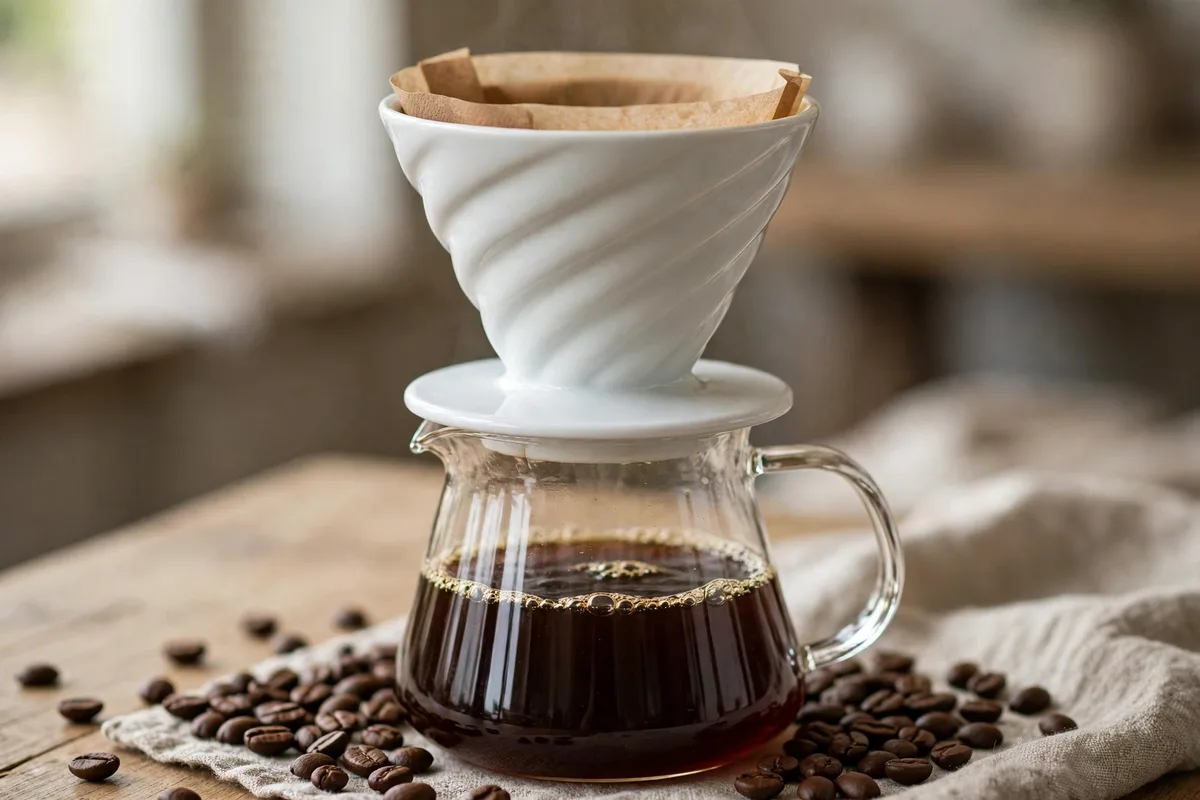
The V60 is the dripper the modern pour-over era was built on: a 60-degree cone with spiral ribs and one large hole, per Hario’s design, which means the brewer — not the device — controls the flow. Pour fast and the cup runs thin; pour in slow spirals with the right grind and the V60 produces the brightest, most detailed cups in this guide, the ones where tasting notes on the bag stop being fiction. It is available in ceramic, glass, plastic and metal, with the 02 size the household standard for one to two cups.
Its reputation in cafés and brewing competitions is the strongest here, and so is its learning curve — the V60 is honestly the worst beginner dripper in this guide and the best experienced one. Owner reports split exactly on that line: tinkerers who weigh and time call it irreplaceable; rushed morning brewers call it inconsistent, and both are describing the same device accurately. Buy it as a hobby with a delicious output, pair it with a gooseneck kettle and a scale, and it will keep teaching you for years.
V60 ownership is a skill that compounds: the first month is inconsistent, the second is repeatable, and by the third the dripper has taught its owner more about extraction than any machine’s manual. The ceramic body’s heat retention rewards the preheat rinse, and the papers are the cheapest quality filters in this guide per cup. It is also the dripper most likely to multiply — owners end up with a plastic twin for travel — which says more about the format’s hold on people than any review could.
Yay · Pros
- The highest flavour ceiling in this guide
- Spiral-rib cone design rewards technique with clarity
- Ceramic build holds heat and lasts for years
Hmm · Cons
- The least forgiving brewer in this guide
- Paper filters are a specific, ongoing purchase
- Great cups require the gooseneck kettle investment
Best for: brewers who weigh, time and tinker — the hobbyist’s reference dripper. Skip if: you want one forgiving recipe that works half-asleep — that is the Kalita or the Clever.
2. Kalita Wave 185 Dripper — Best for consistency
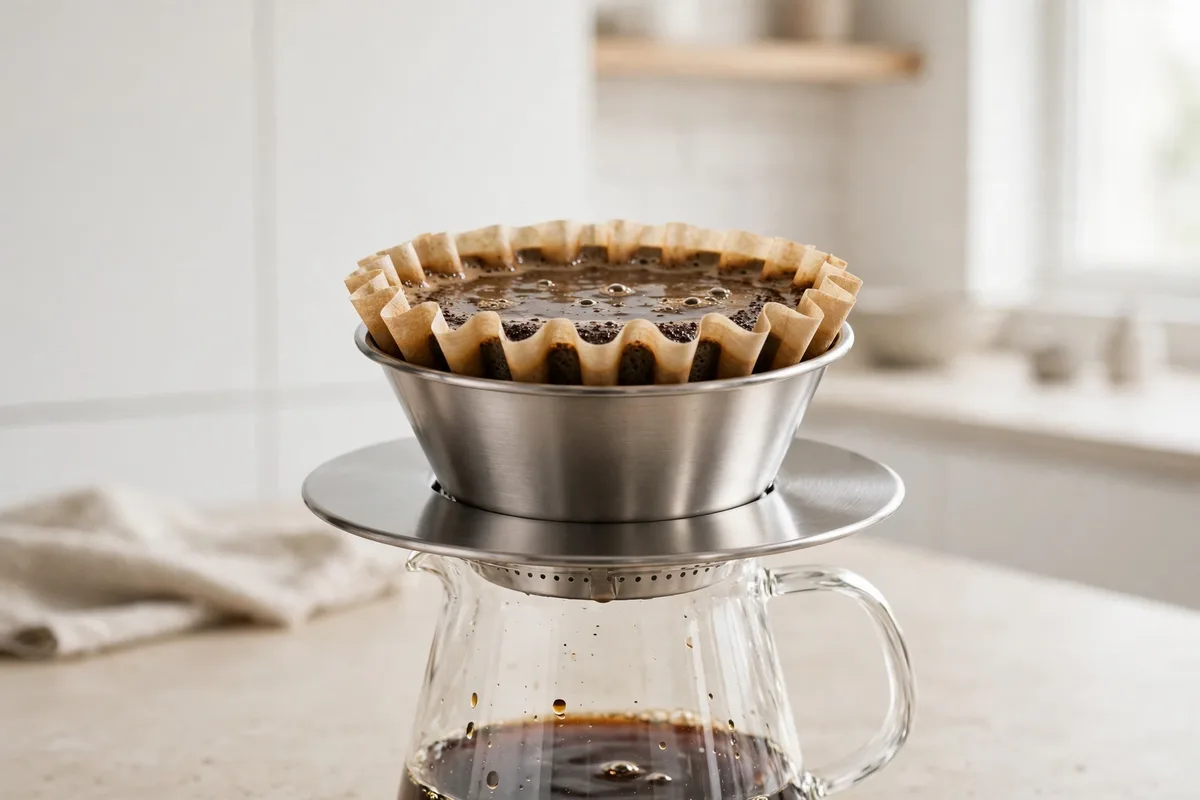
The Kalita Wave is the flat-bed answer to the V60’s demands: its three small holes and flat bottom hold a shallow pool over the grounds, per Kalita’s design, so water drains at the dripper’s pace rather than the pourer’s. The result is the most consistent cup in this guide — sweet, balanced and remarkably similar from one sleepy morning to the next. The 185 size brews for two; the smaller 155 suits single cups. Its proprietary ruffled filters are part of the system: they keep water off the dripper walls and the bed even.
Owner and café reports praise exactly that consistency, and the Wave has a quiet professional following among shops that need every barista’s cup to match. The honest costs: the filters are a specific, pricier consumable than V60 papers; the flavour ceiling is a touch lower — a little less sparkle at the top end; and the stainless version’s small holes reward an occasional rinse check. For a household that wants pour-over quality without pour-over homework, this is the guide’s easiest recommendation.
Wave ownership is the opposite pleasure: the recipe transfers. A friend’s numbers work in your kitchen, a cafe’s card works at home, because the flat bed forgives the small differences between kettles and hands. The steel body travels, camps and survives the dishwasher; the ruffled papers are its only ritual, bought in hundreds without thinking. For the household where two people brew at different skill levels, the Wave is the dripper that makes both cups good — a domestic virtue no other pick matches as completely.
Yay · Pros
- Flat-bed design regulates flow — technique-proof mornings
- Sweet, consistent cups day after day
- Two sizes cover singles and pairs
Hmm · Cons
- Proprietary wave filters cost more than V60 papers
- Slightly less top-end clarity than the V60
- Stainless version’s holes need an occasional check for blockage
Best for: households wanting one reliable recipe that works every single morning. Skip if: chasing competition-level clarity is the point — the V60’s ceiling is higher.
3. Origami Dripper M — Best for versatility
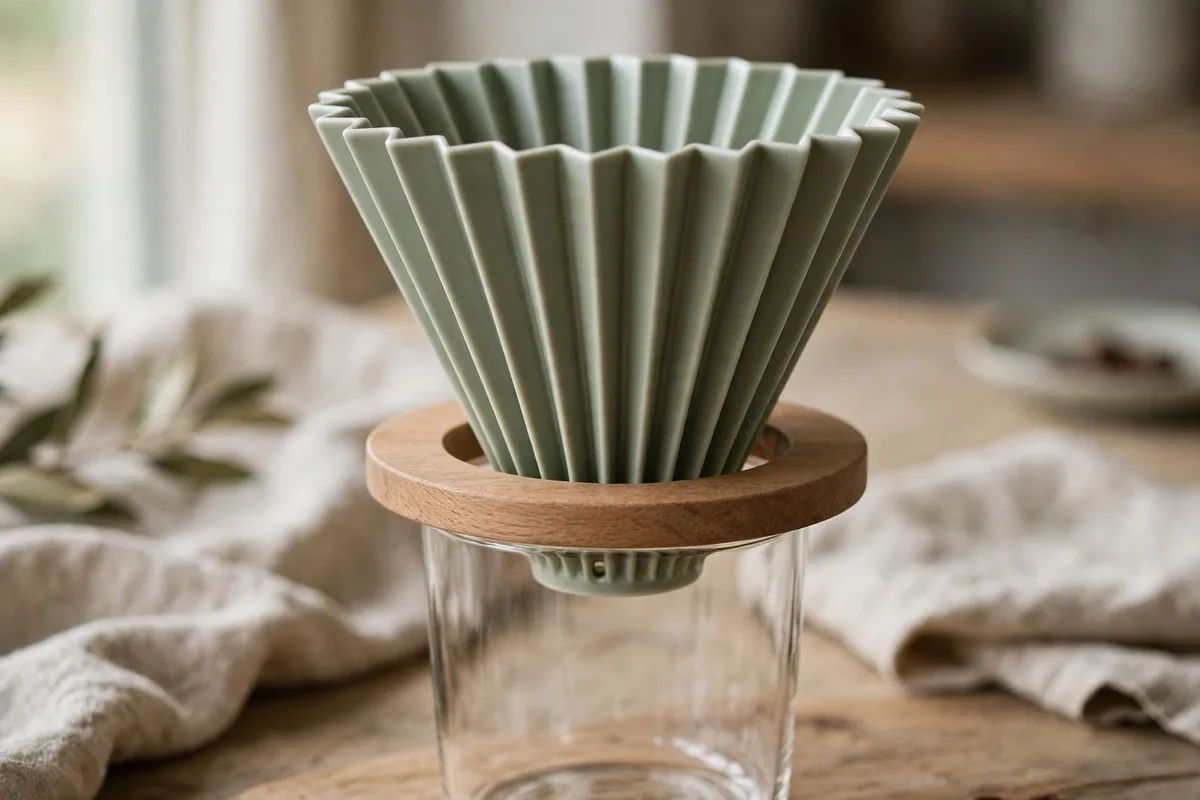
The Origami is the diplomat of this guide: a porcelain dripper from Japan whose vertical grooves let it take both cone filters (V60-style) and Kalita Wave filters, per the maker’s design, so one dripper brews in both geometries — fast and bright with a cone paper, even and sweet with a wave paper. It is also, by wide agreement, the prettiest object here: folded-porcelain looks that have made it a café counter ornament as much as a brewer. The size M covers one to two cups happily.
Function follows the filters: with wave papers it behaves like a slightly freer Kalita; with cone papers it approaches the V60 with a touch more forgiveness from its rib structure. Owner reports praise the versatility and the ritual pleasure of using it, and note the two real costs — porcelain breaks when dropped, and the dripper wants its holder ring for a stable seat on narrow cups. For a household that cannot decide between the cone and flat-bed camps, the Origami is the honest answer: buy both, in one dripper.
The Origami’s ownership delight is flexibility without sprawl: one porcelain body covers both filter families, so a household can run Wave papers on weekdays and V60 papers for the weekend experiment, with a single object on the counter. It asks for gentle handling in return — no metal sink drops, no thermal shocks — and the wooden holder’s ring keeps it stable on the server. It is the pick owners photograph, certainly, but also the one they reach for when a new coffee arrives and the question is what it can do.
Yay · Pros
- Takes both cone and wave filters — two brewers in one
- Porcelain build with real heat retention
- The best-looking dripper in this guide, by consensus
Hmm · Cons
- Porcelain is breakable — the drop test is final
- Needs its holder for stability on some cups
- Costs more than the plastic workhorses
Best for: one-dripper households who want both filter styles and a beautiful object. Skip if: your kitchen breaks things — plastic or metal will outlive porcelain.
4. Clever Dripper — Best for beginners
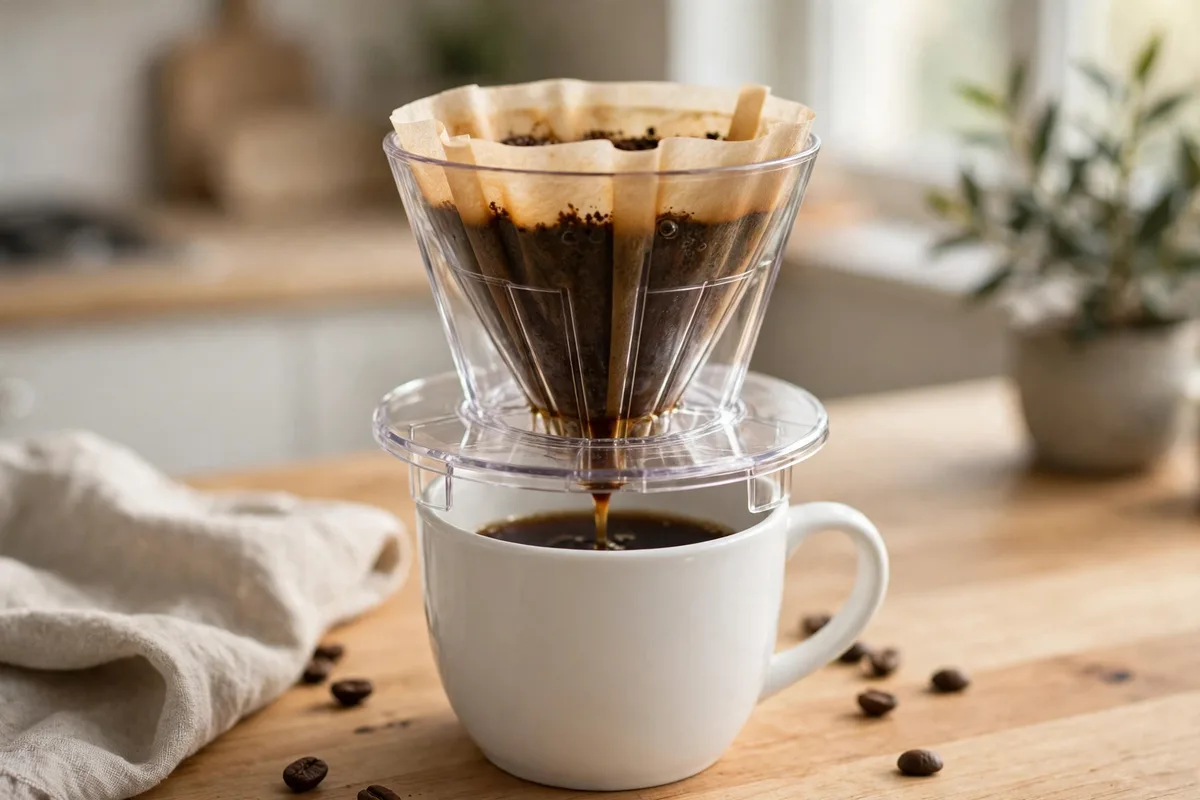
The Clever Dripper cheats beautifully: it is an immersion brewer in pour-over clothing. Add coffee and water, let it steep like a French press, then set it on your cup — a valve opens and the brew draws down through a standard #4 filter, per the maker’s design. Because extraction happens by time rather than by pouring skill, the Clever produces the most forgiving cups in this guide: full-bodied, sweet and consistent from the very first attempt, with paper-filter cleanliness a French press cannot match.
This is the dripper brewing instructors hand to beginners, and owner reports agree it is where new pour-over drinkers make their first genuinely good cups. The compromises are material and scale: the body is plastic (the glass-and-steel alternatives do not exist in this exact mechanism), the common size brews one generous mug at a time, and the valve wants a regular rinse to stay free of old-coffee oils. None of that dents its role. If your mornings have no patience for spiral-pour technique, the Clever is not a compromise — it is the correct answer.
The Clever’s ownership case is the weekday morning: it forgives a distracted pour, a phone call mid-brew, a kettle that boiled and waited — the steeps absorb all of it. The valve is the part to respect; a monthly soak in coffee cleaner keeps it sealing crisply for years, and replacement brewers are cheap when it eventually tires. It also moonlights as a superb tea steeper and a cold-brew-by-the-cup device, which quietly makes it the hardest-working twenty-dollar object in many kitchens.
Yay · Pros
- Immersion brewing: technique barely matters
- Full-bodied cups with paper-filter cleanliness
- Uses standard #4 filters — cheap and everywhere
Hmm · Cons
- Plastic body is the aesthetic and material compromise
- One-cup-at-a-time sizing for most households
- The valve mechanism wants a rinse routine to stay sweet
Best for: beginners and busy households — the best first cups with the least to learn. Skip if: you want the bright, delicate end of pour-over — cone drippers live there.
5. Chemex Classic 6-Cup Pour-Over Brewer — Best for sharing
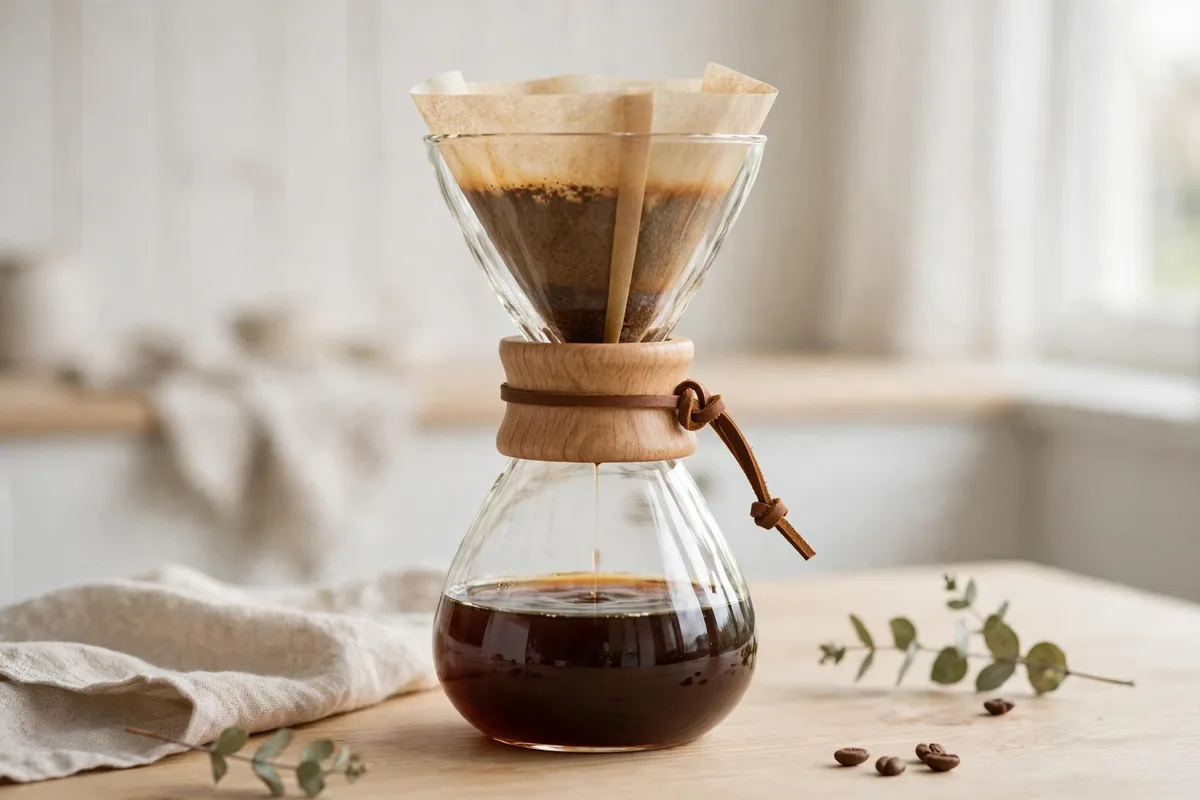
The Chemex is the elder statesman: a one-piece glass brewer-server from 1941, in the Museum of Modern Art’s collection, whose thick proprietary filters produce the cleanest, most delicate cup in this guide — light-bodied, sweet and almost tea-like, with the oils and sediment filtered away. The 6-cup Classic (about 30 ounces) is the household size, brewing for two to four in a single pour that stays presentable on the table because the server is the brewer.
That signature cup is a genuine house style, and this guide treats it as such rather than as a flaw: drinkers who love heavy, oily coffee will find Chemex thin no matter how well it is brewed, while clarity seekers consider it the pinnacle. The practical notes are glass fragility, a pour that rewards the same gooseneck control as the V60, and filters that are a specific purchase rather than a supermarket staple. As a weekend ritual for a table of coffee drinkers, nothing else here presents like it.
Chemex ownership is a small ceremony with a maintenance tail: the bonded filters rinse the brightest cup in this guide, the glass wants a brush and occasional coffee-oil soak, and the wooden collar’s leather tie loosens over years and re-ties in a minute. The brewer doubles as the serving vessel at brunch, which is its real second job. Households that brew for a table rather than a person keep it for decades; single-cup households should believe the batch-size warning and choose accordingly.
Yay · Pros
- The cleanest, most delicate cup in this guide
- Brewer and server in one iconic piece of glass
- Brews for a table in a single pour
Hmm · Cons
- Thick filters mute body — heavy-cup lovers will call it thin
- Glass is breakable and the pour takes attention
- Proprietary filters are a specific ongoing cost
Best for: weekend brewers making clean, delicate coffee for two to four people. Skip if: you love heavy, oily coffee — Chemex clarity will read as thin.
Cone vs flat-bed: the one decision that decides your mornings
Every dripper in this guide is a hole in a cone with opinions, and the opinions reduce to geometry. Cone drippers (V60, Origami) drain toward a point: water moves fast, the brewer controls extraction with pour speed and grind, and the reward is clarity and brightness — with punishment for sloppy technique served in the same cup. Flat-bed drippers (Kalita Wave) spread water across a shallow bed with small, restricted holes: the dripper itself regulates flow, technique matters less, and the cup trades a little sparkle for sweetness and consistency.
The third family refuses the argument: immersion hybrids like the Clever hold water and grounds together, then release — extraction by time, not by pour — which is why beginners make their best early cups on them. Chemex stands apart as a brewer-server system whose thick filters define its famously clean, tea-like cup. None of these is ‘best’ outside the context of who is pouring at 7 a.m. with one eye open.
So choose by temperament. The tinkerer who weighs and times already owns the V60’s personality; the household that wants one forgiving ritual should buy the Kalita or the Clever and never think about geometry again. Pair any of them with the best coffee grinders in Canada and the USA from our grinder guide — grind consistency moves a pour-over cup more than any dripper swap — and the best gooseneck kettles in Canada and the USA for the pour control the cone drippers reward.
Grind is the variable this guide has politely underplayed, because it belongs to the grinder guide — but honesty requires one paragraph: every dripper here is more sensitive to grind consistency than to pouring artistry. A basic burr grinder improves any of these drippers more than a dripper upgrade improves a blade grinder’s coffee. If the budget forces a sequence, buy the dripper you like the look of and the best burr grinder you can stretch to; the cup will reward the order of those purchases.
And the kettle question, briefly: a gooseneck is near-mandatory for the V60, helpful for the Wave and Origami, and unnecessary for the Clever and Chemex, whose forgiveness absorbs a regular kettle’s pour. That split is worth money — a household choosing between the forgiving pair can skip a kettle purchase entirely and put the savings into the grinder, which is the correct order of operations for almost every pour-over budget.
Pour-over questions, answered
Which pour-over dripper is best for a beginner?
The Clever Dripper, and it is not close: immersion brewing removes pour technique from the equation, the recipe is coarse (steep, wait, drain), and the cup is forgiving while you learn grind and ratio. The Kalita Wave is the best first true pour-over for the same reason — its flat bed regulates flow for you. The V60 rewards skill with the highest ceiling and punishes haste on the way there; buy it when you want a hobby, not just coffee.
Does the grinder really matter more than the dripper?
Yes, more than the dripper does. Pour-over extraction is unforgiving of inconsistent grind — fine particles over-extract into bitterness while boulders under-extract into sourness in the same cup. A capable burr grinder is the single largest quality jump in a pour-over setup, which is why our grinder guide is this guide’s linked partner. If the budget forces a choice, buy the Clever (the most grind-forgiving brewer here) and put the savings toward the grinder.
What coffee-to-water ratio should I start with?
Start at 1:15 to 1:16 — 20 grams of coffee to 300–320 grams of water — and adjust by taste: sour and thin means extract more (finer grind, hotter water, longer time); bitter and heavy means extract less. Immersion brewers like the Clever sit happily at the same ratio with a 2–3 minute steep. A cheap scale makes all of this repeatable; without one, you are brewing a new recipe every morning and blaming the dripper.
Why does coffee from a Chemex taste so different?
Chemex filters are roughly 20–30% thicker than standard filters (a widely reported figure) and trap more oils and fine sediment, producing an exceptionally clean, light-bodied, almost tea-like cup. Fans call it clarity; others call it thin. It is a genuine house style rather than a defect — if you love heavy, oily cups, Chemex will disappoint you no matter how well you brew, and the V60 with its thinner papers is your cone.
Ceramic, plastic, glass or metal — which dripper material is best?
Each material trades something. Ceramic holds heat best and is the café standard, but it is breakable and wants preheating. Plastic is the best insulator, the cheapest and the travel-safe choice — many competition brewers use it without apology. Glass is beautiful and mid-weight on heat. Metal is unbreakable and loses heat fastest. Flavour differences between materials are small next to grind and recipe; choose by your kitchen’s drop rate and your preheating patience.
What size dripper should a household that brews two mugs buy?
Work in grams rather than cup labels: two generous mugs are roughly 500 to 600 ml of brewed coffee, which suits the V60 02, the Wave 185, the large Clever and the Origami M at their comfortable maximums, and the Chemex 6-Cup without strain. The smaller sizes (V60 01, Wave 155) are single-mug tools; brewing double in them means a heaped, overflowing bed and a worse cup. When a product line offers two sizes and your household sits between them, the larger dripper brews a small cup happily, while the reverse is not true.
The short version
Buy the Kalita Wave 185 for consistent, forgiving mornings, the Clever Dripper if you want great coffee with almost no technique, and the Hario V60 when you are ready to chase the highest ceiling in the category. The Origami splits the difference beautifully — both filter styles, one dripper — and the Chemex is the weekend table’s clean-cup ceremony. Spend remaining budget on the grinder first: our best coffee grinders in Canada and the USA will improve any of these more than the next dripper would.
Last updated: November 18, 2026. We refresh this guide each season and whenever a pick is replaced by a better one.