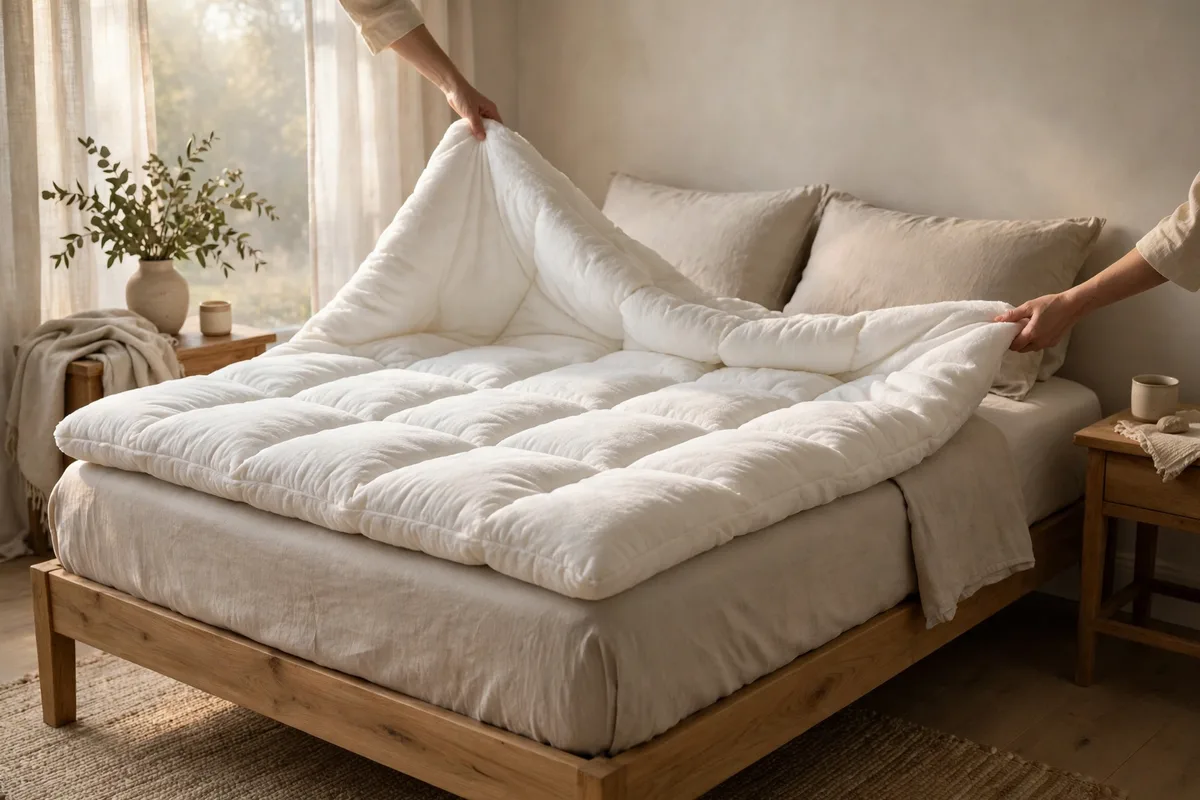
Start with the limit, because it decides whether you should spend anything at all: a mattress topper cannot fix a sagging mattress. A topper is a soft layer laid over the bed you already have, and soft layers follow the shape beneath them. If your mattress dips in the middle, has deep body impressions, or has lost its support, a topper will sink into that same dip — it will make the sag feel softer, but the sag, and the uneven support behind many morning aches, will still be there. Sellers rarely lead with this, because ‘buy a new mattress’ is not a sentence that sells toppers. If the bed itself has failed, the honest money goes to a mattress, and no pick below changes that.
What a topper genuinely can fix is a shorter, very common list. A mattress that is structurally sound but too firm — the bed that leaves shoulders and hips sore — gains a pressure-relieving surface it never had. Pressure points ease because weight spreads across a contouring layer instead of concentrating on bone. A thin, tired guest bed or dorm mattress becomes honestly comfortable for the people sleeping on it. And a good topper can stretch the life of a sound mattress whose comfort layer has firmed up. One boundary matters: easing pressure-related discomfort is not treating back pain, and nothing here is a medical fix. If the actual problem is a cold bed rather than a hard one, warmth is the cheaper answer — see our guide to the best heated blankets in Canada and the USA before you buy foam to solve a temperature problem.
Disclosure: CookSmartPicks is reader-supported. When you buy through links on this page, we may earn an Amazon commission at no extra cost to you. Prices and availability change often — check the current price on Amazon before you decide.
How we chose these mattress toppers
CookSmartPicks is a research-based guide. We do not run a sleep lab, and we never claim hands-on testing we have not done. For this list we compared tester roundups and buying guides from NCOA, Mattress Clarity and Sleep Foundation-class sources with manufacturer material specifications — foam type, thickness, density where published, and certifications such as CertiPUR-US — and with owner reports from verified buyers in Canada and the USA. The criteria were pressure relief over a firm surface, heat behaviour through a full night rather than the first hour, durability evidence, and the honesty of each maker’s claims. Where a benefit comes from the manufacturer — graphite heat dispersal, gel cooling — we label it as a claim and weigh it against what roundups and owners report.
The lineup at a glance
| Product | Best for | Why it stands out |
|---|---|---|
| Tempur-Pedic TEMPUR-Topper Supreme | Best pressure relief | 3 inches of genuine TEMPUR material — the contouring benchmark in tester roundups |
| Saatva Graphite Memory Foam Mattress Topper | Best cooling memory foam | Graphite-infused foam with CertiPUR-US certification, a chiropractor-roundup regular |
| ViscoSoft Select High Density Mattress Topper | Best value that lasts | 4 lb-class high-density foam that resists bottoming out |
| Sleep On Latex Pure Green Mattress Topper | Best natural latex | 100% natural Dunlop latex in 2 or 3 inches with firmness choices |
| Linenspa 3-Inch Gel-Infused Memory Foam Topper | Best budget | A long-running Amazon best-seller that refreshes guest beds and dorms cheaply |
1. Tempur-Pedic TEMPUR-Topper Supreme — Best pressure relief
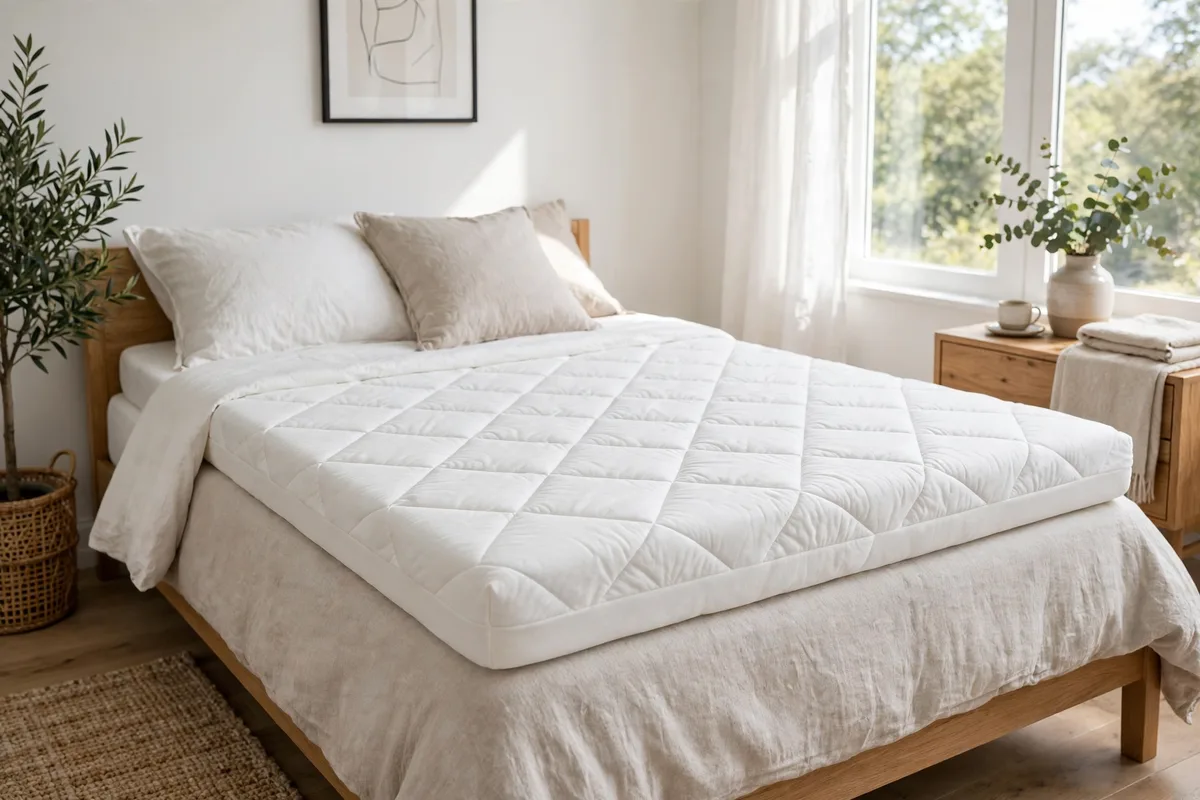
The TEMPUR-Topper Supreme is the topper this category is measured against, and the reason is the material itself: three inches of genuine TEMPUR foam, the same viscoelastic foam family Tempur-Pedic builds its mattresses from, rather than a generic memory foam borrowing the language. In tester roundups from NCOA and Mattress Clarity-class sources it is the recurring pressure-relief benchmark, named repeatedly for side sleepers whose shoulders and hips take the load on a firm bed. The feel is the classic TEMPUR feel — slow, deep and deliberate. You do not bounce on this topper; you settle into it, and it holds that shape.
The trades are just as well documented. TEMPUR material sleeps warmer than latex, because the same body-heat softening that creates the contour also limits airflow, so hot sleepers should read the Saatva and latex sections before defaulting to the name. It is also a premium-priced topper, and its slow response annoys combination sleepers who change position often and resent climbing out of a body-shaped hollow each time. Owners also praise the finish: a washable cover that actually comes off and goes back on, and motion isolation strong enough that a restless partner mostly disappears. For a sound but punishingly firm mattress, this remains the reference fix.
Yay · Pros
- Three inches of genuine TEMPUR material — the pressure-relief benchmark in tester roundups
- Slow, deep contouring that eases shoulder and hip pressure points on firm beds
- Washable cover and excellent motion isolation for couples
Hmm · Cons
- Sleeps warmer than latex — hot sleepers should compare before buying
- Slow response can frustrate combination sleepers who move often
- Premium pricing for a topper
Best for: side sleepers and anyone whose sound, firm mattress creates shoulder and hip pressure points. Skip if: you sleep hot (see the latex pick) or change position all night.
2. Saatva Graphite Memory Foam Mattress Topper — Best cooling memory foam
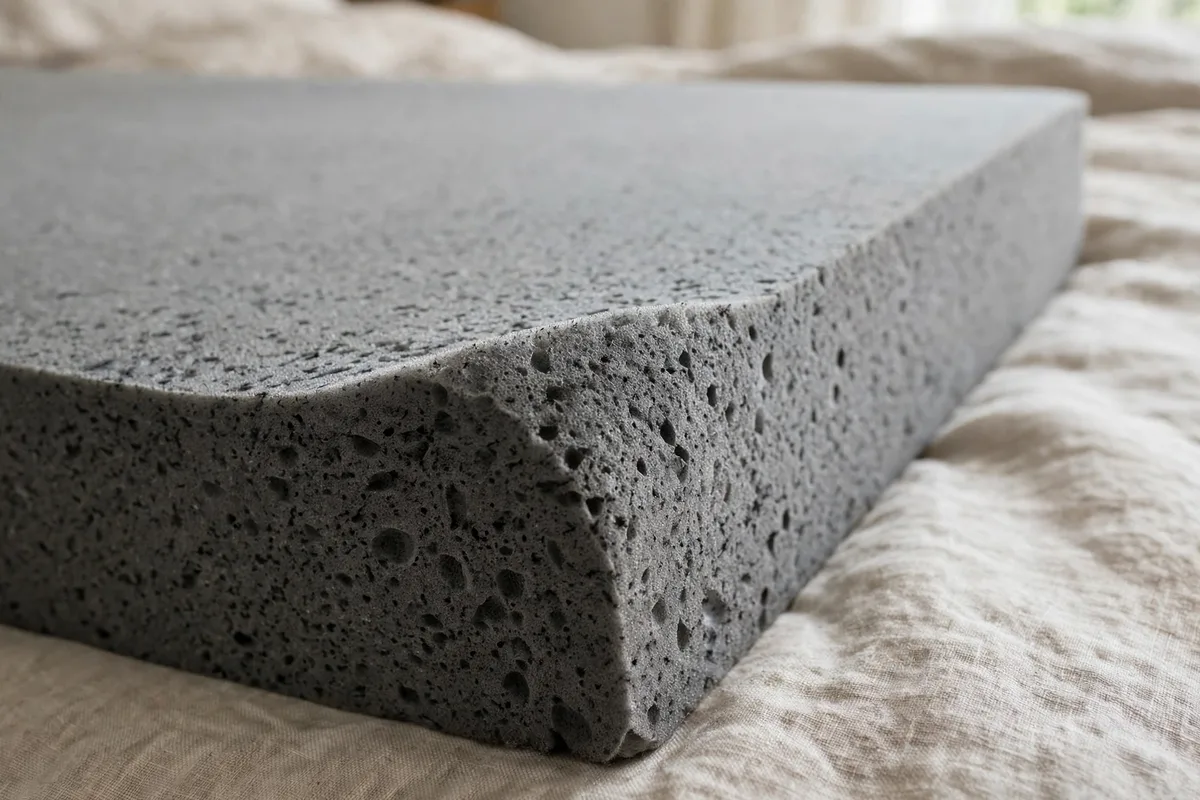
The Saatva Graphite topper is memory foam aimed squarely at the material’s oldest complaint: heat. The three-inch foam is infused with graphite, which Saatva presents — as a manufacturer claim — as its heat-dispersal answer, drawing warmth away from the sleep surface and spreading it through the foam instead of trapping it at the skin. The foam is CertiPUR-US certified, the independent certification for foam content and emissions, and the topper is a recurring favourite in chiropractor roundups aimed at shoppers with back discomfort, for its medium-firm support over a too-hard bed. No topper treats back pain, and this guide makes no such claim — but for pressure-related discomfort on a firm mattress, the roundup record is consistent.
Saatva sells this as a premium product: direct-to-consumer, positioned above the big-platform brands, with the cover and finish owners describe as a step up from budget foam. The honest limit is physics. Graphite and gel infusions can change how the first hours of the night feel, and roundups generally credit them with a cooler start, but the base material is still memory foam — it still contours with body heat and still sleeps warmer than latex for most hot sleepers. Buy it as the best-finished, coolest-leaning memory foam here, not as air conditioning, and it delivers that: TEMPUR-style pressure relief with the heat problem reduced, not removed.
Yay · Pros
- Graphite infusion targets memory foam’s heat problem at the surface
- CertiPUR-US certified foam, with a premium cover and finish
- A chiropractor-roundup regular for firm-bed discomfort
Hmm · Cons
- Still memory foam underneath — warmer than latex for most hot sleepers
- Premium, direct-to-consumer pricing
- Cooling effect is strongest early in the night, per roundup consensus
Best for: memory-foam lovers who sleep warm and want the coolest-leaning, best-finished foam here. Skip if: you are a genuinely hot sleeper — latex stays neutral all night.
3. ViscoSoft Select High Density Mattress Topper — Best value that lasts
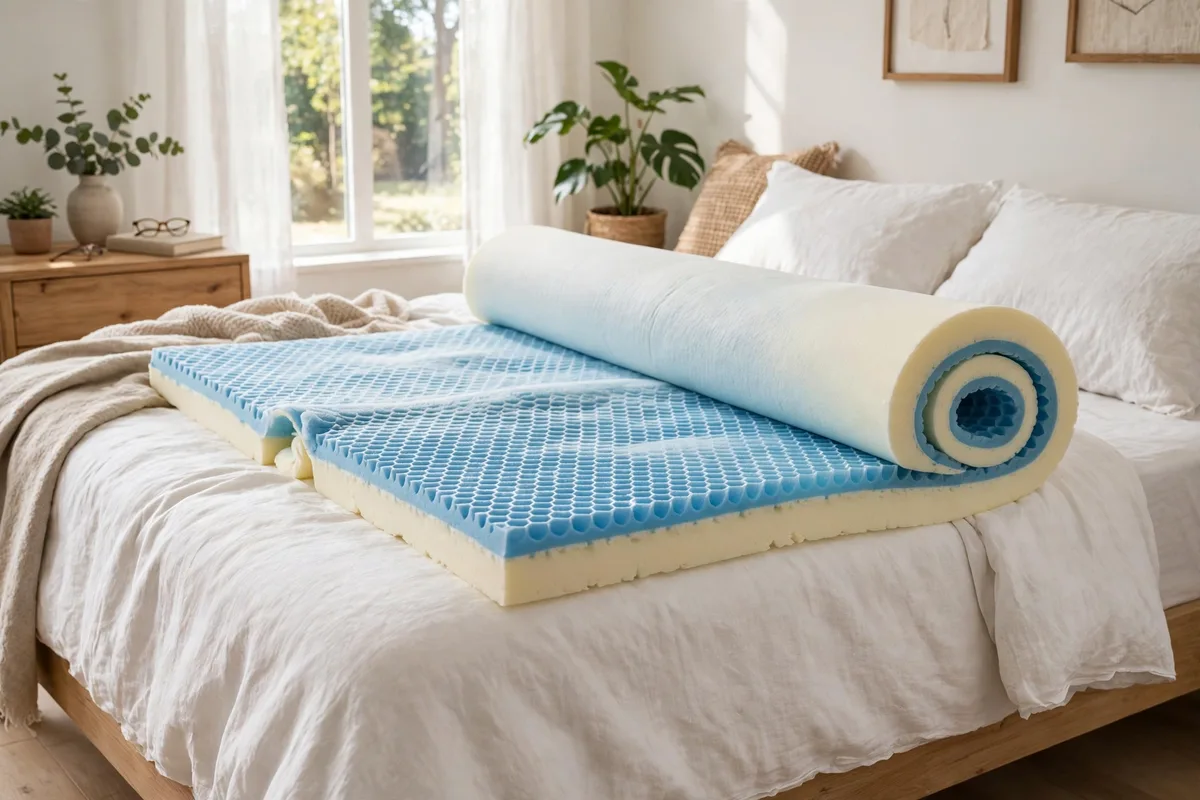
The ViscoSoft Select High Density makes its case on the one specification most topper listings work hard to hide: density. Its memory foam sits in the four-pound class, and density — pounds per cubic foot — is the durability and support spec that decides whether a topper still works in year three or has compressed into an expensive sheet. Review sites keep naming the Select for shoppers with back discomfort for one mechanical reason: dense foam does not bottom out. Where a soft, light topper lets a heavier sleeper sink straight through to the hard mattress beneath, this one keeps a supportive layer in between, so the pressure relief survives the night.
ViscoSoft sells gel-infused versions for sleepers who want the dense feel with some help on heat, and the gel follows the usual honest pattern — a cooler first impression, not a cold bed. The feel is firmer and less plush than the Linenspa below, which is the point for stomach and back sleepers who need support more than hug, and the wrong choice for anyone shopping for a cloud. It is heavier to handle than budget foam, and the premium over basic toppers is real. It is also the easiest premium to justify in this guide: you are paying for the spec that decides how long the thing lasts.
Yay · Pros
- Four-pound-class high-density foam — the durability spec that matters
- Does not bottom out under heavier sleepers like soft foam does
- Gel-infused options for sleepers who want dense support with less heat
Hmm · Cons
- Firmer, less plush feel — not the cloud some shoppers want
- Heavier to fit and rotate than budget foam
- Costs more than basic toppers, though the spec explains why
Best for: heavier sleepers and value shoppers who want a topper that still works in year three. Skip if: you want a soft, plush hug — this foam is deliberately firm.
4. Sleep On Latex Pure Green Mattress Topper — Best natural latex
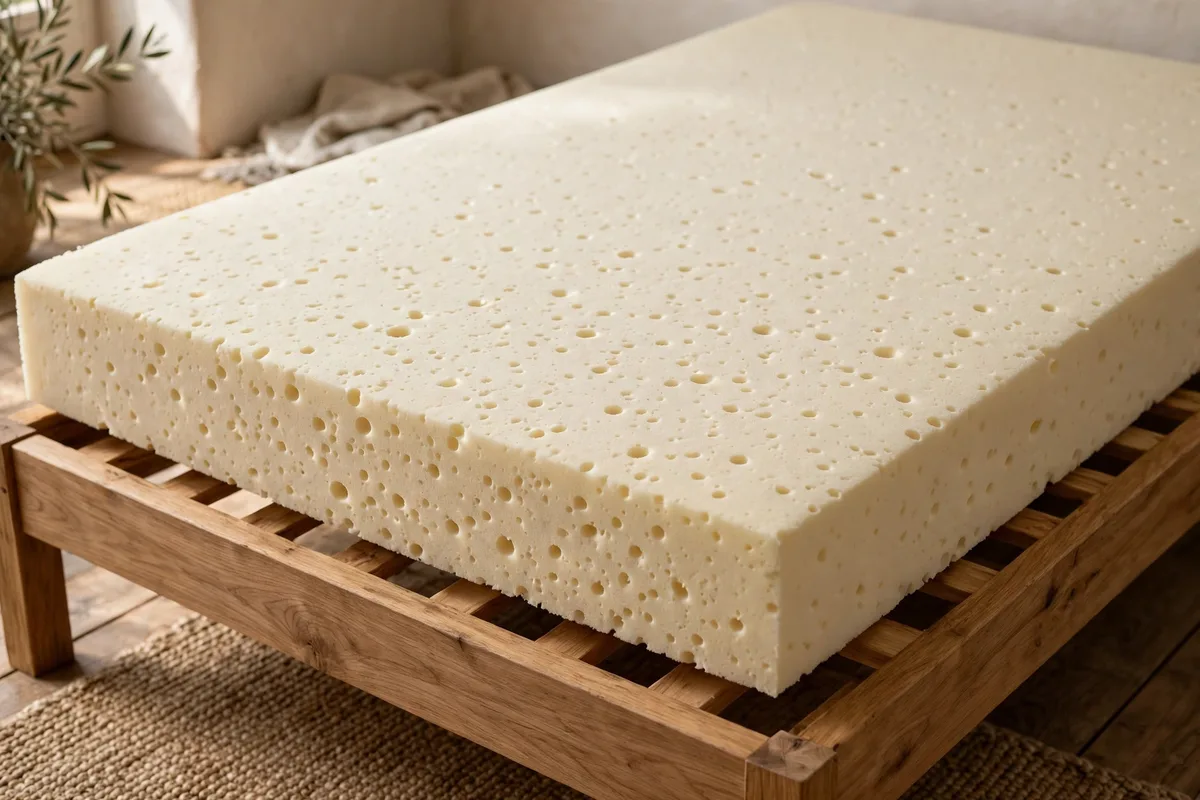
The Pure Green topper is the material purist’s pick: one hundred percent natural Dunlop latex, tapped from rubber trees rather than synthesised from petroleum, sold in two- and three-inch thicknesses with a choice of firmness levels. Latex behaves nothing like memory foam. Press it and it pushes back instantly; change position and it answers immediately, with a buoyant, on-the-bed feel instead of a slow sink. Because latex does not need body heat to soften, and because its pinhole structure lets air move, roundups place it at the temperature-neutral end of the topper market — the natural answer for sleepers who find every foam warm.
Durability is the second half of the case. Latex is the longest-lived topper material in roundup and owner evidence, outlasting memory foam by years before it softens or takes an impression, which reframes its higher price as cost per year rather than cost per purchase. The trades are physical. A latex topper is heavy — wrestling a queen onto the bed is a two-person job — and its bounce transfers more partner motion than memory foam absorbs. It also feels firmer and less enveloping, so committed side sleepers chasing a deep hug may find it honest but unromantic. For hot sleepers and buy-it-once shoppers, it is the strongest long-term value here.
Yay · Pros
- 100% natural Dunlop latex in 2- or 3-inch, with firmness choices
- Responsive and temperature-neutral — no slow sink, no heat trap
- The durability leader here; latex routinely outlasts foam
Hmm · Cons
- Heavy — fitting a large size is a two-person job
- Bouncier feel transfers more partner motion than memory foam
- Higher upfront price, repaid over a longer life
Best for: hot sleepers, combination sleepers and buy-it-once shoppers who value natural material. Skip if: you want deep, slow contouring or strong motion isolation.
5. Linenspa 3-Inch Gel-Infused Memory Foam Topper — Best budget
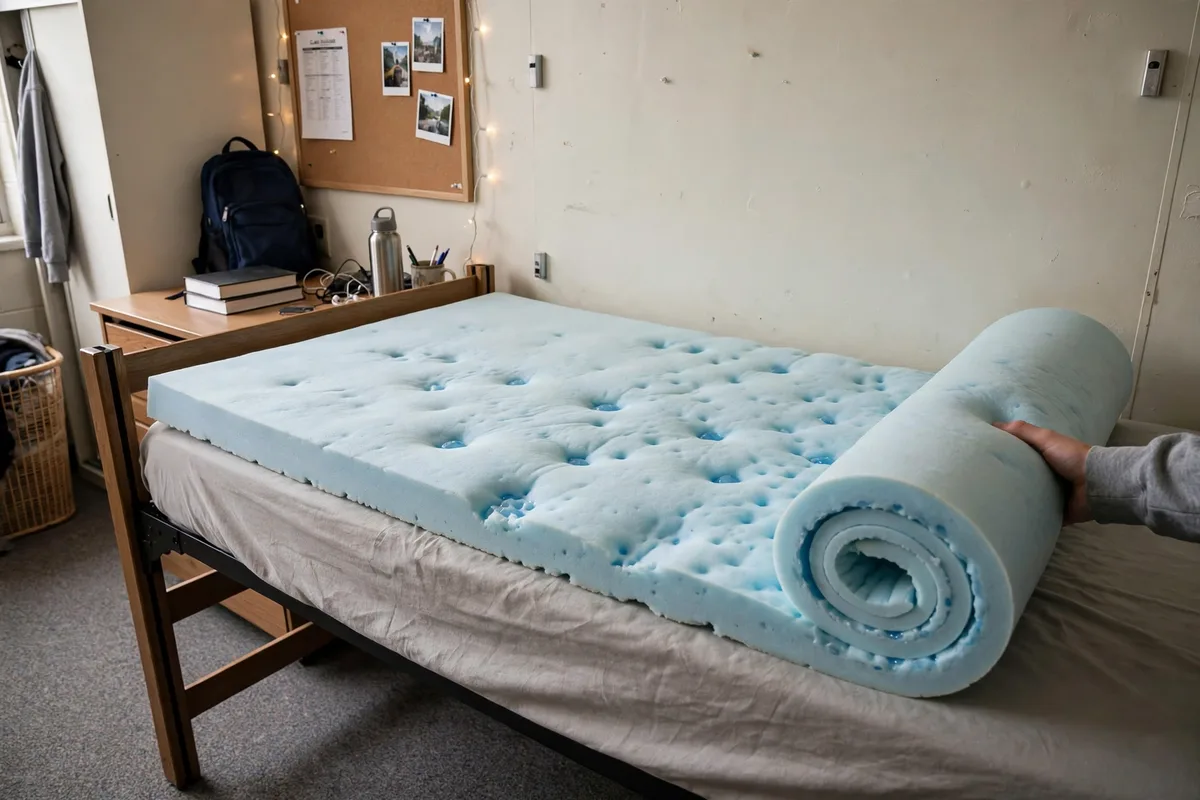
The Linenspa three-inch gel-infused topper has been one of Amazon’s best-selling toppers for years, and its role in this guide is the honest entry point: a light, soft layer of memory foam with gel infusion intended to disperse heat, sold at a price that makes experimenting cheap. The feel is plush rather than supportive — it takes the hard edge off a firm dorm mattress, a spare-room bed or a tired guest bed, and it unrolls without the wrestling match a dense or latex topper puts up. For students, renters and anyone furnishing a bed they do not own, that combination explains the sales record better than any specification.
The trade is lifespan, and it should be bought with open eyes. Light, soft foam compresses faster than high-density foam, so owner reports and roundups treat this as a one-to-two-year refresh rather than a five-year fixture — under a heavier sleeper, expect the plushness to fade sooner. The gel infusion, as elsewhere, moderates the first part of the night rather than transforming the bed into a cool one. Judged as what it is — the cheapest credible way to make a hard, temporary bed comfortable tonight — it earns its place. Judged as a long-term fix for your main bed, the ViscoSoft or the latex above is the better spend.
Yay · Pros
- One of Amazon’s best-selling toppers for years, at a budget price
- Light and easy to unroll — ideal for dorms and guest beds
- Gel infusion takes the edge off memory-foam warmth
Hmm · Cons
- Shorter lifespan than high-density foam — a refresh, not a fixture
- Too soft to support heavier sleepers on an everyday bed
- Plush rather than supportive; limited help for firm-bed pressure
Best for: dorms, guest beds, rentals and first topper experiments on a tight budget. Skip if: it is your main bed for years — step up to high-density foam or latex.
Memory foam, cooling infusions, latex, thickness and density: what actually matters
Memory foam, honestly. Viscoelastic foam softens where body heat touches it, so it contours closely, spreads pressure away from shoulders and hips, and absorbs motion better than any other topper material — a partner’s turning barely registers. Those strengths come from the same mechanism as its weaknesses. A material that softens with heat and holds a shape responds slowly when you move, and a close contour with limited airflow sleeps warm. Every memory foam pick in this guide is negotiating that trade; none has escaped it. Judge foam toppers by how well they manage warmth and how long the foam keeps its support.
What gel and graphite can and cannot do. Gel beads, gel infusions and graphite are added to foam to move heat, and the honest summary from tester roundups is consistent: they work at the surface and early in the night. A gel or graphite topper usually feels cooler to the first touch and slower to warm up than plain foam, a real improvement for sleepers who overheat while falling asleep. What no infusion can do is refrigerate a bed for eight hours — the foam underneath still warms to body temperature. Treat ‘cooling’ on any foam listing as a manufacturer claim about degree, not kind, and if heat is your main complaint, change material, not additive: latex is the structural answer.
Latex, the different physics. Latex does not soften with heat, so it feels identical at minute one and hour seven: springy, supportive and cool, with air moving through its pinhole structure. It is also the durability leader — natural latex keeps its shape years after foam has taken a permanent impression. The costs are weight, bounce and price: latex toppers are heavy to handle, livelier under a restless partner, and dearer upfront. Sleep environment matters around any topper, too: dry winter air disturbs sleep independently of the bed, which is why our guide to the best humidifiers in Canada and the USA is the companion read for Canadian bedrooms in January.
Thickness: two, three or four inches. Thickness only helps if the foam supports it. Two inches suits lighter sleepers, stomach sleepers and anyone adding a touch of cushion to a bed that is nearly right — it changes the surface without changing the bed. Three inches is the middle and this guide’s default: enough depth for side sleepers to sink shoulders and hips into on a firm mattress, without the unstable, perched feeling of very thick foam. Four inches belongs to heavier sleepers on firm beds, and only in dense foam or latex; four inches of soft, light foam compresses to the same thin layer under load. Body weight matters as much as inches — the heavier the sleeper, the more density has to back the thickness up.
Density, the hidden spec. If you remember one number, make it density. Two toppers can share a thickness and behave completely differently, because low-density foam is mostly air: it feels soft on night one and tired within a year or two, while high-density foam — the four-pound class — supports for years. Listings hide density because it is the spec that separates a durable product from a disposable one, so its absence from a listing is itself information. Protect whichever topper you choose with a washable protector, rotate it head-to-foot monthly, and complete the sleep setup rather than upgrading the bed: our guide to the best white noise machines in Canada and the USA covers the sound side of the same bedroom.
Mattress topper questions, answered
Can a mattress topper fix a sagging mattress?
No. A topper sits on top of the mattress and follows whatever shape is underneath it, so a visible sag, a deep body impression or a broken-down support core will still be there in the morning — the topper just makes the dip feel softer. A topper can help when the mattress is structurally sound but the surface feels too firm, or when pressure at the shoulders and hips is the problem. If the bed itself sags, the honest fix is a new mattress, not a thicker topper.
What thickness mattress topper is best for back pain?
For most back and side sleepers, 3 inches is the starting point tester roundups return to most often. It is thick enough to add real pressure relief over a firm mattress without changing the feel of the bed entirely. Lighter sleepers and stomach sleepers often do better with 2 inches, which cushions without letting the hips sink out of line. Heavier sleepers usually need 3 inches in a denser foam, because a soft, thin topper compresses flat under load and stops helping.
Do memory foam toppers sleep hot?
Standard memory foam can, yes. It softens with body heat, holds you in a close contour and limits airflow, so warm sleepers often notice the difference in summer. Gel and graphite infusions are designed to move heat away from the surface, and roundups generally find they help for the first part of the night rather than all night. Latex is the cooler long-term answer for most hot sleepers, because its open, pinhole structure breathes and it does not rely on body heat to soften.
Memory foam or latex topper — which is better?
Neither is better for everyone — they feel different. Memory foam contours closely, absorbs motion well and eases pressure at the shoulders and hips, but it responds slowly and tends to sleep warmer. Latex answers movement instantly, feels bouncier and more on the bed than in it, sleeps closer to temperature-neutral and usually lasts longer, but it costs more, weighs more and transfers more motion. Side sleepers who love a hug usually pick memory foam; combination sleepers and hot sleepers usually pick latex.
How long does a mattress topper last?
It depends mostly on density and material. A high-density memory foam topper commonly lasts around three to five years before it softens or takes a permanent impression, while a low-density budget topper can feel tired in one to two years. Natural latex is the durability leader in tester roundups and owner reports, often lasting five years and well beyond with rotation and a protector. Rotating the topper head-to-foot, using a washable protector and airing it out all extend whichever lifespan you bought.
The short version
Match the pick to the problem. For pressure relief on a sound, firm bed, the Tempur-Pedic TEMPUR-Topper Supreme is the benchmark; for memory foam that fights its own heat, the Saatva Graphite; for value that survives year three, the high-density ViscoSoft Select; for natural material, cool sleep and the longest life, the Sleep On Latex Pure Green; and for dorms, guests and tight budgets, the Linenspa. And keep the opening warning taped to the decision: if the mattress underneath sags, replace the mattress. A topper fixes firmness, pressure and tired guest beds — it was never going to fix a dip.
Last updated: November 18, 2026. We refresh this guide each season and whenever a pick is replaced by a better one.