Baking by weight is the quiet habit that separates consistent results from lucky ones — and the best kitchen scale is the cheapest precision tool in the kitchen. The right choice depends on your bowls, your batches and whether you ever weigh anything smaller than a gram. This guide compares the scales independent expert reviews keep recommending for Canada and the USA, with separate buying links for each marketplace.
Best Kitchen Scales at a Glance
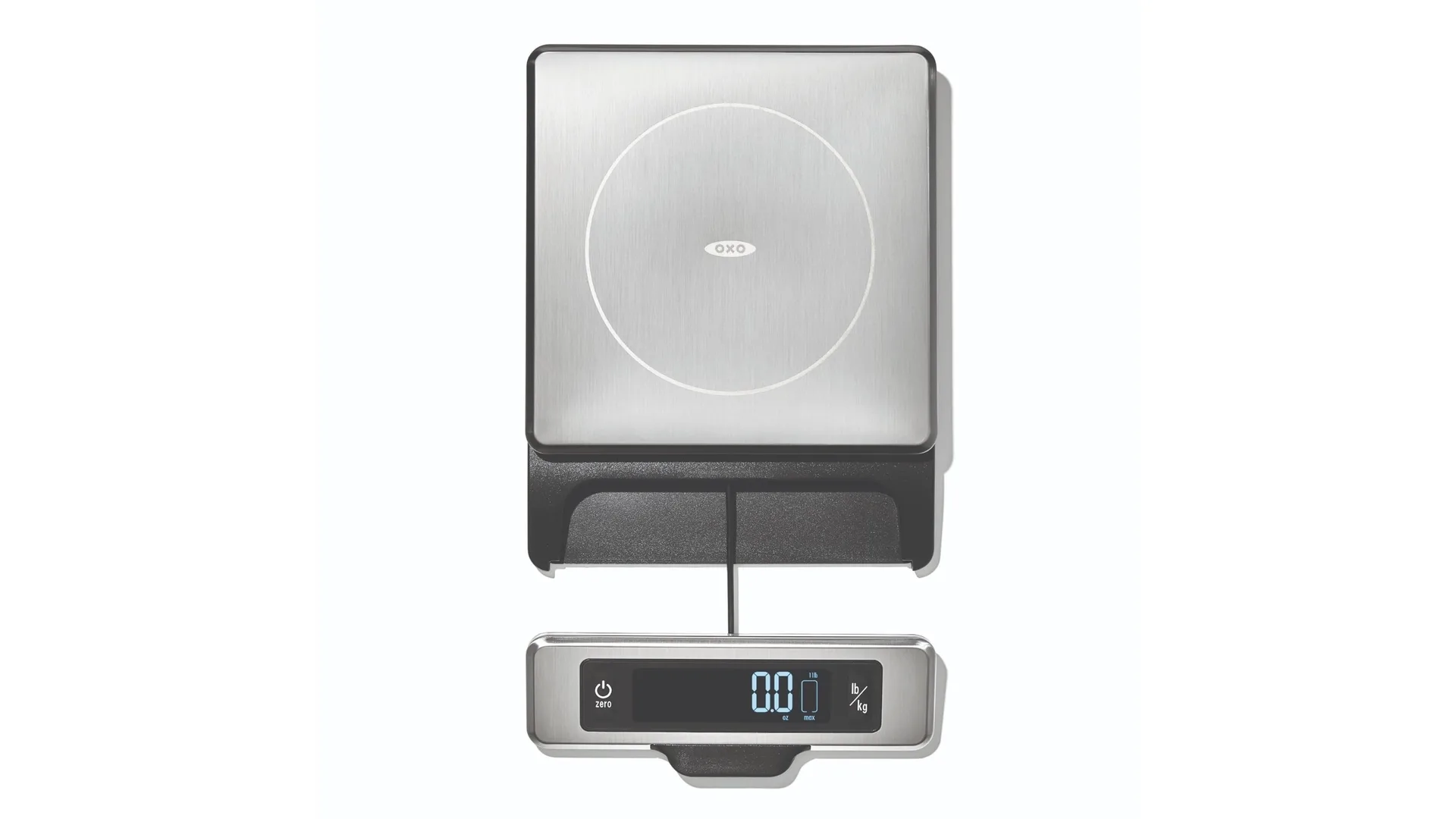
- Best Overall: OXO Good Grips 11-Pound Stainless Steel Scale with Pull-Out Display.
- Best Budget: Escali Primo — the long-running reliability benchmark.
- Best for Meal Prep: Etekcity EK6015.
- Best High-Capacity Value: Greater Goods Digital Kitchen Scale.
- Best Low-Budget Alternative: Ozeri Pronto.
- Best for Serious Bakers: My Weigh KD-8000.
- Best for Macros: Etekcity Smart Nutrition Scale (app-connected).
- Best Entry Price: Amazon Basics Digital Kitchen Scale.
- Best for Big Households: Nicewell 22lb Food Scale.
How We Researched
We do not buy and test products ourselves — our guides are built on independent research. We compared published findings from established review publications (including calibration-weight accuracy checks reported by reviewers), manufacturer specifications, and recurring owner experience. Our full method is on our How We Research page.
How we score
The scores in this guide are CookSmartPicks’ own editorial ratings. We set them from our research of the expert reviews and sources listed in this post — they are our ratings, not scores quoted from another publication.
1. OXO Good Grips 11-Pound Scale with Pull-Out Display — Best Overall
Every scale in this guide can weigh accurately; the OXO is the one you can always read. Its display pulls out from beneath the platform, so a large mixing bowl never shadows the numbers — the single most common frustration with every other design. Add a backlit readout, 1-gram increments to 11 pounds, and a fingerprint-resistant stainless platform, and the reviewer consensus behind it makes complete sense.
Pros: pull-out display; accurate and consistent in reviewer calibration checks; easy-clean platform. Cons: premium tier for a scale; 11 lb ceiling.
Who should buy: bakers and everyday cooks — especially partners for our stand mixers readers. Who should skip: bulk batch cooks (see picks 4 and 9).
2. Escali Primo — Best Budget
The Primo has been recommended by major review publications for years for a simple reason: it is accurate, fast and sealed against the flour and spills of a real counter, with controls a first-time user understands in seconds. It is the scale professional test kitchens keep on hand — and the easiest recommendation in this guide at its tier.
Pros: reliable 1-gram accuracy; sealed buttons; simple and quick. Cons: no backlight; wide bowls can hide the fixed display.
Who should buy: most kitchens on a sensible budget.
3. Etekcity EK6015 — Best for Meal Prep
The meal-prep workhorse: 11 lb capacity, five unit modes and a backlit display, backed by one of the largest owner bases in the category. It pairs naturally with the portioning workflow in our glass meal prep containers and vacuum sealer for meal prep guides — weigh, portion, seal, done.
Pros: proven at owner scale; clear backlit readout; slim storage. Cons: 1-gram floor only — not a spice or coffee-precision scale.
Who should buy: weekly meal preppers and portion trackers.
4. Greater Goods Digital Kitchen Scale — Best High-Capacity Value
A 22 lb-class platform with 1-gram precision at a value tier — the headroom dough bakers and batch cooks need when an 11 lb scale maxes out mid-recipe.
Pros: double the usual capacity; simple interface. Cons: larger footprint; shorter publisher track record than OXO or Escali.
Who should buy: bread bakers and bulk cooks.
5. Ozeri Pronto — Best Low-Budget Alternative
The closest low-cost analogue to the Escali formula: simple, quick, and honest about its tier. Choose it when the budget is strict or a second scale lives in a drawer.
Pros: inexpensive; dead simple. Cons: build and display a step below the Primo.
Who should buy: strict budgets and backup-scale buyers.
6. My Weigh KD-8000 — Best for Serious Bakers
A bench-style scale built for dough workflows, with high capacity and baker’s percentage functions in its maker specification — the choice of sourdough bakers who weigh every ingredient, every time.
Pros: purpose-built for baking math; sturdy platform. Cons: bulky and utilitarian; more scale than most kitchens need.
Who should buy: committed bread bakers. Store the results with our food storage containers picks.
7. Etekcity Smart Nutrition Scale — Best for Macros
An app-connected scale that turns weighing into nutrition logging, calculating macros as you portion. If you track intake seriously, it removes the manual-entry step entirely.
Pros: automatic nutrition tracking; solid base scale. Cons: app dependency; unnecessary for baking-only use.
Who should buy: macro trackers and structured meal preppers.
8. Amazon Basics Digital Kitchen Scale — Best Entry Price
A simple first scale with tare and multiple units — the lowest-friction way to start cooking by weight, and a recurring roundup presence on owner volume alone.
Pros: easy start; slim. Cons: basic display; no standout durability story.
Who should buy: first-time scale buyers.
9. Nicewell 22lb Food Scale — Best for Big Households
Double the usual ceiling in a slim body — built for the cooks who brine, batch and bulk-buy, and for whom 11 lb is a starting point, not a limit.
Pros: 22 lb capacity; slim profile. Cons: less publisher coverage than the top picks — check the current model’s specifications before ordering.
Who should buy: big families and bulk cooks.
Do You Need 0.1-Gram Precision?
For almost all home cooking and baking, no. A 1-gram scale is accurate well within what recipes can detect. The 0.1-gram class earns its place for coffee dosing, spices, yeast and salts in small amounts — a specialist second scale for most kitchens, not the main one. Whichever you choose, weigh in grams: a cup of flour varies wildly by scoop, while 120 grams is 120 grams in Toronto and in Texas.
How to Choose the Best Kitchen Scale
Capacity: 11 lb covers most homes; bakers and bulk cooks should look at 22 lb-class picks. Display: if your bowls are wide, the OXO’s pull-out display is not a luxury — it is the feature you will use daily. Buttons: sealed panels survive flour; raised buttons are easier with wet hands. Auto-off: longer timers (or an AC option on bench scales) prevent mid-recipe shutoffs. Units: grams and kilograms are essential; millilitres-for-water modes are a convenience, not a requirement.
How the Picks in This Guide Differ Where It Matters
On paper, most of these scales look alike: 1-gram increments, a tare button and a choice of units. In daily use, three differences decide whether a scale feels effortless or annoying. The first is whether you can actually see the reading. The OXO Good Grips is the only pick here whose display pulls out from under the platform, so a wide mixing bowl or a sheet pan cannot cover the numbers. The Escali Primo, the Ozeri Pronto and the Amazon Basics all use a fixed display, which is fine under a cereal bowl and genuinely frustrating under a large salad bowl — the guide notes this trade-off in the Primo’s own pros and cons. The Etekcity EK6015 splits the difference with a backlit fixed display: easier to read in dim light, but still capable of being shadowed by an oversized bowl.
The second difference is capacity, and it splits the list cleanly in two. The OXO, the Primo and the EK6015 are 11 lb scales, which covers a bowl of batter, a chicken, or a week of portioned lunches with room to spare. The Greater Goods and the Nicewell are 22 lb-class scales, and the My Weigh KD-8000 is a bench-style design built for heavy dough work. That headroom only matters when the bowl itself is heavy: a large ceramic mixing bowl can weigh several pounds before a single ingredient goes in, and tare does not create capacity — it only zeroes the display. A scale that maxes out mid-recipe leaves you splitting the batch and adding figures in your head, which defeats the point of weighing in the first place.
The third difference is what the scale does beyond weighing. For most cooks, the honest answer should be “nothing” — the Primo and the Pronto earn their places by being fast, simple and quick to wipe down. The KD-8000 adds baker’s percentage functions for people who build dough formulas around flour weight. The Etekcity Smart Nutrition Scale adds an app that turns each weighing into a nutrition entry, which is valuable if you log macros daily and dead weight if you do not. Neither upgrade makes the underlying weighing better, so choose them for the workflow you already have, not for a workflow you imagine starting.
Which Scale Suits Your Kitchen? A Working Guide by Household
Start with what you weigh most often, and do the simple maths for your largest regular job. A typical home bread dough — 500 grams of flour, around 325 grams of water at 65 percent hydration, plus salt and yeast — totals well under 1 kilogram, so any 11 lb scale handles a single loaf easily. Double that dough for two loaves, add the weight of a heavy bowl, and then add a holiday batch or a brining bird, and the case for a 22 lb-class pick like the Greater Goods or the Nicewell makes itself. The rule is not “buy the biggest”; it is “buy enough headroom for your heaviest bowl plus your heaviest batch, and no more,” because the bigger platforms also take more counter and drawer space every day.
Meal preppers should think in portions rather than batches. If you cook 800 grams of chicken, rice or roasted vegetables and divide it into four equal lunches, the scale is doing one weighing per container — 200 grams each, taring between containers — and speed and a clear display matter more than raw capacity. That is the EK6015’s home ground, and it is also why the Smart Nutrition Scale suits trackers: the weighing and the logging happen in the same motion. Coffee drinkers and spice-heavy cooks face the opposite problem. A 1-gram floor is too coarse to show a pinch of salt, a small amount of yeast or a precise coffee dose changing in real time, which is why this guide treats 0.1-gram precision as a specialist second scale rather than a reason to replace a good main scale.
Household size matters less than cooking style. A single cook who bakes sourdough weekly will use the KD-8000’s percentage functions more than a family of five that mostly weighs portions and produce. A household buying its first scale should start simple — the Primo, the Pronto or the Amazon Basics — live with cooking by weight for a month, and let real frustrations, not feature lists, decide whether an upgrade is ever needed. Canadian and US buyers face the same shortlist on Amazon.ca and Amazon.com; what differs is simply which marketplace link applies, not which scale suits the kitchen.
Keeping a Kitchen Scale Accurate: Care, Storage and Troubleshooting
A kitchen scale is a measuring instrument that happens to live in a messy room, and most “inaccurate scale” complaints trace back to the room rather than the instrument. Always weigh on a flat, level, hard surface — not on a towel, a trivet or a wobbly board — and centre the bowl on the platform instead of hanging it over one edge. Let the reading settle for a moment before you record it, especially with liquids, which keep moving after you stop pouring. Keep the scale away from the heat and steam of a stove or a just-opened oven, and never leave a heavy bowl sitting on the platform for hours between uses; a platform is built to measure loads, not to store them.
Cleaning should stay boring. Wipe the platform with a damp cloth and dry it; do not immerse any scale in this guide in water, run it under a tap or put it in a dishwasher, because the electronics and the weighing mechanism sit directly under that platform. Sealed controls, like the Primo’s, shrug off flour and splashes better than open seams, but no kitchen scale is a cutting board or a splashback. Flour worked into a seam, sugar syrup dried around a button and water pooled under the platform are the slow, ordinary ways these tools get less pleasant to use. A quick wipe after a messy session prevents all three.
When readings start to drift, dim or lose the tare setting, work through the cheap explanations first. As the FAQ below notes, tired batteries are the usual cause, and fresh batteries fix more “broken” scales than any other step. Next, check the surface and the load position, then weigh a known reference — a sealed bag or tin whose weight you already know from a previously reliable reading — in the centre and then towards a corner; a scale that agrees in the centre but not at the edges is telling you the load is off-centre, not necessarily that it has failed. Store the scale flat and dry, with nothing stacked on top of it, and keep spare batteries in the same drawer if your household weighs daily. Treated that way, a simple scale has very little to go wrong, which is exactly why the simplest picks in this guide stay recommendable year after year.
Frequently Asked Questions
How accurate is a home kitchen scale?
Good 1-gram scales are accurate to within a gram or two across their range in reviewer calibration checks — far more consistent than volume measures like cups, which is the entire point of weighing.
What does the tare function do?
Tare zeroes the scale with your bowl on it, so you weigh only the ingredients — and can add each ingredient in turn, zeroing between, in a single bowl.
Why does my scale give different readings in different spots?
Uneven counters and off-centre loads are the usual causes. Use a flat, level surface, centre the bowl, and let the reading settle before recording it.
Can I weigh liquids on a kitchen scale?
Yes — for water and milk, grams and millilitres match closely enough for home recipes, and weighing is tidier than jug markings. Oils differ slightly by density; recipes written by weight already account for this.
How long do kitchen scale batteries last?
Typically many months of daily use. Scales that dim, drift or forget tare are usually asking for fresh batteries — try that before assuming the scale has failed.
The Verdict
Buy the OXO if you bake under big bowls — you will thank the pull-out display every single time. Buy the Escali Primo if you want the proven budget benchmark. Buy the Greater Goods or Nicewell if your batches outgrow 11 pounds. Then cook by grams for a month; most people never go back to cups.