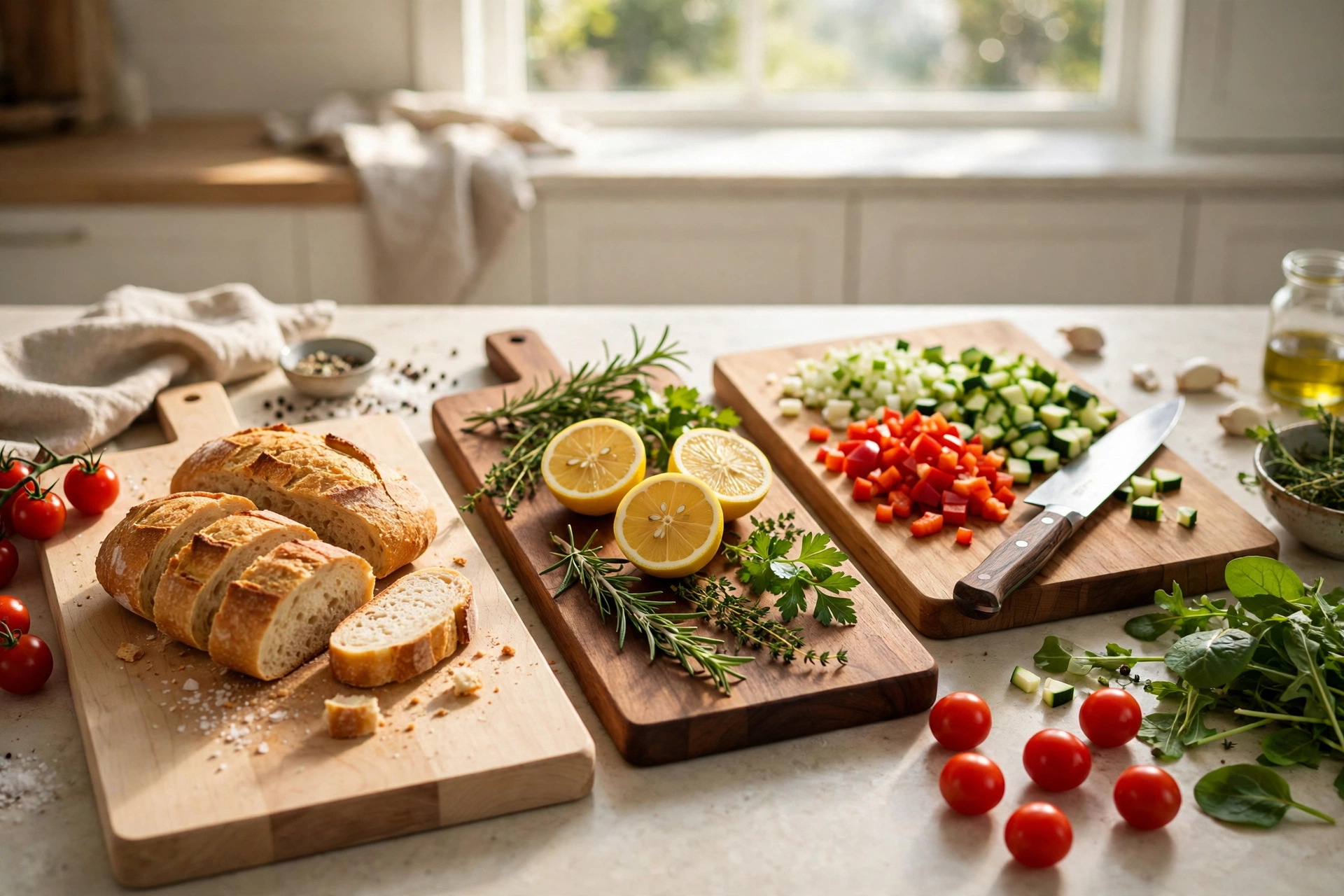
A cutting board is the surface every meal in your kitchen passes over, and it is quietly a knife decision too: the wrong board dulls good blades, slides around mid-carve, or soaks up raw-chicken juices it can never quite give back. We compared the boards the major test kitchens keep recommending — and the ones Canadian and American owners keep re-ordering — to build the shortlist below, and the good news is that the test consensus in this category is unusually settled.
The honest headline: material matters more than brand. Wood is gentler on knife edges than plastic or composite, end grain is gentler still, and the boards to avoid outright are the glass and marble ones, whatever the showroom says. After that, the choice is maintenance tolerance — a board you oil monthly, or one that goes in the dishwasher and never asks for anything. Everything below is split along exactly that line.
How we chose these cutting boards
We built this list from the tested roundups that revisit cutting boards every year — the mega-outlet testing from Serious Eats, America's Test Kitchen, Good Housekeeping and Reviewed, as reconciled by the specialist guides that track those results alongside owner ratings on Amazon in both countries — then checked every board's material, construction and care requirements against the manufacturers' own specifications. Where testers disagree, we say so. CookSmartPicks does not run its own board lab; what we do is reconcile the published evidence and flag the trade-offs the roundups bury.
Three things separated the picks. Knife kindness — how hard the surface is on an edge over months of daily chopping, because a board that eats blades costs you a knife. Stability and size — enough weight or grip to stay planted, and enough room for a chicken, a cabbage or a Thanksgiving turkey. Care honesty — what the board actually demands week to week, from monthly oiling to nothing at all, scored as a feature or a burden depending on who is buying.
The lineup at a glance
| Cutting board | Best for | Why it made the cut |
|---|---|---|
| John Boos Maple Edge Grain Cutting Board | Best wood benchmark | The professional standard in maple edge grain — 4.7 to 4.8 stars across the major guides |
| Boardsmith Maple End-Grain Cutting Board | Best heirloom | EatHealthy365's best overall and knife-dullness test winner — end grain that's gentlest on edges |
| OXO Good Grips Carving & Cutting Board | Best plastic for everyday | Juice groove, non-slip edges and dishwasher-safe, with the biggest rating base in the category |
| Epicurean All-In-One Cutting Board | Best composite | 2026 Good Housekeeping Kitchen Award winner — NSF-certified composite, fully dishwasher-safe |
| TeakHaus Edge Grain Teak Cutting Board | Best low-maintenance wood | Naturally oily teak that needs far less conditioning than maple |
| Sonder LA Winsome Acacia Cutting Board | Reviewed's best overall 2026 | Reviewed's best overall cutting board of 2026 — warm acacia with a modern profile |
1. John Boos Maple Edge Grain Cutting Board — Best wood benchmark
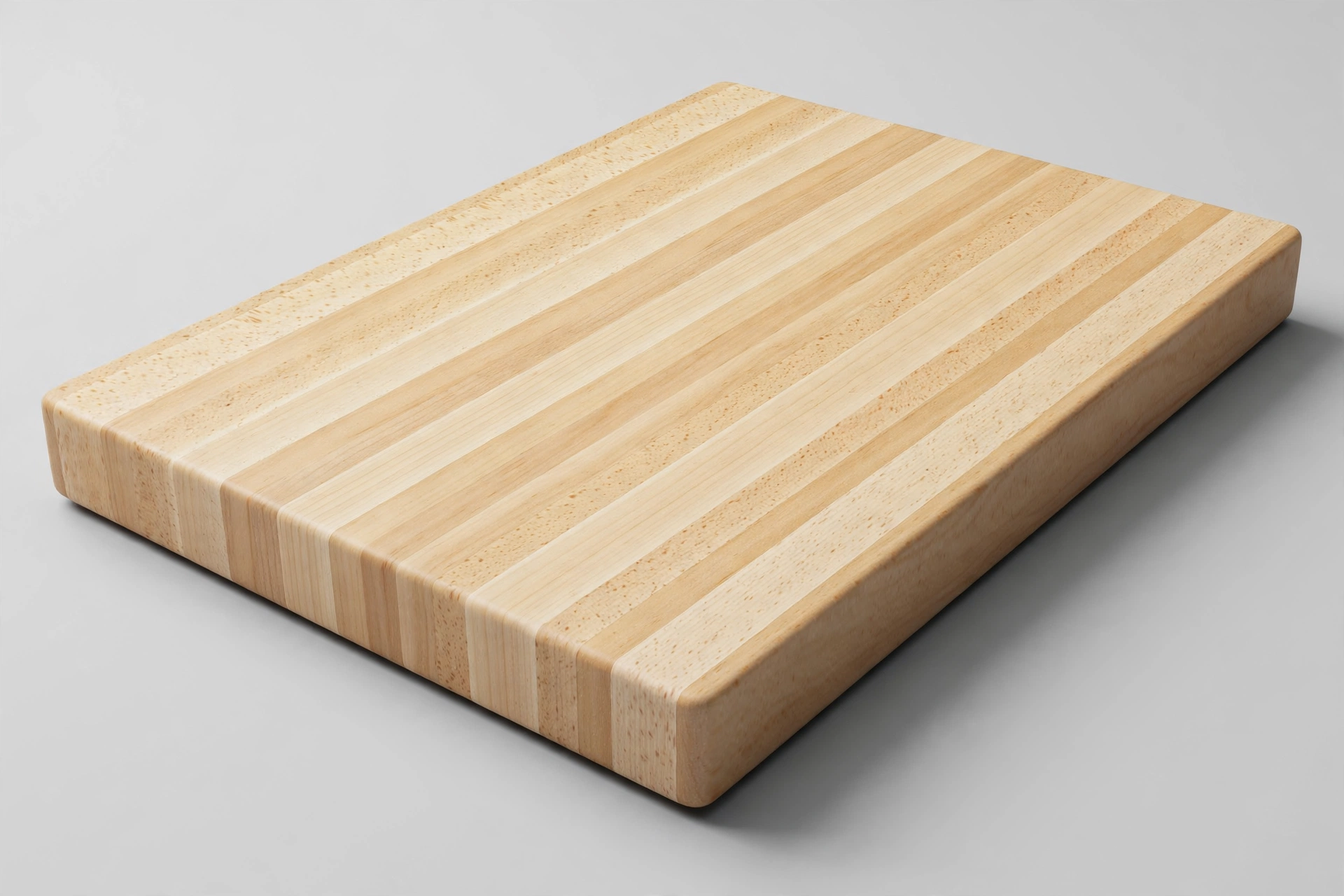
Boos is the name professional kitchens default to, and the maple edge-grain board is why: dense North American maple laid in long strips, thick enough to stay planted under a cleaver and heavy enough that it never walks across the counter mid-task. The guides that track this category rate it 4.7 to 4.8 stars, and per SuperKitchenTools it carries some 15.6k owner ratings — the wood benchmark against which everything else here is measured. Edge grain is the workhorse construction: more forgiving of heavy use than face grain, and far kinder to edges than any plastic or composite surface.
The trade-offs are the wood trade-offs, in full. It is hand-wash only, it wants a coat of board oil or cream on a regular rhythm or it will eventually dry and split, and its weight — the very thing that makes it stable — makes it a two-handed trip to the sink. It is also a serious purchase next to the plastic picks below. If you cook daily and keep your knives sharp, it earns that money back over a decade or more of service.
Yay · Pros
- The professional standard — 4.7 to 4.8 stars across the major guides
- Dense maple edge grain is gentle on knife edges and shrugs off heavy use
- Thick and heavy: it stays exactly where you put it
Hmm · Cons
- Hand-wash only, with regular oiling or board cream
- Heavy — a two-handed carry to the sink when wet
- A serious price next to the plastic and composite picks
Best for: daily cooks who want the reference wood board and will actually maintain it. Skip if: the words "hand-wash only" end the conversation — the Epicurean and OXO below ask nothing of you.
2. Boardsmith Maple End-Grain Cutting Board — Best heirloom
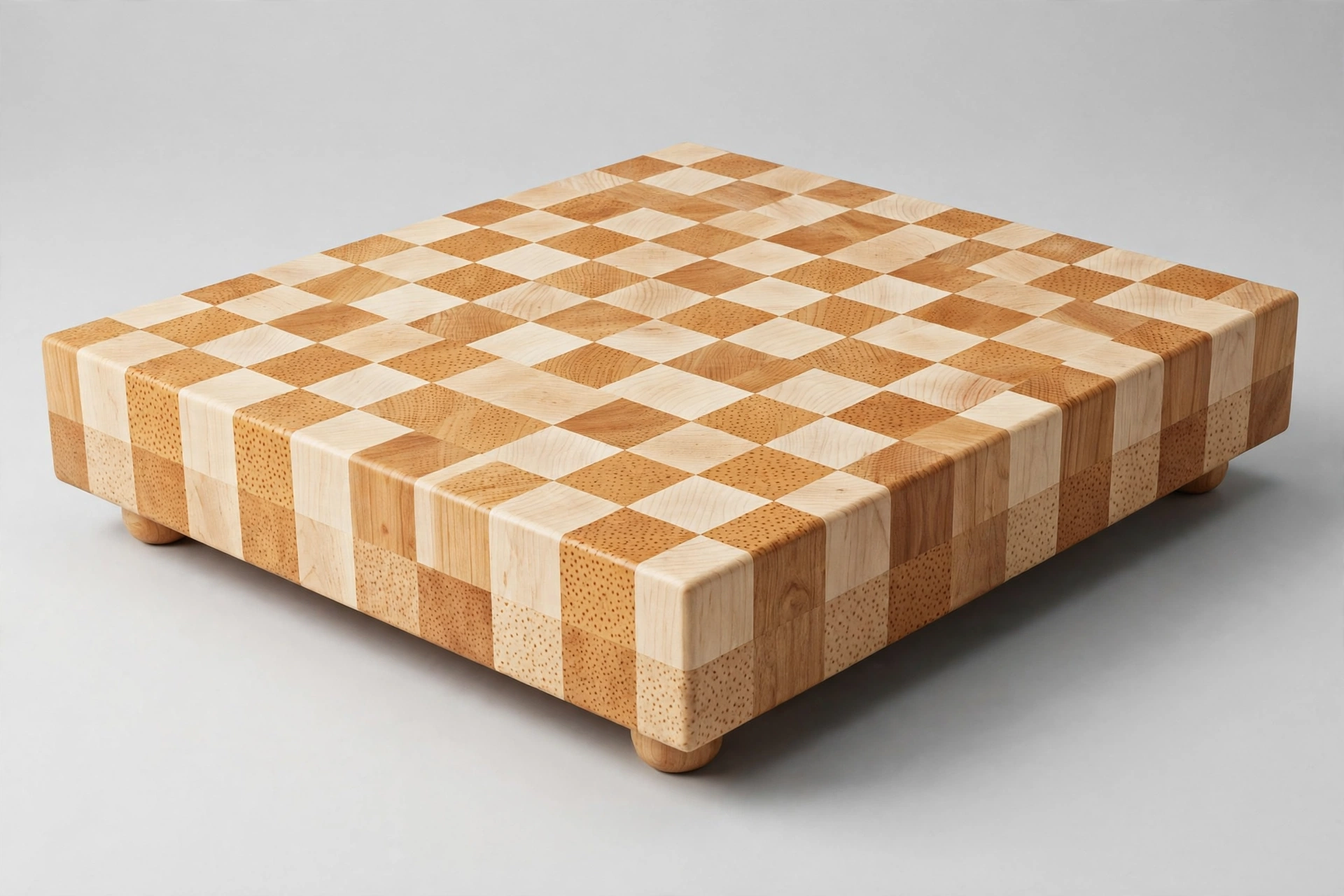
End grain is the construction knife people argue for, and the Boardsmith is the argument at its best. Instead of long strips, the wood blocks stand on end, so the blade slips between the fibres rather than severing them — the surface partly closes behind each cut, and edges stay keen far longer. In EatHealthy365's testing this board was named best overall and won its knife-dullness test outright, which is the single most relevant result in the category for anyone who has invested in good knives. It is built the slow way, in small batches, and it looks and feels like the last board you buy.
That position costs what it costs. This is the premium end of the category, the board is thick and heavy, and like all serious wood it is hand-wash only with regular conditioning — arguably more faithfully than the Boos, because end grain drinks oil faster. Buy it as a decades-long fixture and a partner to good steel, not as a casual upgrade.
Yay · Pros
- EatHealthy365's best overall — and the winner of its knife-dullness test
- End grain partly closes behind the blade, sparing your edges
- Heirloom build quality, made in small batches
Hmm · Cons
- The premium price in this guide
- Thick and heavy — not a board you move casually
- Hand-wash only, and end grain wants oil more often
Best for: knife enthusiasts and buy-it-for-life shoppers who want the gentlest surface money buys. Skip if: your knives are a budget set you replace anyway — the Boos gives you most of the wood experience for less devotion.
3. OXO Good Grips Carving & Cutting Board — Best plastic for everyday
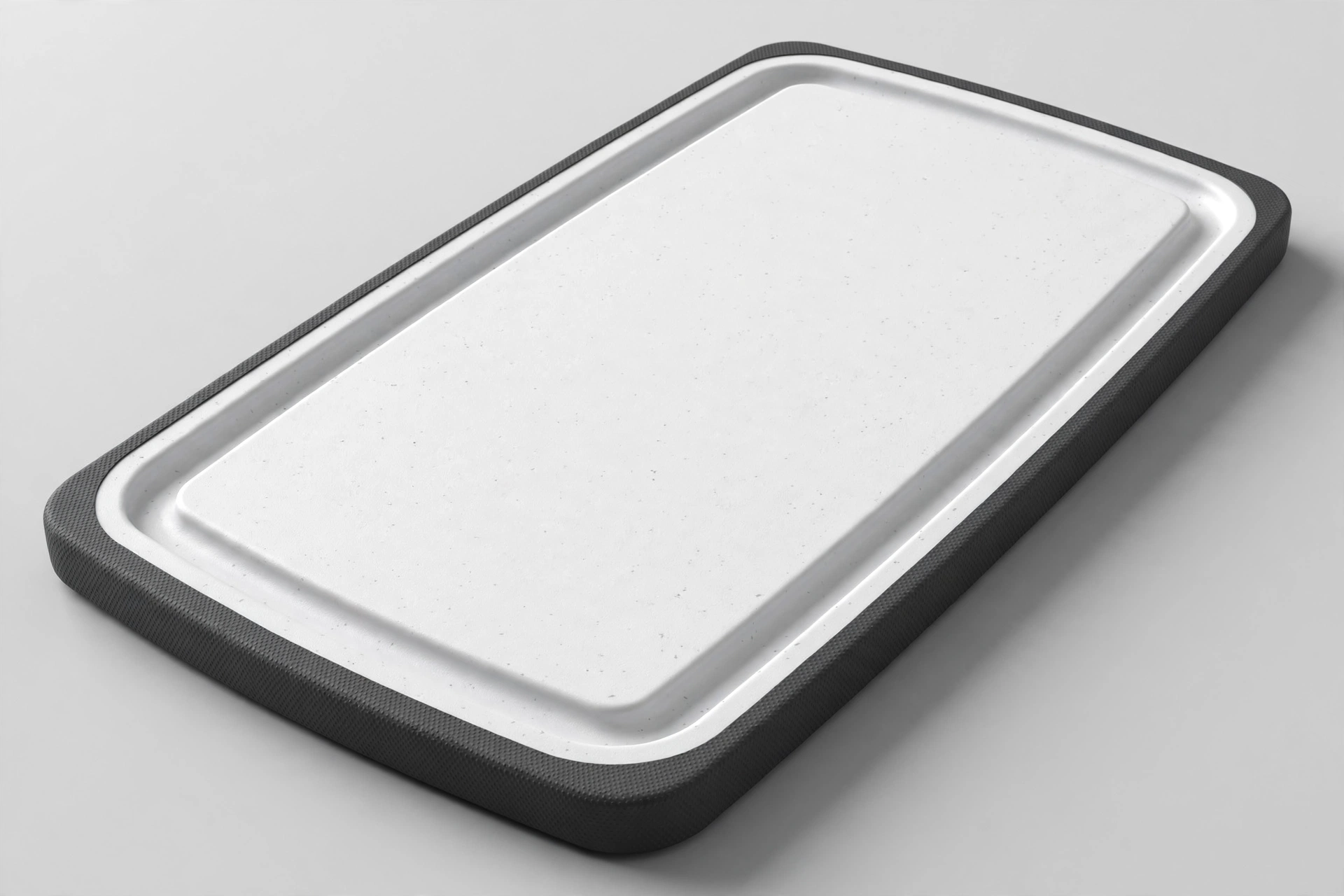
Every kitchen needs one board that can take raw chicken at six and come out of the dishwasher clean at seven, and this is the category's default answer. The OXO pairs a deep juice groove — sized for roasts, melons and a holiday turkey — with non-slip edges that keep it planted on the counter, and per SuperKitchenTools it carries some 22.1k owner ratings, the biggest rating base of any board here. That volume of owners, over that many years, is its own kind of test result: this is the plastic board North America actually cooks on.
The honest trade-offs are plastic's own. The surface scores under knives and will hold stains and knife marks over the years in a way wood does not; it is harder on edges than any wood board in this list; and it is a consumable, not an heirloom — expect to replace it when the scoring gets deep rather than hand it down. As the raw-meat and dishwasher half of a two-board setup, none of that matters much.
Yay · Pros
- Deep juice groove and non-slip edges — built for roasts and poultry
- Fully dishwasher-safe: the raw-meat board of the pair
- Some 22.1k owner ratings — the biggest base in the category
Hmm · Cons
- Plastic scores and stains over time; it is a replaceable, not a keepsake
- Harder on knife edges than any wood board here
- Light build feels less planted than a thick wood board for heavy carving
Best for: the everyday workhorse slot — raw proteins, messy fruit, dishwasher households. Skip if: it would be your only board and your knives are good ones; pair it with wood or make wood the main board.
4. Epicurean All-In-One Cutting Board — Best composite
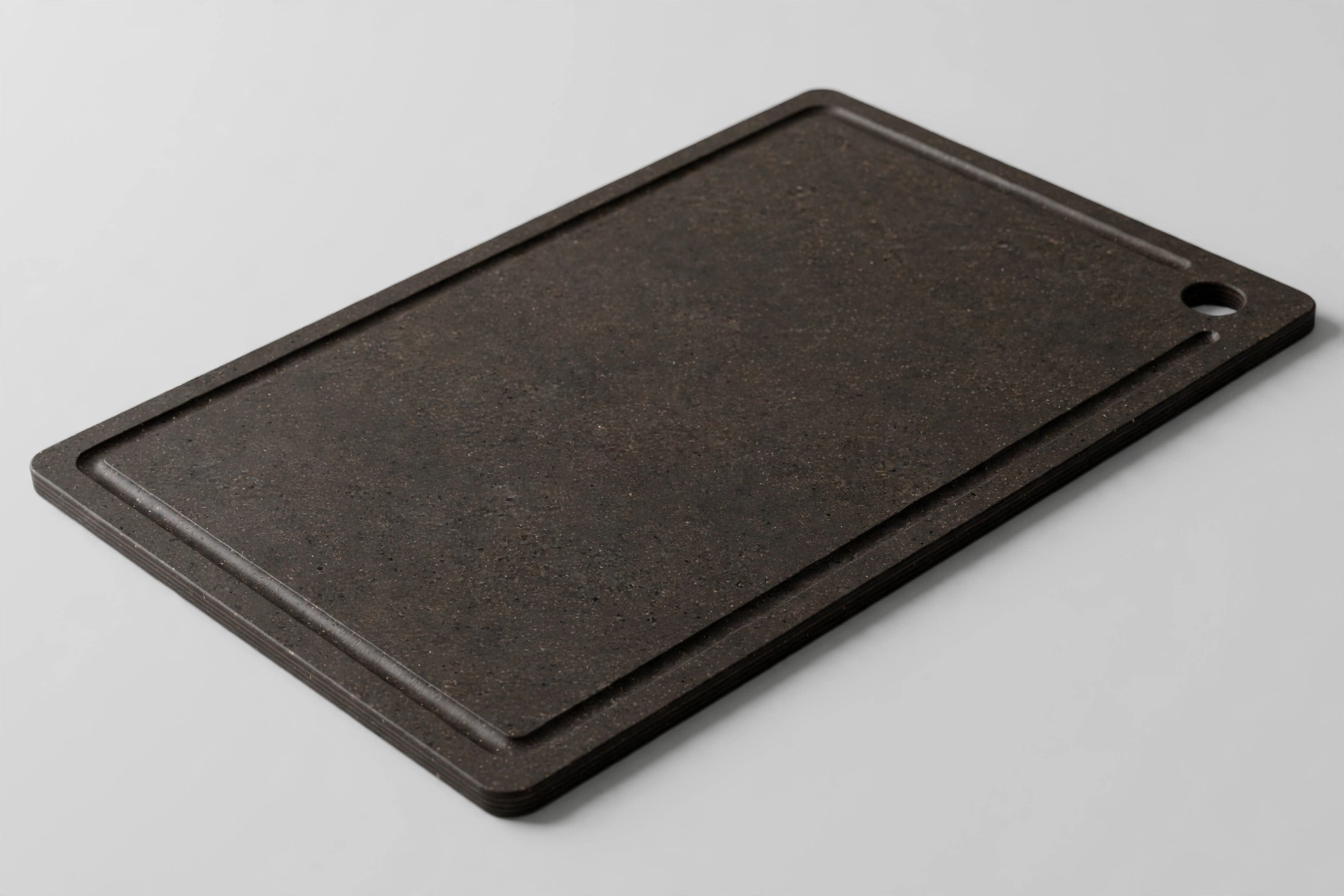
Epicurean's boards are pressed from wood-fibre composite — the same family of material as professional skate-park ramps — and the All-In-One is the line's full-featured version, with a juice groove for messy work. Per TheSharpKitchen's roundup of the category, it won a 2026 Good Housekeeping Kitchen Award, and it is NSF-certified, the sanitation standard commercial kitchens work to. The appeal is the combination nothing else here offers: a wood-warm surface feel in a thin, light board that goes straight into the dishwasher and will not crack, warp or need a drop of oil in its life.
Composite sits between wood and plastic in edge kindness too — kinder than plastic, but a harder surface than maple, so keen edges will want honing more often than they would on the Boardsmith. The thin profile is a storage gift and a small compromise at the same time: it has none of the planted, immovable feel of a thick wood block, and deep knife scores can hold colour from beets and turmeric. For a low-maintenance household, it is the most rational board in this guide.
Yay · Pros
- 2026 Good Housekeeping Kitchen Award winner, per TheSharpKitchen
- NSF-certified composite — dishwasher-safe, never needs oil
- Thin and light: stores anywhere, easy to handle
Hmm · Cons
- Harder on edges than wood — plan on more frequent honing
- Thin profile lacks the planted feel of a heavy wood board
- Deep scores can hold colour from beets and turmeric
Best for: low-maintenance kitchens that want one board to do everything, dishwasher included. Skip if: protecting a serious knife investment is the priority — wood, and ideally end grain, is the gentler home for it.
5. TeakHaus Edge Grain Teak Cutting Board — Best low-maintenance wood
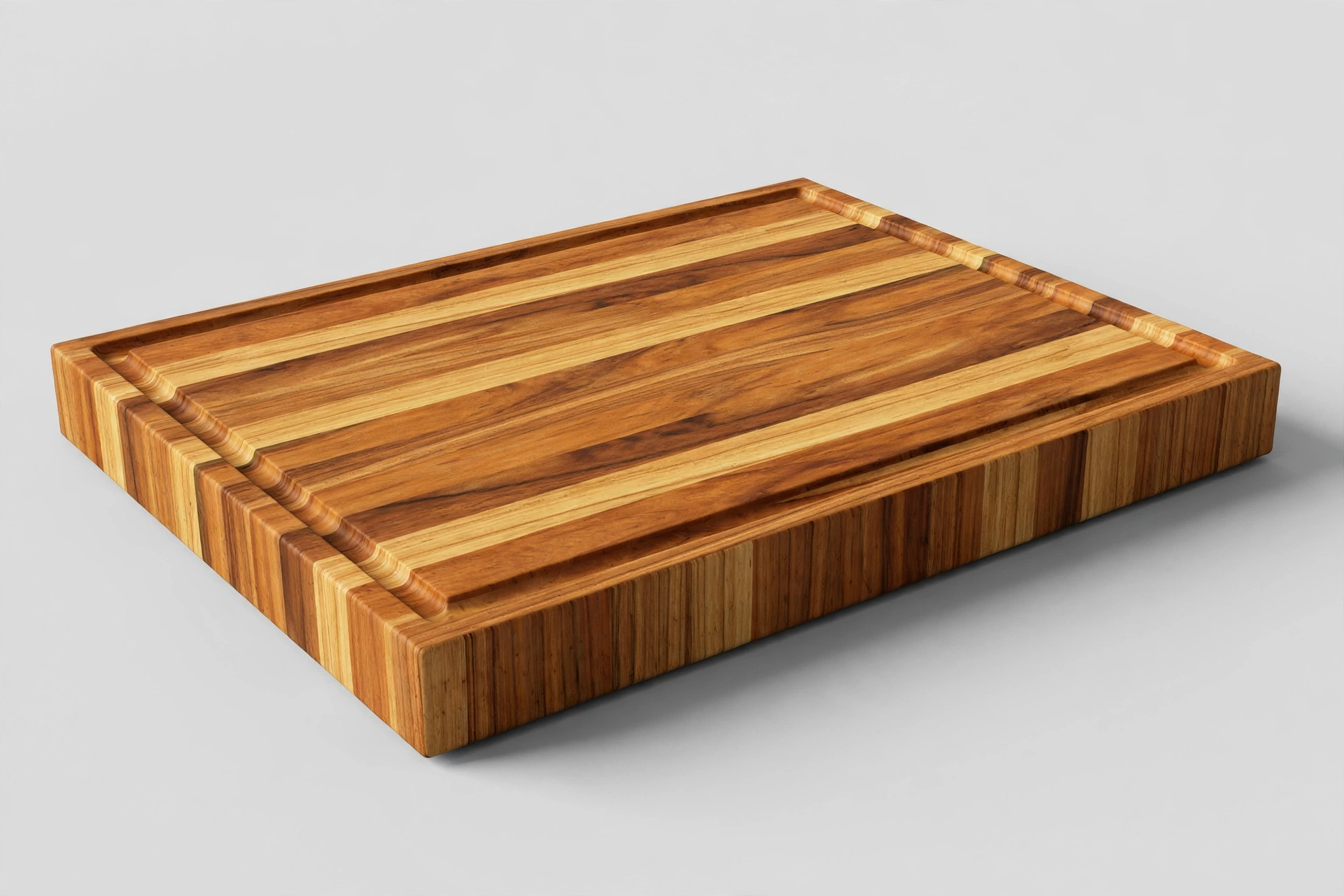
Teak is the wood for people who love wood boards but not the upkeep calendar. The timber is naturally rich in oils, so it resists moisture and warping far better than maple and asks for conditioning on a much lazier schedule — the reason teak has been the boat-deck and outdoor-furniture wood for a century. TeakHaus builds substantial edge-grain boards from it, with the warm, varied grain that makes a board worth leaving out on the counter, and per SuperKitchenTools the line carries some 6.7k owner ratings — a real owner base, not a novelty.
Two honest cautions. Teak's natural silica content means it is a touch harder on fine edges than maple — not in glass-board territory, but knife purists ranking purely on edge kindness will place it behind the two maples above. And "low-maintenance" is not "no maintenance": it is still hand-wash only, and it still wants an occasional coat of oil, just far less often. Judged as the wood board for real households rather than hobbyists, that balance is exactly right.
Yay · Pros
- Teak's natural oils resist moisture and warping — conditioning is occasional, not monthly
- Rich, warm grain that earns its place out on the counter
- Substantial edge-grain build with some 6.7k owner ratings behind it
Hmm · Cons
- Teak's silica makes it slightly harder on edges than maple
- Still hand-wash only — lower maintenance, not none
- Priced like the serious wood board it is
Best for: wood-board lovers who know they will not keep a monthly oiling schedule. Skip if: absolute edge kindness is the whole brief — that is the Boardsmith's job.
6. Sonder LA Winsome Acacia Cutting Board — Reviewed's best overall 2026
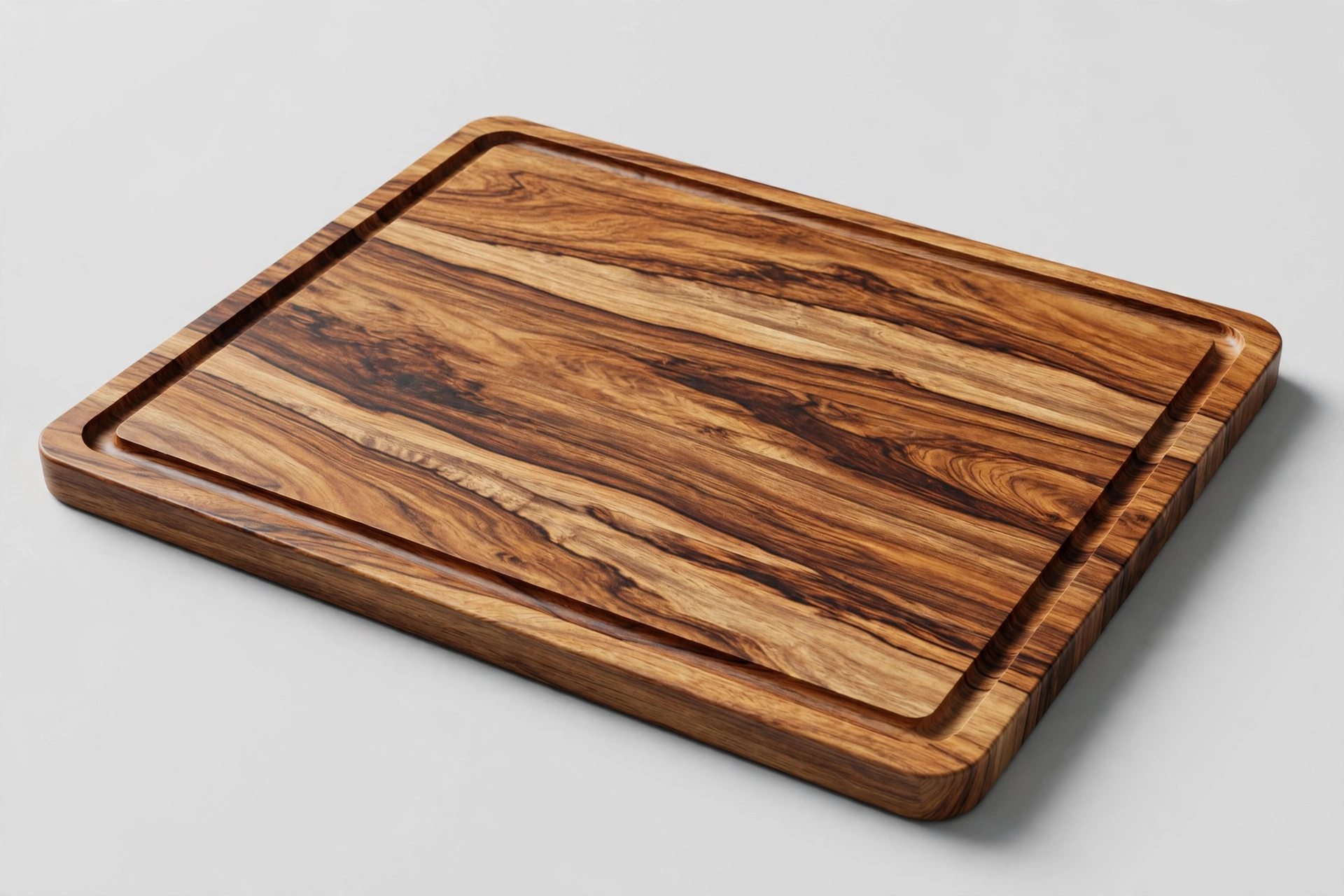
The newest name in this guide carries the newest headline: per TheSharpKitchen's synthesis of the category, Reviewed named the Sonder LA Winsome the best overall cutting board of 2026. It is an acacia board with a designer's eye — rich, high-contrast grain, a juice groove for messy work, and a profile slim and handsome enough to double as the serving board when the cheese course arrives. For buyers who found the Boos a little too commercial-kitchen and the Boardsmith a little too serious, this is the wood board styled for a home.
The cautions are a young brand's cautions. Acacia is a hard wood — beautiful and durable, but a step harder on edges than maple, so it sits mid-pack on knife kindness. The owner base is far smaller than the OXO's or Boos's, so the long-term record is still being written, and like every wood board here it is hand-wash and occasional oil. None of that overturns the testers' verdict; it just prices the risk honestly.
Yay · Pros
- Reviewed's best overall cutting board of 2026, per TheSharpKitchen
- Striking acacia grain — cuts all week, serves at the weekend
- Juice groove and a modern, giftable profile
Hmm · Cons
- Acacia is harder than maple — mid-pack on knife kindness
- Smaller owner base; the long-term record is still being written
- Hand-wash only, with occasional oiling like all wood here
Best for: design-led kitchens and gift buyers who still want a testers' top pick. Skip if: you want the deepest owner record in the category — that is the Boos or the OXO.
Cutting boards: what actually matters
Material decides almost everything — including your knives' future. Wood is gentler on edges than plastic or composite, and a board is the other half of the knife decision: the same research that produced this guide produced our roundup of the best kitchen knives in Canada & the USA, and the two purchases should be made together. Two materials to refuse outright: glass and marble, which are knife-edge destroyers sold as décor, and bamboo, which is harder on knives than its eco-friendly marketing suggests.
End grain vs edge grain is the wood buyer's real fork. End grain stands the fibres on end, so the blade parts them instead of cutting them — the gentlest surface, the slowest wear, the highest price. Edge grain runs the fibres lengthwise: a little harder on edges, a lot harder-wearing day to day, and the construction behind most professional boards. Either beats plastic for your knives; the choice is budget and devotion, not right and wrong.
Run two boards, and size for your sink. The setup testers keep landing on is one wood board for produce, bread and cooked food, plus one dishwasher-safe board reserved for raw meat and fish — cross-contamination solved by colour or material, not by memory. Buy the largest main board that still fits in your sink for washing and in a cupboard for storage, and remember that a board under a full set of knives deserves the same thought as the knives themselves — our guide to the best knife sets in Canada & the USA covers the other half of that pairing.
Cutting board questions, answered
Is wood or plastic more hygienic? Both are safe when washed promptly and dried properly; they just get there differently. Plastic's advantage is the dishwasher's heat cycle, which is why it owns the raw-meat slot in most test kitchens. Wood's surface draws moisture down into the grain where bacteria cannot thrive, and decades of food-safety research have treated a well-kept wood board as a sound surface. The real rule is not the material — it is keeping raw proteins on their own board.
Will a wooden board dull my knives? Less than almost anything else you could cut on. Wood — and end grain above all, as the Boardsmith's knife-dullness test win shows — is among the gentlest common surfaces. The true edge-killers are glass, marble and stone, with bamboo and hard plastic behind them. Whatever board you choose, edges still need regular honing and occasional sharpening; our guide to the best knife sharpeners in Canada & the USA covers that half of the routine.
How do I stop a wood board cracking or warping? Three habits cover nearly all of it: hand-wash and towel-dry rather than soaking or dishwashing, store it dry and upright or flat rather than leaning wet against the sink, and feed it a coat of food-safe mineral oil or board cream whenever the surface looks pale and thirsty — monthly for a maple in daily use, far less often for teak. A board that is oiled on schedule essentially does not crack.
What size cutting board should I buy? The biggest your sink and storage honestly allow. A generous board handles a chicken, a watermelon and a pile of onions without food escaping to the counter, and weight is a feature — a heavy board is a stable board. Most households do best with one large main board plus a small second board for fruit, garnish and cheese, rather than a matching set of mediums that are all slightly too small for the Sunday roast.
The short version
Buy the John Boos Maple Edge Grain if you want the professional wood benchmark and will maintain it. Buy the Boardsmith End-Grain if your knives are the investment and the board is there to protect them. Buy the TeakHaus if you want wood without the oiling calendar, the Sonder LA Winsome if you want the testers' 2026 favourite with a designer's finish, and pair any of them with the OXO for raw meat — or take the Epicurean All-In-One if the whole question you are asking is "which good board goes in the dishwasher?" Everything else is size: measure your sink first.
Last updated: November 16, 2026. We refresh this guide each season and whenever a pick is replaced by a better one.