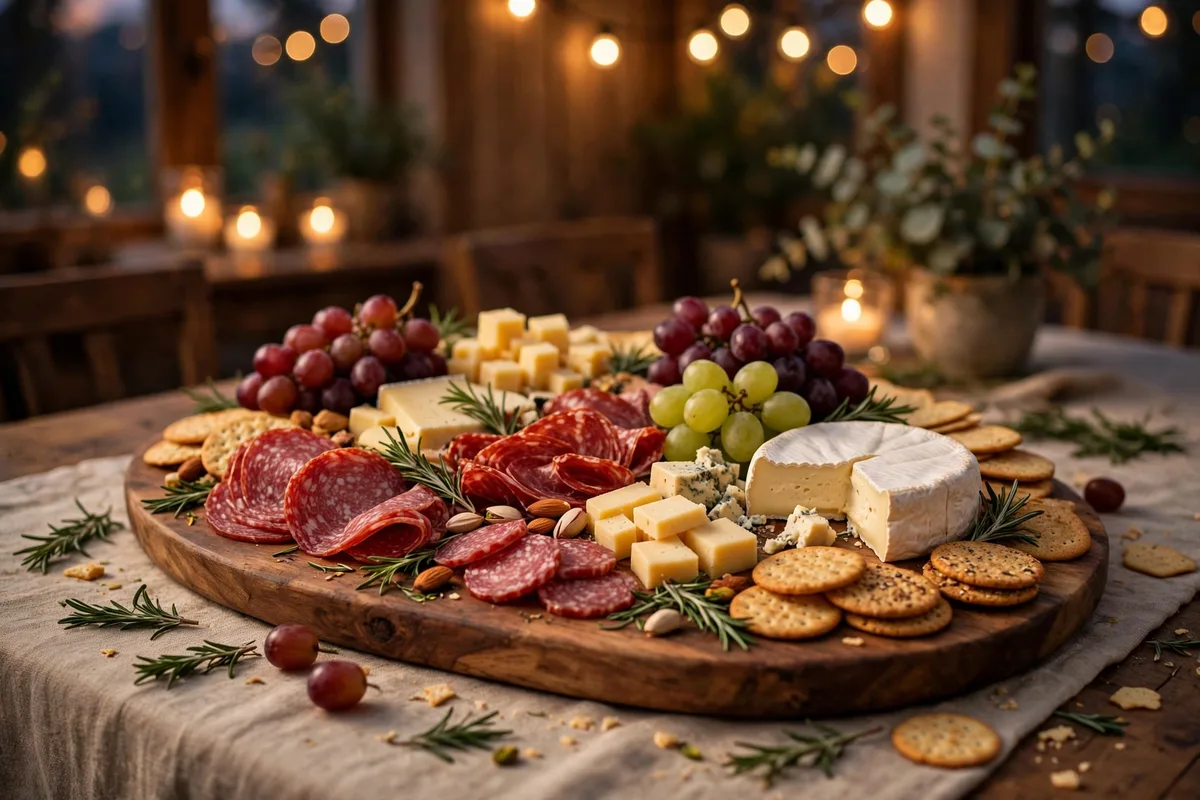
The best charcuterie board for most hosts is a large acacia serving board of about 200 square inches or more: wood is kind to knives, light enough to carry loaded, and handsome enough to leave on the table — and the Bambüsi and Royal Craft Wood picks below are the strongest versions of it. Everything else in this guide is a refinement for a specific host: the entertainer who wants a cheese-knife set included, the traditionalist who wants end-grain maple, and the stylist who wants slate’s black canvas.
A board is not a cutting board with better PR — it is a serving surface judged on usable area, material safety, and how gracefully it survives a year of salami grease and dishwasher temptation. The five picks below were checked on exactly those terms, with sizes stated in real square inches and care demands stated plainly. For the rest of the hosting kit, our best hosting and serving essentials in Canada and the USA guide covers the full table, the best wine glasses in Canada and the USA guide handles what goes in the glasses beside the board, and the best cocktail shakers in Canada and the USA guide pours what fills them.
Disclosure: CookSmartPicks is reader-supported. When you buy through links on this page, we may earn an Amazon commission at no extra cost to you. Prices and availability change often — check the current price on Amazon before you decide.
How we chose these charcuterie boards
Size honesty came first: we compared usable surface area — the flat interior where food actually sits, excluding juice grooves, handles and bevels — against the guest counts in the listings, and several photogenic boards were cut for claiming party capacity their square inches cannot serve. A board that serves six needs roughly 200 or more square inches of working surface, and that arithmetic, not the marketing, set this list.
Materials were judged on the full service cycle: how the surface treats knife edges, whether the finish is food-safe and renewable, how the board washes and dries, and how it ages after a year of salami fat and beet juice. Every pick is available through normal Canadian retail. Two boards with non-food-safe decorative finishes were excluded outright — a serving surface is food equipment, not décor, whatever the product photos suggest.
The lineup at a glance
| Product | Best for | Why it stands out |
|---|---|---|
| Bambüsi Premium Bamboo & Acacia Cheese Board (Large) | Best overall | The host’s standard: 220 sq in of acacia with a real juice groove and handles |
| Royal Craft Wood Bamboo Cheese Board & Knife Set | Best with knife drawer | The complete kit: bamboo board plus a hidden drawer of cheese knives |
| Picnic Time Circo Cheese Board & Tools Set | Best compact cheese set | The swivel board: a round of hardwood hiding a full cheese tool set |
| John Boos Maple Serving & Cutting Board | Best heirloom wood | The butcher’s board: Illinois maple, resurfacable, built for decades |
| Juvale Slate Cheese Board (with Soapstone Chalk) | Best slate presentation | The black canvas: chillable slate you can write the cheese names on |
1. Bambüsi Premium Bamboo & Acacia Cheese Board (Large) — Best overall
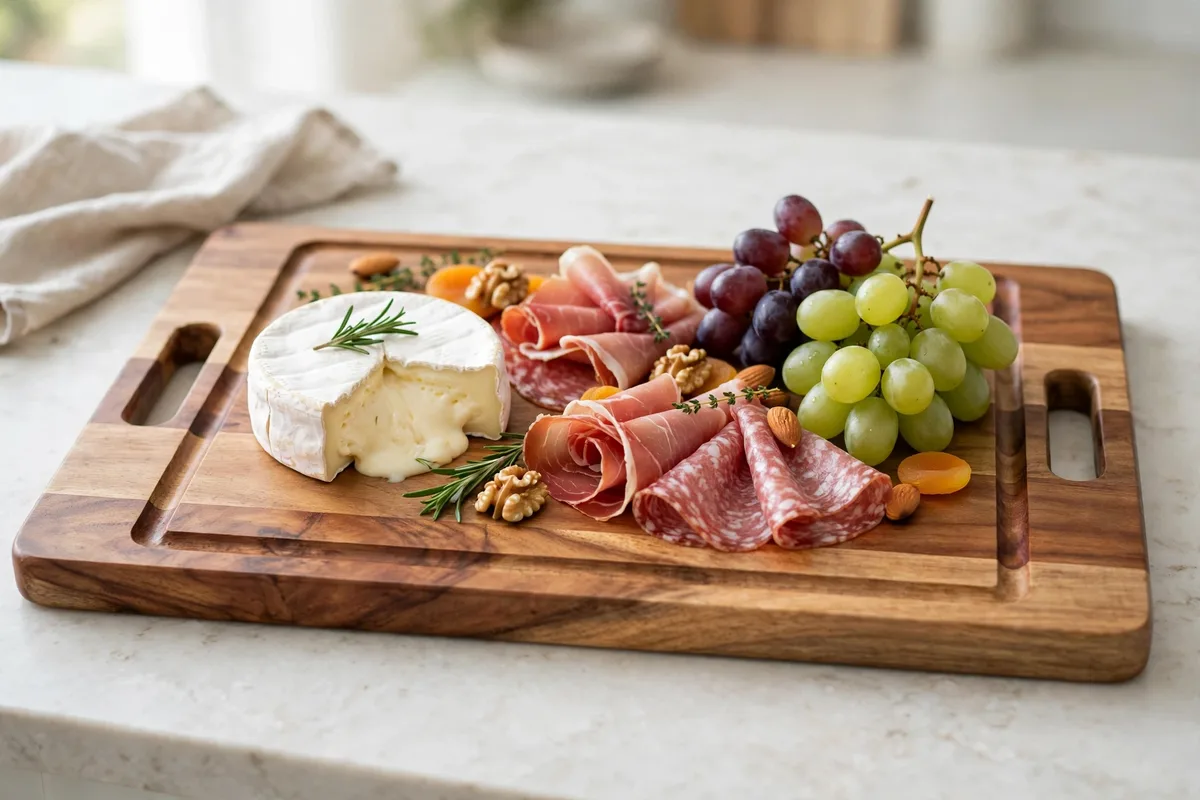
The Bambüsi is the board this category revolves around: a generous acacia serving surface — the large format runs about 17.5 by 13 inches, over 220 square inches before the juice groove takes its share — in a hardwood prized for exactly this job. Acacia’s density resists water and knife scoring better than most serving woods, its grain does half the styling for you, and the board’s weight lands in the carry-a-loaded-board-with-one-hand zone that separates usable serving ware from furniture.
The details are the considered kind: a juice groove that actually catches brie runoff and grape escapees, cut-out handles that make the loaded trip from kitchen to table a one-attempt journey, and a food-safe finish that renews with a rub of mineral oil when it dulls. Owner reports across years of parties describe the same arc — it arrives handsome, works constantly, and ages into the board guests ask about. It is the rare serving piece that gets used weekly rather than saved.
For Canadian hosts it is stocked through mainstream online retail at a price that undercuts the boutique board shops by a wide margin. If the guide’s other picks are specializations — kits, end-grain, slate — the Bambüsi is the centre: buy it first, compose generously, and let the two-to-four-hour rule, not the board’s capacity, decide when the party’s grazing ends.
The Bambüsi’s groove earns a second mention in service: it is deep enough to hold a ring of crackers upright around the spread, which doubles the board’s apparent abundance without another ounce of food — the oldest caterer’s trick, built into the wood.
Yay · Pros
- Over 200 sq in of usable serving surface
- Acacia resists water and scoring; juice groove works
- Handles make loaded carries one-handed
Hmm · Cons
- Hand-wash and oil care, like all wood
- Groove collects crumbs — brush it out
- Too large for small cupboards
Best for: Most hosts — the default large wood board Skip if: You want a board that can go in the dishwasher — no honest wood board can
2. Royal Craft Wood Bamboo Cheese Board & Knife Set — Best with knife drawer
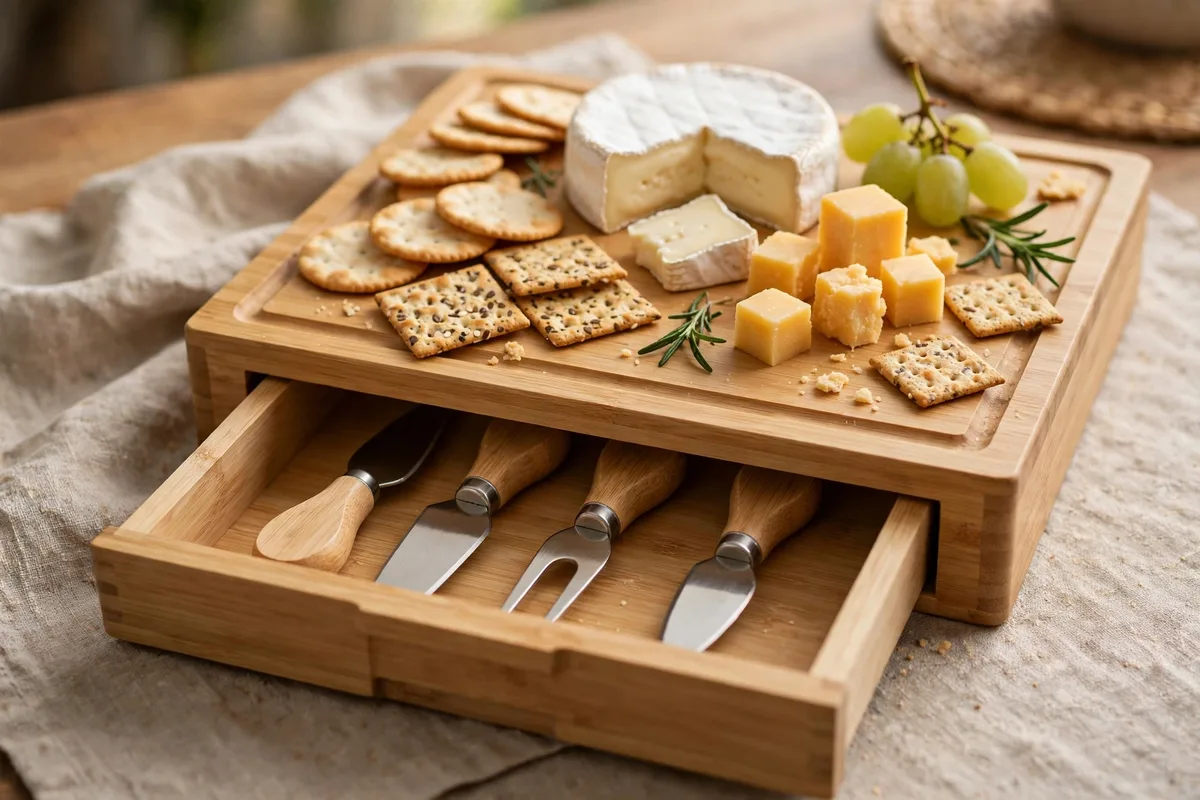
Royal Craft Wood’s board is the entertainer’s specification: a thick bamboo serving surface with a deep perimeter groove for crackers and grapes, and — the detail regular hosts swear by — a hidden slide-out drawer holding a four-piece cheese knife set, so the tools live with the board instead of migrating to the back of a cutlery drawer. The footprint suits four-to-six-person spreads, and the bamboo’s tight grain presents a smooth, pale canvas that makes dark salamis and bright fruit look composed before you have styled anything.
Bamboo’s properties cut both ways and the guide states them plainly: it is harder and more dimensionally stable than most woods, shrugs off moisture, and asks little beyond hand washing — but that hardness is less kind to knife edges, so this is a serve-and-slice-gently board rather than a working cutting surface. The drawer’s knives are serviceable cheese tools (a fork, a spreader, and two cutters) that cover the standard cheese textures without a separate purchase.
Canadian availability is straightforward online, and the set’s presentation — boxed, complete, handsome — has made it a registry and housewarming staple. For the host who entertains monthly and wants one object that answers the whole charcuterie question, board and tools together, this is the most complete purchase in the guide.
Royal Craft Wood’s drawer has an unlisted benefit: the knives arrive at the table clean and leave it contained, so the post-party hunt for the cheese fork in the dishwasher ends. Small logistics are what separate hosting systems from hosting objects.
Yay · Pros
- Slide-out drawer with a 4-piece cheese knife set
- Deep groove corrals crackers and grapes
- Complete, giftable, registry-ready package
Hmm · Cons
- Bamboo is harder on knife edges than acacia
- Deep groove narrows the flat area slightly
- Heavier than its footprint suggests
Best for: Hosts who entertain often and value a finished, giftable set Skip if: You cut hard cheeses aggressively at the board — acacia or maple is kinder to edges
3. Picnic Time Circo Cheese Board & Tools Set — Best compact cheese set
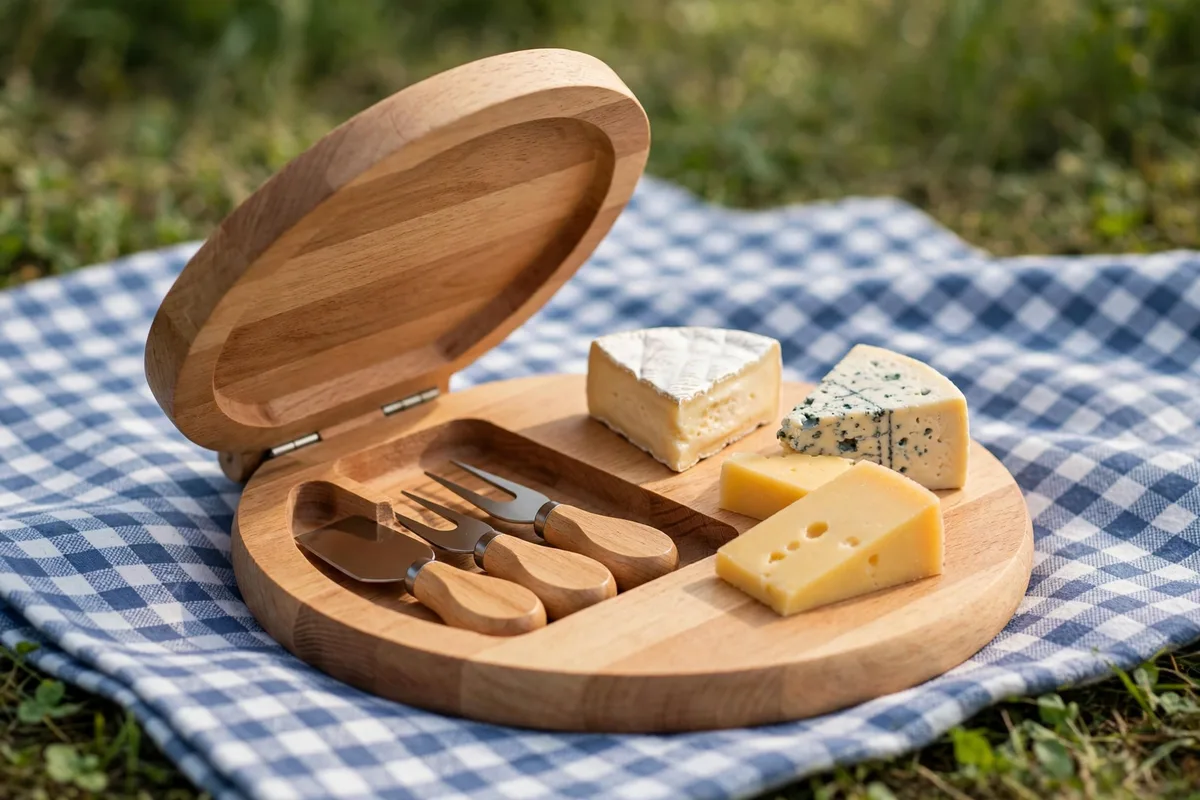
The Circo is the charcuterie board as a piece of theatre: a round hardwood board whose top swivels open to reveal a recessed compartment holding four stainless cheese tools with wooden handles — fork, crumbly-cheese chisel, and knives for hard and soft textures. At about 10 inches across it is honestly a cheese course for two to four rather than a party spread, and the guide places it as such: the board you bring out for the evening’s deliberate cheese moment, or pack for the picnic that takes itself seriously.
Picnic Time has made this design for years, and its virtues are finish and completeness: the wood is smooth and food-safe finished, the tools are real stainless rather than plated novelty, and the whole object stores as a tidy disc. The swivel action is the delight and the delicacy — treat it as joinery, not machinery, and it serves indefinitely. For apartment hosts, it is also the only pick here that stores in a drawer’s footprint.
In Canada it appears through gift and kitchen retailers at a price that reflects the tool set it includes. Buy it as the cheese-course specialist or the gift that lands with a gasp; for feeding eight, the big rectangles above it are the honest answer, and the Circo’s owners typically end up owning both — which is the category’s natural fleet.
The Circo’s round format composes by a different grammar — a central mound, radiating wedges — and hosts who master it find round boards easier to make abundant than rectangles, because the eye reads a circle as fuller at the same load.
Yay · Pros
- Swivel design hides 4 stainless cheese tools
- Perfect cheese-course size for 2–4
- Stores flat; travels to picnics beautifully
Hmm · Cons
- Round format composes differently than rectangles
- Smaller surface — a cheese course, not a feast
- Swivel mechanism wants gentle handling
Best for: Cheese-course traditionalists and picnic romantics Skip if: You need to feed a crowd — this is a cheese course, not a spread
4. John Boos Maple Serving & Cutting Board — Best heirloom wood
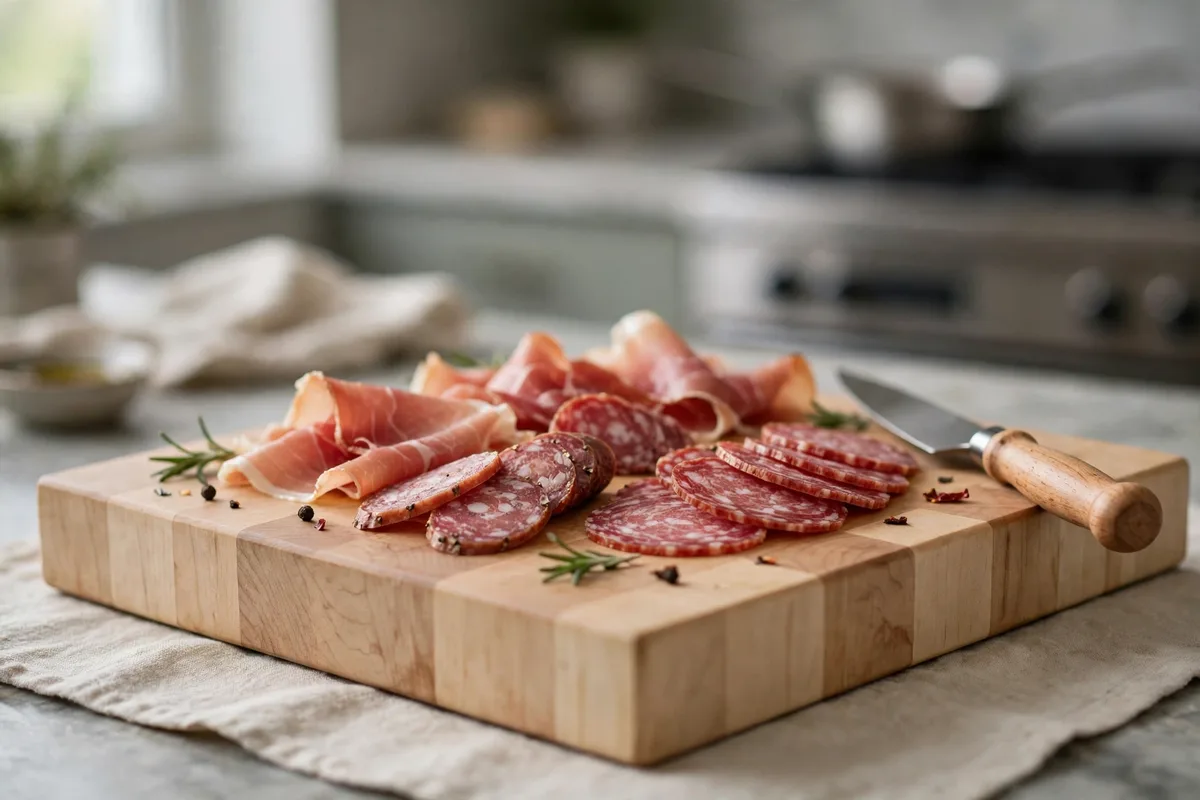
John Boos has made butcher blocks in Illinois since 1887, and its serving boards carry that institutional weight — literally. A Boos maple board is thick, dense North American hard maple with the tight grain that professional kitchens trust, finished with the brand’s board cream tradition and built to be resurfaced rather than replaced. Maple’s pale, fine surface is the classic charcuterie canvas: it makes cured meats look like a deli window and treats knife edges more kindly than any wood in this guide.
The ownership proposition is the professional one: this board will outlast the table it serves on if it is washed by hand, dried standing, and oiled when thirsty — the Boos Mystery Oil and cream ritual the brand has sold for a century. It is heavier than the acacia and bamboo picks by a clear margin, and carrying it loaded is a two-hand, forearm-aware exercise. In exchange, there is no board here more likely to be serving your grandchildren’s friends.
Canadian availability runs through serious kitchen retailers, at prices that make it the considered purchase of the five. For the host who buys kitchen equipment the way chefs do — once, heavily, forever — the Boos is the end of the search, and its presence on this list is the guide’s benchmark for what ‘durable’ means in wood.
A Boos board’s first month asks for the full ritual — oil, cream, patience — and owners who give it describe a surface that seems to drink less and shine more with every cycle, the wood visibly settling into its working life.
Yay · Pros
- North American hard maple; butcher-block heritage since 1887
- Kindest surface here for knife edges
- Resurfacable — a decades-long service life
Hmm · Cons
- Heaviest pick; a two-hand board when loaded
- Premium price for a serving surface
- Wants regular oiling to stay handsome
Best for: The buy-once traditionalist who wants a board for decades Skip if: You want light and portable — this is the heaviest board here
5. Juvale Slate Cheese Board (with Soapstone Chalk) — Best slate presentation
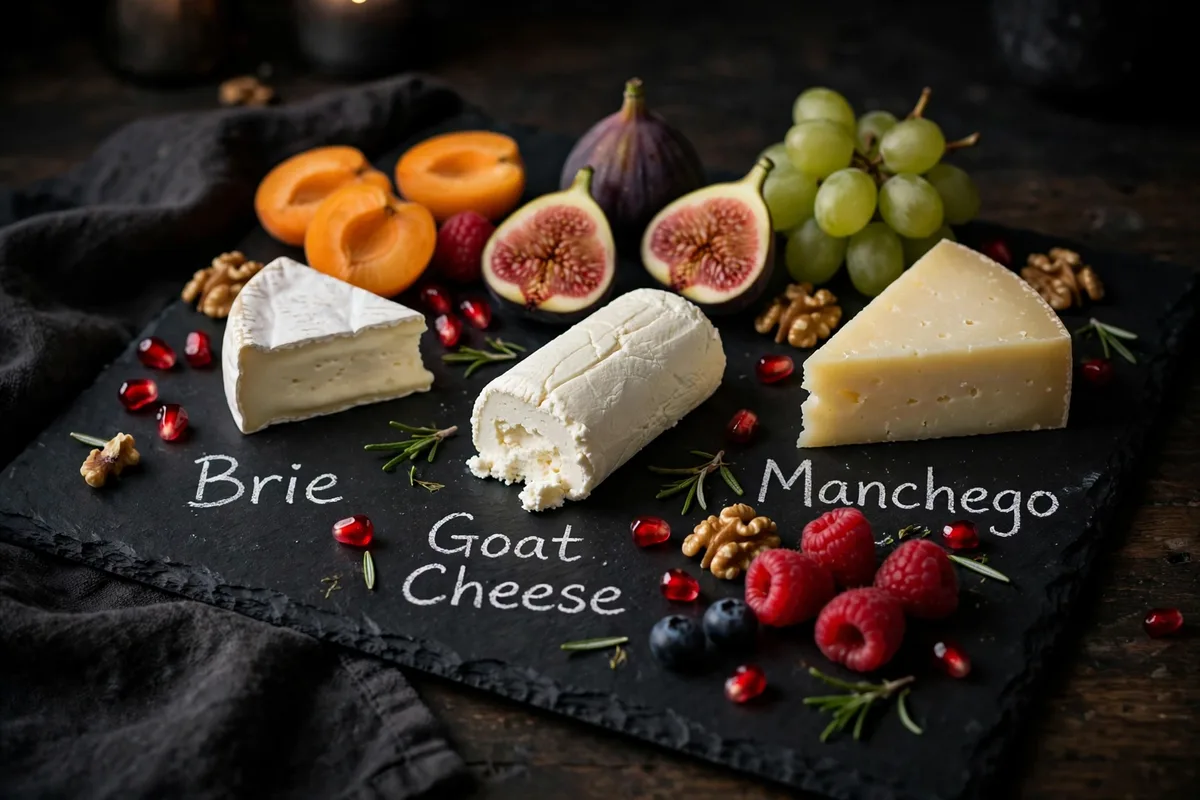
Slate changes the picture entirely: a matte black stone surface on which pale cheeses, bright fruit and cured meats register like a chalkboard menu — which is literal, since a soapstone pencil (often included) writes cheese names directly on the board, the single most charming labelling system in hosting. Juvale’s slate boards come in party sizes around 16 by 12 inches, with the stone’s natural cleft edges and foam feet to protect the table beneath.
The terms are stone’s terms: slate is heavy, it chips at the edges if it meets tile at speed, and a knife drawn across it makes a sound that ends conversations — so slate service is composed service, everything pre-sliced in the kitchen and arranged on the stone. In exchange, slate chills beautifully (a half hour in the fridge gives soft cheeses a fighting chance in a warm room), never stains, never holds odours, and wipes clean with a damp cloth, asking for no oil, ever.
For Canadian hosts it is an inexpensive online purchase, often in multi-packs that make a two-slate composed spread affordable. Choose it when presentation leads and the menu is slice-in-advance; pair it with a wood board for the working refills, and you own the category’s classic two-board fleet for less than one heirloom board costs.
Slate’s hidden virtue is temperature honesty: stone feels cold to the touch at room temperature and tells you so, reminding the host to chill it before soft cheeses arrive — a small, built-in prompt that wood never gives.
Yay · Pros
- Black canvas makes food photograph itself
- Chills well; labels write on in soapstone chalk
- Never stains or holds odours; zero oiling
Hmm · Cons
- Slate chips if dropped on tile
- No cut-at-the-board service — knives sing on stone
- Heavier than wood of the same size
Best for: Stylists and photographers serving pre-sliced spreads Skip if: Guests will cut at the board — stone and knives are enemies
Size by guest count, material by menu: the board maths that works
A charcuterie board needs roughly 30 to 40 square inches of usable surface per guest when it is the main event — a 17-by-13-inch board serves four to six people as a centrepiece, and anything smaller is a two-person board whatever the listing claims. The rule behind the number is density: charcuterie is composed in overlapping clusters, and a board that forces single-file salami is too small, full stop. Buy for your largest regular gathering, not your largest imaginable one; two medium boards compose better than one aircraft carrier.
Material decides the menu more than the menu decides the material. Wood and bamboo forgive knife work and suit cheese-and-meat spreads where guests cut as they graze. Slate and marble chill beautifully and present soft cheeses and pâtés elegantly, but a knife on slate makes a sound your guests will remember, and both stone surfaces can dull edges — serve pre-sliced on stone, and let guests cut on wood. The mixed-host solution is one of each: stone for the composed picture, wood for the working board that refills it.
Food safety deserves its plain paragraph: wood boards are not the bacteria traps of folklore — studies of cutting surfaces consistently find wood’s porous structure draws moisture and bacteria away from the surface — but charcuterie service has its own rule that matters more: the two-to-four-hour window. Perishable spreads should not graze indefinitely; US food-safety guidance puts the limit at two hours in warm rooms, four at the outside in cool ones, after which the leftovers’ story ends. Small boards, refilled from the fridge, beat one giant board ageing in the room — another argument for the two-board fleet.
Care is the material’s tax, paid gladly or not at all: wood wants hand washing, immediate drying, and a food-safe oil rub when it looks thirsty — a five-minute monthly ritual that keeps a board handsome for a decade. Slate wants the same hand wash and rewards it by looking new forever. Bamboo asks the least and ages the fastest. None of them belongs in a dishwasher, and a listing that says otherwise is selling you a shorter-lived board.
And the styling truth that makes any board look abundant: odd numbers of clusters, something draped (salami rivers, prosciutto rosettes), something tall (a grape bunch, a breadstick bundle), and no empty corners. The board is a frame; the composition is the picture. Buy the frame by the maths above and the picture takes care of itself.
One more number for the composed board: protein maths. As a main event, plan roughly 5 to 6 ounces of meat and cheese per guest; as an appetizer before a meal, 2 to 3 ounces suffices — the figures caterers compose by, and the reason a correctly sized board can still fail if it is loaded for the wrong occasion.
Charcuterie board questions, answered
What size charcuterie board do I need for a party?
Plan on roughly 30 to 40 square inches of usable board per guest when charcuterie is the main food: a board around 17 by 13 inches serves four to six, and a large 20-inch board handles eight to ten. When the board is an appetizer before a meal, you can halve the area. When in doubt, two medium boards compose and refill better than one oversized board.
Is acacia or bamboo better for a charcuterie board?
Both are food-safe when finished with food-grade oils, as all picks in this guide are; acacia is denser and more water-resistant, while bamboo is harder, lighter and more sustainable to produce, but can be tougher on knife edges. For a board guests will cut cheese on, acacia or maple is the kinder surface; bamboo shines for serving pre-cut spreads.
Can guests cut cheese directly on a wood board?
Yes, with normal charcuterie manners: use cheese knives rather than your chef’s knife, cut on the board rather than sawing, and expect faint scoring over years — it is patina, not damage. For heavy daily cutting, keep a dedicated cutting board; a serving board’s finish stays prettier when the cleaver work happens elsewhere.
How do I care for a wooden board so it does not crack?
Hand-wash in warm soapy water, dry immediately and thoroughly, and never soak or dishwash it. When the wood looks dry or pale — every month or two of regular use — rub in food-safe mineral oil or a board cream, let it soak in, and buff off the excess. That five-minute ritual is the entire difference between a board that lasts two years and one that lasts twenty.
How long can a charcuterie spread safely sit out?
Two to four hours is the honest window: US food-safety guidance says perishable foods should not sit out more than two hours in a warm room (above about 90°F / 32°C, one hour), and four hours is the common cool-room maximum before leftovers should be discarded rather than refrigerated. Serve smaller boards and refill from the fridge for long parties.
Is slate better than wood for presentation?
Slate is colder, sleeker and photographs beautifully, and it suits pre-sliced spreads and soft cheeses; you can even write labels on it with soapstone chalk. Its costs are weight, edge chipping if dropped, and a knife-on-stone sound that rules out cut-at-the-board service. Choose slate for composed presentation, wood for working boards where guests slice as they graze.
A last word on boards as gifts, because this category is bought for other people as often as for oneself: a board is the rare present that improves with the giver’s restraint. Choose the size the recipient’s kitchen can store — a board that lives in its box is a board that never serves — and pair it with nothing but a small jar of board oil and a note. The Bambüsi and the Royal Craft Wood set are the two picks here that arrive gift-ready; the slate travels worst and the Boos weighs most, which is logistics, not criticism, and worth knowing before the holidays.
The short version
Buy the Bambüsi acacia for the all-round hosting board, or the Royal Craft Wood if you want the cheese knives living in the board’s own drawer. The Picnic Time Circo is the charming cheese-course specialist, the John Boos maple is the heirloom, and the Juvale slate is the presentation play for pre-sliced spreads. Size by the maths — about 30 to 40 square inches per guest — and mind the four-hour grazing limit.
Last updated: November 18, 2026. We refresh this guide each season and whenever a pick is replaced by a better one.